
Tim Neverett (Transcript)
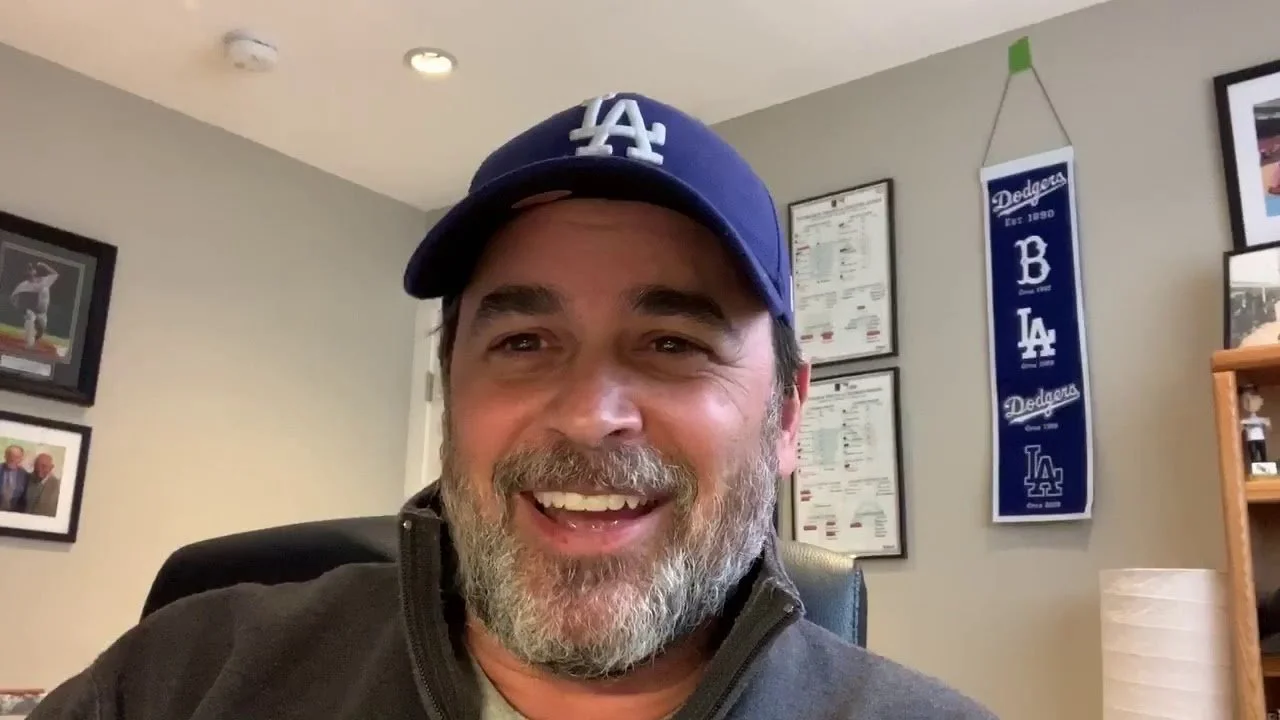
Robby Incmikoski: Tim Neverett, my friend. We're just taking words, not using the audio or video. Tell me about broadcasting games at Dodger Stadium. You've been doing this a long time in the big leagues. What is the experience like calling games at Dodger Stadium?
Tim Neverett: When you have 50,000 people there every night, it's pretty cool. We both have been places where that's not the case, and in most places around Major League Baseball, that's just not reality. The Dodgers lead the world literally in attendance in any sport. That's kind of the heartbeat of the stadium.
It's the third oldest in baseball, behind Fenway and Wrigley, but you wouldn't really know it. They redid it in mid-century modern—Janet Marie Smith was the architect who did an amazing job. The weather helps—it's not a weatherbeaten stadium at all. The hills of Elysian Park surround it, and in the distance, you see the San Gabriel Mountains. When you sit in the booth, that's what you're looking at—these hills, palm trees, the San Gabriels off in the distance. The sun sets off to your left, providing some really neat skies some nights. We call them "cotton candy skies" because they're just beautiful.
When I first broadcast a game there, I was with the Pirates. I remember walking by the Dodger TV booth and heard a voice say, "Hey, Tim." I stopped in my tracks because I knew exactly who it was, wondering how the hell he knew me—I'd never met him before. It was Vin Scully. I backtracked and looked in, and he said, "Come on in here, sit down." Of course, I followed his instructions. We talked about all kinds of things—he was asking me about where I'm from. It was all questions about me; I couldn't get anything in about him. It was something I'll never forget.
The next year when I came back, the same thing happened. I walked by his booth and he said, "Hey!" I stopped, but he didn't say, "Hey Tim"—he just said, "Hey." I thought if he gets two of the three letters right, I'm okay with that. After that, he was really good to me. I've got a voicemail from him saved before he passed away, something I'll always keep.
Being able to sit in the same booth as him, in the same chair, and have the same point of view when I did television for the Dodgers—it might not have literally been the same exact chair, but it was the same exact viewpoint where he sat for all those years. My first year with the Dodgers, I remember sitting down there, looking out, and observing everything around me, thinking, "This is what Vin was seeing. This is pretty cool." It wasn't lost on me.
That's why I'm a big proponent of always wearing a coat and tie in that booth. The younger announcers don't always do that—they want to wear golf shirts nowadays. Sometimes they'll wear a shirt and tie, but I always wanted to wear the shirt and tie because that's been Scully's booth. It's a small piece of square footage in that stadium, but it's one of the most important. When people walk by it on the press level, I don't think a day goes by where they don't think of him being in there, even though he hasn't done games since 2016.
I look at the entire property as about 365 acres, including the parking. You could probably put four Fenway Parks in the entire acreage. Every stadium has cool features, especially the old ones—like the gas station they've got out in centerfield, the 76 station. It used to actually be a gas station—players would get their cars filled up during games. They'd have a clubbie run their car out there to fill it up so it would be ready when they got back to their parking spot. They used to park out that way, closer to the gas station. I drove by there the other day and saw it set up for some kind of function.
The whole stadium's kind of set up like a museum when you walk around. They've added things and continue to add to it. No matter what level you're on, you can see all the Silver Bats, Gold Gloves, Cy Young Awards, and MVPs down in the dugout club area and in the hallways going to the house. The old clubhouses are now office space for analytics. They've changed a lot of things—the home clubhouse is good now. The visiting clubhouse is what it is, a long hallway to get there. It's better than the old one, which was just kind of a locker room, not much of a clubhouse.
I just look at Dodger Stadium as one of the great old parks where so many great moments have happened. It sounds cliché, but it's true—it is hallowed ground there, and they haven't moved. Nothing wrong with Yankee Stadium or Busch Stadium, but those have been knocked down and rebuilt. This one is original—it sits where it was when it was built in 1958.
Robby: What is the feeling of sitting in the seat that Vin Scully once occupied? When your baseball career comes to a close and you look back on it, you can count on maybe three fingers the people—Steve Lyons, Joe Davis, and you—who've sat in Vin's chair. How cool an honor will that be?
Tim: Huge honor. When you think about it—I would sit there those first couple of games pinching my leg going, "I can't believe this. How did I get here?" You start thinking like that, and then you just go do the job the way you do it. But from that vantage point, being able to walk in that booth and sit there—in our sport, that's the ultimate place to sit. I was hoping maybe he left something in the booth that could rub off on me, but I'm still looking for that! He was special, no doubt.
I remember being on the air in San Francisco the night he passed. We were told at the top of the fifth inning, but not to say anything for another half inning because the family wanted to release it. In the bottom of the fifth, we got the go-ahead to talk about it. Larry Baer, the president of the Giants, came into the booth in the seventh inning and talked to Rick Monday and me, expressing his condolences. He said they weren't going to announce it until the game concluded because they didn't know if any players or coaches had relationships with Vin and didn't want them to find out by looking at the scoreboard. They didn't want to affect the integrity of the game, so they waited until it was over.
When the game ended, there was no music on the PA—it was completely silent. The only thing you could hear were the seagulls. They put up on the main scoreboard in center field a picture with Vin's name, birth year, and death date—very simple. Everybody stopped. People going up the aisles, the umpires leaving, they all turned around. Players leaving the field turned around. A round of applause started in appreciation for him. It's one of the more enchanting and bizarre scenes I've ever seen in sports anywhere—people just stopped and stared at the scoreboard in silence.
Robby: And that was in San Francisco the night Vin passed? They just put it up right after the game?
Tim: Yeah. You've been there at the end of games in the 8th inning—the seagulls start to come. They were circling, and that's all you could hear. Usually, there's music when you're leaving the park—none of that. Just the seagulls, the picture of Vin, and silence.
Robby: What was it like on the bus afterward? Or did you go to the clubhouse?
Tim: I think Rick and I walked back to the hotel. It was pretty quiet. When you walk out front in San Francisco, there's usually a bunch of people gathering in that area, but it wasn't as much stirring as normal. So the night ended on a somber note.
Robby: What was the first game like back at home after that?
Tim: It was a big production, which it should have been. The atmosphere at Dodger Stadium then—they had these patches you could get that just said "Vin" with a microphone on it. The players had them on their uniforms. People were buying them, wearing them, crying. It was kind of like a funeral with a baseball game attached, but it was certainly something to witness.
Robby: Let's shift gears. You were with the Boston Red Sox for a couple of seasons after you left the Pirates. As a New Hampshire native, what was it like to call Fenway Park your home ballpark?
Tim: For me, I lived three blocks from Fenway when I went to college at Emerson, so I was there all the time as a student. It used to cost three bucks to get in. They've changed things over the years—the press structure wasn't the way it is now, it was lower. They've continued to add on to Fenway.
It's the coolest thing because the footprint is an old city block that they just jammed it into. That's why you have the Green Monster, the wall that high—because Lansdowne Street was right behind it. Literally, you have the edge of the Green Monster, then a sidewalk, and the street. That's it. Now the Monster seats, which didn't used to be there, were also designed by Janet Marie Smith. They actually overhang the sidewalk, and it took a lot for the Red Sox to get clearance from the city to do that.
To me, Fenway is the coolest ballpark just in terms of all the little nooks and crannies and features that people don't know about until they're there a lot. As a kid growing up in New Hampshire, that's all we knew—Red Sox baseball—until the advent of cable TV. When we got cable, I became my dad's remote control since we didn't have a remote. Every commercial break, I would get up and turn it to the Yankees or the Expos in French. We'd watch the Expos in French—it was great! Gary Carter, Andre Dawson, Warren Cromartie, Steve Rogers, Ellis Valentine.
The first time I went to Fenway as a kid, I was probably four years old. When I walked up the ramp behind home plate—we had box seats behind the third base dugout—and saw the color green of the outfield wall for the first time with my eyes, I couldn't believe how green it was. Then I saw the grass, watched them take infield practice, how white the uniforms were—it was like coming off LASIK surgery and looking at everything in HD. It was unbelievable for a four-year-old kid.
They played the Orioles that day, and I got an Orioles helmet for some reason. I remember hearing the sounds of the ballpark, having an usher with a coat and police-looking hat show us to our seats. My dad slipped him a couple bucks, and he wiped our seats down. They served popcorn out of these cardboard megaphones—once you finished your popcorn, you'd turn it around and it would say "Red Sox," so everybody had these cardboard megaphones. I had my first Fenway Frank, which was in a steamer. The concessionaire would have tongs to take a steamed dog and put it in a steamed bun. I'd never had a hot dog that tasted that good in my life.
Fast forward, I get the opportunity to work there and go home. We had moved in across the street at a place called the Viridian on Boylston and Jersey Street. Some of the players lived there. I remember my wife Jess and our dog Reggie walked me over to Gate D on Jersey Street, which was then still Yawkey Way, and said goodbye. I went in, and it was just really surreal as the game was starting. I'm looking around Fenway going, "This is where I wanted to be."
It was awesome. We won three straight division titles and a World Series, winning an awful lot of games with great moments. My partner Joe Castiglione is now in the Hall of Fame, so I got to work with a Hall of Famer, which was a great experience. Learning the ballpark a little differently when I was there all the time was really special.
I was back there last summer when we had games there with the Dodgers. Dodger Stadium is so immense, and going back to Fenway, it seemed really small. But it's the most beautiful bandbox in baseball, it really is. I know people in Chicago love Wrigley Field, and Wrigley's great for all its reasons, but if I had to pick between the two, obviously I'm taking Fenway.
For me, the three best ballparks are Dodger Stadium for its incredible atmosphere, Fenway, and PNC Park in Pittsburgh when it's full. We just passed the anniversary of October 1, 2013, the Wild Card game there, and looking back at some old videos—that's what it should be there. If it's not like that in Pittsburgh now, that's a discussion for another time, but it can be that way and it's incredible.
Robby: Can you tell me about the Ohtani game where he reached 50/50? What was the vibe in the booth calling that game?
Tim: That game, to me, is the single greatest game I've ever seen any player play. It's not even close. I've seen players have great games—Rick Monday saw Rennie Stennett go 7-for-7 when Rick was on the Cubs bench. Rick told me Ohtani's game was better.
Following his progress through the season, getting closer and closer, I was writing the numbers in my scorebook for stolen bases and home runs, so I knew where he was. I started thinking, "He's probably going to do it back at home after this trip to Miami. It's unlikely he'll get two home runs today, but it's possible the way he swings the bat." He's got the most violent swing I've ever seen. So I started thinking I'd better jot down a few facts just in case. I wanted to get the facts right, but I wasn't going to prepare a call like some announcers do. I'd rather have it be in the moment, but I wanted to make sure I had all the information available.
There were about 17,000 people there, and I think 15,000 of them had Ohtani shirts on. It was essentially a Dodger home game because Miami still struggles to draw fans. It was a Thursday afternoon, played as late as they could—a 4:00 start because of the collective bargaining agreement. When he hit his first homer to get to 49, he hit it so hard, way into the upper deck. If it was an open-air stadium, it might have gone completely out. At that point, he was 3-for-3, his batting average going up, and we started thinking maybe he'd battle for the Triple Crown, which came down to the last day of the season—he almost won it, just a couple percentage points short.
As the game went along and he had 49 homers, I thought reaching 50 was a possibility. The Dodgers were running away with the game—I think the final score was 20-4 or something like that. Miami had to use two position players to pitch. I don't blame Skip Schumaker at all, but I also tip my cap to him because first base was open when Ohtani came up the next time. In any normal circumstance with a closer score, the manager would walk him. We were hoping he wouldn't. We could see Schumaker talking to his bench coach, and lip readers said he told him, "I'm not going to walk him—I have too much respect for this game."
So they pitched to him, and Ohtani went the opposite way, hitting it to the right of the bullpen into the nightclub area in left field for number 50. The place went crazy. I think they were requesting a seatbelt for me because I was actually on my feet. When I call big moments, I'm usually sitting down—I might lean over a bit—but it actually brought me out of my chair. None of us have ever seen anyone do this, so to witness the first 50/50 season in major league history was incredible. And it was just this random Thursday afternoon in Miami in front of 17,000 people, but he brought the house down.
When he came up to face the position player for his third homer, I didn't know if he'd had a three-homer game before. I turned to our producer, put up three fingers and gestured, so he looked it up quickly and told me Ohtani had never had one. As soon as he hit it, I knew it was his first-ever three-homer game. He almost put it out the back of the ballpark—he absolutely crushed it. Granted, it was a BP fastball, but it still counts as a home run in a major league game. You don't get points off for hitting it off someone who doesn't pitch regularly.
It was incredible to watch him hit three homers in a row. He went 6-for-6, scored four runs, and drove in 10. The Dodgers also clinched a postseason berth that day, so they had a champagne toast for making the playoffs, but it turned into the Ohtani toast. He addressed the team after the game.