
Tim Neverett
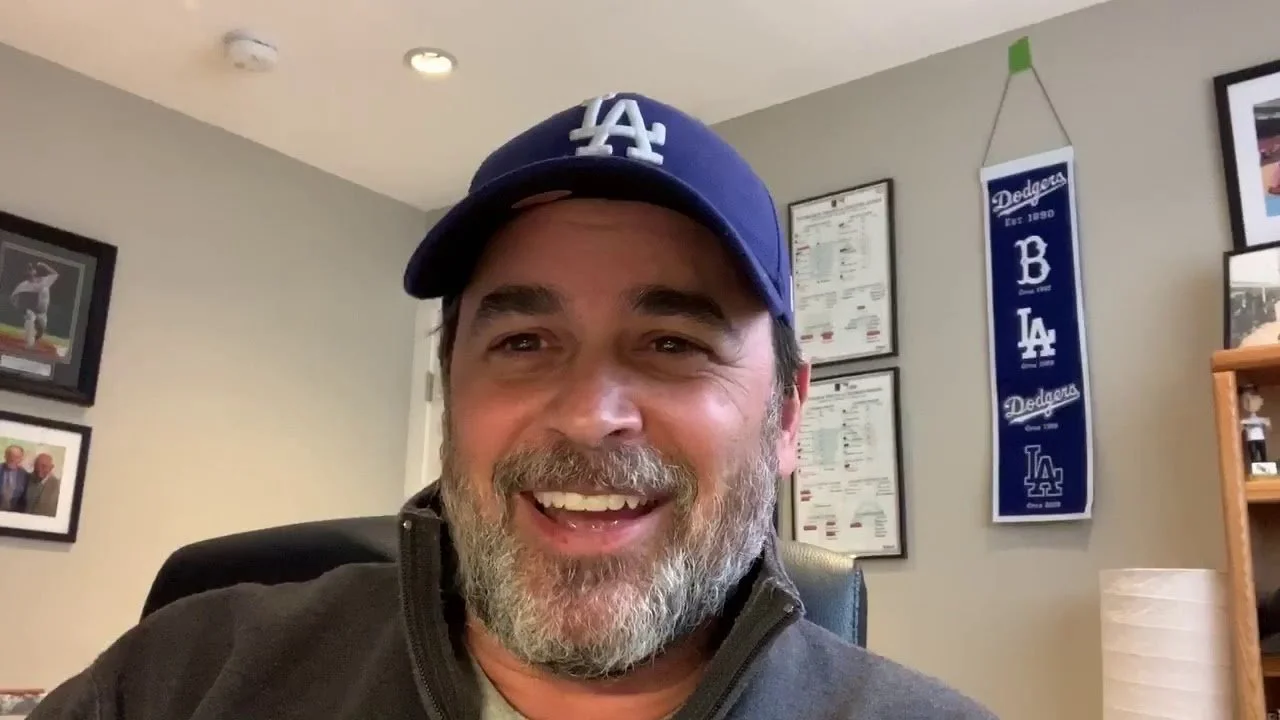
One thing I always like asking broadcasters—guys who’ve spent decades around the game—is what certain ballparks actually feel like. Not the press guide version. The real version. When I asked Tim Neverett about Dodger Stadium and Fenway Park, the conversation quickly turned into something more personal: Vin Scully’s booth, a silent stadium honoring a legend, and the first time a four-year-old kid walked up the ramp at Fenway and saw the Green Monster glowing in front of him. If you love baseball parks, you’ll understand exactly what Tim means. These places aren’t just stadiums—they’re memory machines.
Tim Neverett, my friend. Tell me about broadcasting games at Dodger Stadium. You've been doing this a long time in the big leagues. What’s the experience like calling games there?
When you have 50,000 people there every night, it’s pretty cool. A lot of places in Major League Baseball don’t draw like that, but the Dodgers lead the world in attendance. That’s the heartbeat of the stadium.
Dodger Stadium is the third-oldest park in baseball, behind Fenway and Wrigley, but you wouldn’t know it because they’ve taken great care of it. The setting helps too. It sits up in the hills of Elysian Park, and from the booth you can see the San Gabriel Mountains in the distance. The sun sets off to your left and some nights the sky turns these incredible pink and orange colors—we call them “cotton candy skies.” It’s just beautiful.
You’ve sat in the same broadcast booth Vin Scully occupied for decades. What’s that experience like?
The first time I walked by the Dodger TV booth years ago when I was with the Pirates, I heard a voice say, “Hey, Tim.” I stopped because I knew exactly who it was—Vin Scully—even though I’d never met him.
He invited me in and we talked. But the whole conversation was him asking questions about me. That’s just who he was.
Later, when I joined the Dodgers and sat in that booth myself, I remember pinching my leg thinking, How did I get here?
When I sat down and looked out at the stadium, I realized this was the exact viewpoint Vin had for decades. That wasn’t lost on me.
That’s why I always wear a coat and tie in that booth. Some younger broadcasters wear golf shirts, but I feel like it’s Vin’s booth. It’s a small space in the stadium, but it’s one of the most important spaces in baseball.
Dodger Stadium has been around since 1958. What makes that place so special compared to other parks?
It’s still the original stadium. Yankee Stadium has been rebuilt. Busch Stadium has been rebuilt. Dodger Stadium is still right where it was when it opened.
When you walk around the stadium it’s almost like a museum. There are displays everywhere—Silver Slugger bats, Gold Gloves, Cy Young Awards, MVP trophies. The entire place is filled with history.
You can walk around and see reminders of all the great players and moments that have happened there.
It really is hallowed ground.
You were in San Francisco the night Vin Scully passed away. What happened that night?
We were broadcasting a game when we got word during the fifth inning that Vin had passed away. The family asked us not to say anything for half an inning while they prepared the announcement.
After the game ended, something really remarkable happened.
There was no music in the stadium. Normally there’s music playing while people leave.
Instead, it was completely silent.
The only sound you could hear were the seagulls flying around the ballpark.
They put a simple graphic on the center-field scoreboard: Vin Scully’s name, his birth year, and the year he passed away.
Everyone stopped.
Fans walking up the aisles stopped. Umpires leaving the field stopped. Players stopped and turned around.
A round of applause started.
It was one of the most surreal scenes I’ve ever seen in sports. Everyone in the stadium just stood there quietly looking at the scoreboard and applauding.
Let’s shift gears. You worked with the Boston Red Sox for a couple seasons. What was it like having Fenway Park as your home ballpark?
I lived three blocks from Fenway when I went to Emerson College, so I was there all the time as a student. Back then it cost three dollars to get in.
Fenway is fascinating because it’s basically jammed into an old city block. That’s why the Green Monster exists—because Lansdowne Street is right behind it. There’s literally the wall, then a sidewalk, then the street.
To me, Fenway is the coolest ballpark because of all the little nooks and crannies. There are so many features people don’t even realize are there until they spend time in the park.
Do you remember the first time you ever went there?
I was probably four years old.
We walked up the ramp behind home plate and suddenly the field opened up in front of me. I remember seeing the Green Monster for the first time and being stunned at how green it was.
The grass looked incredibly green. The uniforms looked incredibly white. It felt like I had just gotten LASIK surgery and was seeing everything in high definition.
I remember the sounds of the ballpark. The usher wiping down our seats. The popcorn served in those cardboard megaphones that said “Red Sox.” My first Fenway Frank from the steamer.
I’d never had a hot dog that tasted that good in my life.
What was it like when you finally got to work there professionally?
My wife walked me to Gate D on Jersey Street one day for my first game working for the Red Sox.
When I walked in and looked around Fenway before the game started, I remember thinking: This is where I always wanted to be.
It was surreal.
We ended up winning three division titles and a World Series while I was there. And I got to work alongside Joe Castiglione, who is now in the Hall of Fame.
Those were incredible memories.
What other ballparks stand out to you?
Dodger Stadium for its atmosphere.
Fenway Park because of its history.
And PNC Park in Pittsburgh when it’s full. If you watch the Wild Card Game from October 1, 2013, that’s what that place can feel like when the crowd is fully into it.
When that stadium is packed and the energy is there, it’s incredible.
~~~
More from Tim Neverett
NOTE: The above was edited for clarity and length.
You can read the full transcript here.