
Janet Marie Smith (Transcript)
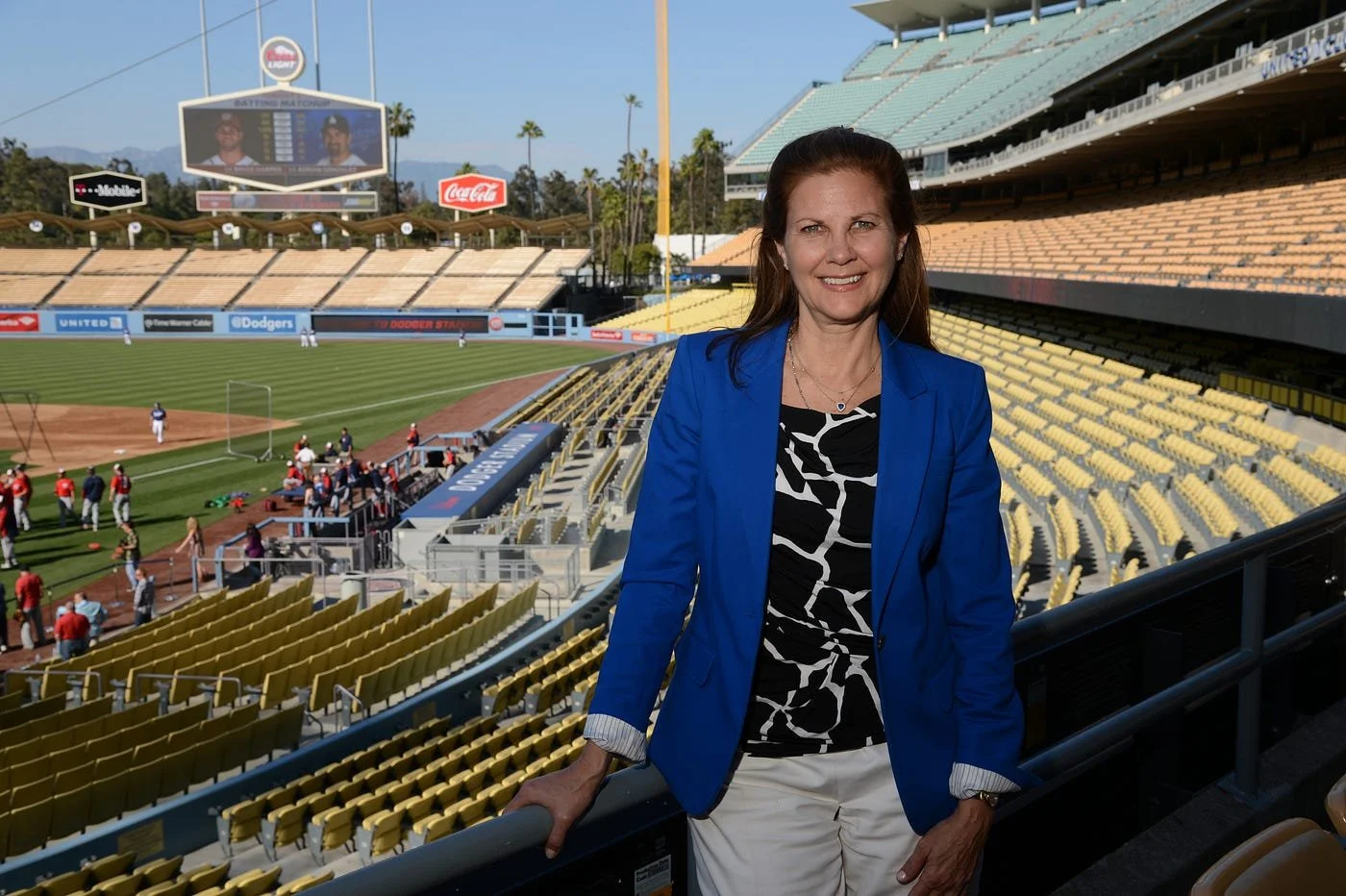
Robby Incmikoski: Janet Marie Smith, you are the 80th person we are interviewing. I'll explain the project when we're done because now we're recording, but I'll explain everything. I really think you're going to love what we're doing. It's a cool concept and it's going to be really well done and well produced.
The first thing I would like to ask you - I know a little bit about your bio, I know the work you've done and I know the amount of respect you have around the game of baseball, Janet - but where did your passion or love come from, either for the game of baseball or for stadiums? How did you get into doing what you do?
Janet Marie Smith: I started working in baseball and grew to really love Major League Baseball while living in New York and Los Angeles. With the enormity of those cities, I think as someone who was young and single at the time, I was looking for a place that represented the culture.
I've always loved that baseball parks were different city to city - the architecture is different, the field is different, the foods are different, the atmospheres are different. I love the way that baseball is a reflection of its community. I never really thought about working in sports until I learned that the city of Baltimore and state of Maryland were building a baseball park in downtown Baltimore.
When I was in urban planning school, I had learned about Baltimore pioneering its transformation from an industrial city with a financial center into this waterfront promenade with an aquarium, science center - all these things that changed the nature of what we think of a downtown being. I was impressed that they were putting baseball in the mix.
Even though I loved Memorial Stadium and kind of hated to see it go, I thought what an interesting idea to use sports as a means of populating an urban center and making it more part of an attraction that would draw people from around the region. I was lucky enough that then-president of the Orioles, Larry Lucchino, was willing to take a chance on me.
Much of that was because he had so many sports experts around him and he was looking to create something different. I think he was looking for someone who could mix it up. I've loved this intersection of urbanity and baseball in that job creating Camden Yards and in so many of the subsequent projects I've had a chance to work on.
Robby Incmikoski: This might make you laugh a little bit. I'm sure you're well aware of this, but the late great Larry Lucchino has a quote where he said that "Janet Marie Smith is from another planet." That's his quote when describing you.
Janet Marie Smith: He just thought I didn't have to have any sleep.
Robby Incmikoski: There's something to be said for your work and how you've impacted the game of baseball. Yet yes, you do get a little bit of publicity, but in my opinion, I don't think as much as maybe you deserve just in terms of how you impacted the game and how you impact communities with your work.
So, my next question is this - when you approach a project, specifically for baseball stadiums, not other work that you've done in your career, where does that vision come from? How do you get the vision to think, "Okay, if we do X then Y will happen" or "If we do A then B, C, and D are going to happen"?
Janet Marie Smith: Maybe I'm a behavioral scientist at heart or something because I think the best research is just to go out and pound the pavement, get to know a community, understand its vibes, go to the baseball game, sit in the stands yourself with no badge, no credentials - just go get a cold beer and some popcorn and observe things around you.
In fact, that's how I knew about Baltimore building a new ballpark back in the day because I had gone to a game at Memorial Stadium and got to talking with fans around me and they told me that. Your own observation of how people use spaces and just listening to average fans is really an amazing way to learn.
I love the fact that baseball is so different community to community. I cherish that part of the game and hope it really holds on to that identity. I admire the way other sports have begun to script entertainment, but they're on a clock. They're different than us. We should be different. We should celebrate the unique aspects of it. I've enjoyed the opportunity to get to know a lot of different communities at the minor league level as well as the major league level.
Robby Incmikoski: If you go to a hockey arena or an NBA arena - just take all 30 that they play in - by and large, they're pretty much the same. There's a seating bowl, the dimensions of the rink are 200 by 85 in hockey. I don't know what a basketball court is, but they're pretty much cookie-cutter with a few different things from arena to arena.
You go to football stadiums, the field is 100 yards plus two end zones. And then you look around, okay, there's maybe a little bit more - you go to Heinz Field here in Pittsburgh, you've got the rotundas that are unique, the open-ended end zone, the ketchup bottles for Heinz and all that.
But when you get to baseball, the dimensions of the field are different from ballpark to ballpark. There are so many unique features that connect a ballpark to its city. You have the bridges in the background of Pittsburgh. You have a pool in Arizona. You have the ivy at Wrigley. You have the rock pile in Anaheim. You have the hills of Dodger Stadium. You have the warehouse in Baltimore, which you're quite familiar with yourself.
How does a baseball stadium connect to a community and a city?
Janet Marie Smith: I think the examples you used are spot on. The shape of the field itself was often born out of the block that it was on. Ebbets Field, Fenway Park, Shea Park were all in an urban environment in a very tight site. They ran out of real estate and a wall popped up - you did what you did to make the game work within those confines, but it ended up being that the building itself was part of the game.
The architect in me is coming out, right? A building is a living, breathing thing. It has a role in the game. It's a place that has personality and atmosphere and it also literally shaped the game. I think that has stayed with baseball even during that period of the '80s and '90s when many parks were very similar.
You mentioned how much you love Bowie, but the personality for Bowie is derived from its community. The playing field itself is fairly standard. It's got a few nods to Memorial Stadium, but I think those of us who knew Memorial Stadium probably know that. It's not something that they champion - they probably should, because it's kind of fun knowing the derivative of that.
Maybe the fact that there's no clock and it's a leisurely game with a lot of time for fans to talk between innings means that stories like the fact that Bowie has Memorial Stadium dimensions do get passed down and become a part of baseball lore. Baseball is a sport that has always enjoyed its past as much as its future. That's not to say that it's boring or old, but that it has a nostalgic flair. There's a reason that teams pull out their vintage uniforms - it's got an art to the way that style is presented.
Robby Incmikoski: To feel the vibe of a city - you helped redesign Pittsburgh, and you're not from here. How can someone from the outside, not just specific to you, Janet, but to anybody, come in and just kind of get a feel and say, "Okay, I think this is the direction we should go in"?
Janet Marie Smith: Sometimes it comes to you right away, and sometimes it takes longer to think about. In the case of Pittsburgh, I was struck with how every baseball fan in America thinks of Pittsburgh as one of the most beautiful parks in America. And it is because of that classic view of downtown.
Kudos to the team and the city planners who made the decision 20-plus years ago to orient the ballpark so that downtown was in the backdrop, even though the third baseline is south, not north. It's a different field orientation, but it was done specifically to embrace that skyline.
After Bob Nutting and Travis Williams invited me to be a part of thinking about the future of PNC Park, my first question was, "Why? It's so beautiful. What do you want to do?" But then the more that I listened to people and thought about what they were saying, I realized you don't want to be a one-note Johnny. You want to have multiple layers of experiences, not just have a beautiful postcard view. There were very few places at PNC Park where you could live in that view. And if the view is the draw, then let's go live in it.
I love that the team embraced that and put together plans, and we all figured out components that really made it come to life with the things you mentioned - everything from the bar to the Lucky Climber kids' pirate ship to the little fun bridge - just what Pittsburgh needed was another bridge. It just makes the whole thing really come to life.
Robby Incmikoski: PNC Park did something, but you took it to another level. Those were my last two years with the team, and for the first nine, the place was always hopping and was always just a cool place with a cool vibe. But then you see those bars, and every time I walk past the area in the outfield that you helped design, the numbers, the retired numbers, and the giant base that are out there behind center field. They put the wall of fame just in the center field entrance by the Clemente statue.
So you have all these different facets that made the greatest ballpark in baseball, in my opinion, even greater. What drove that? What made you say, "Let's take these sections out, put a bar here"?
Janet Marie Smith: Think about what you just said. All the things that you mentioned are things that fans love - the sort of game of "Do you know your retired numbers? Do you know what name is associated with that? Do you know why 42 is a different color than the others? Do you know about the family of baseballs that we put on the public side of the Riverwalk?" What a wonderful opportunity to celebrate everyone from Pittsburgh's teams that are in the National Baseball Hall of Fame - the Grays, the Crawfords, and the Pirates.
Knowing how fans enjoy that bedrock of the sport makes us want to make it come to life in a way that you don't have to read a book or be a history nut to know those things. It's part of the decor and part of the surroundings that you take in.
This is something that maybe couldn't have happened two generations ago when teams were playing in multi-purpose parks because you didn't own your building. You were sharing it with a football team. You didn't have those opportunities. As more teams have come to take literal ownership of their building - in terms of they're not sharing it with anyone (yes, they're having concerts, doing tours, the team store is open) - but there's no one else that owns that look. It's made it a palette for an expression of essentially public art that tells a city's story.
I think especially when you take cities like Pittsburgh or Baltimore, I would argue that the baseball team is an indelible part of their personality. They've had those teams for so long, and we know them nationally because of those teams. Maybe that's not so true for Chicago or New York - although I could challenge that too. I can't tell you how many times I've been in Europe and seen a Dodgers cap or Yankees cap walking down the street. There is an international cache to American baseball, which is amazing.
I love that it's family-friendly, too. That was very important to us - that it wasn't just a bar so that you could get hammered. It was meant to say, look, you shouldn't be penalized if you bring your kid or a niece or nephew or family friends to the ballpark. You should all be able to have a good time.
The whole idea of putting the pirate ship, the bobbleheads, the kids bridge on the riverwalk was to create a casual environment. You don't have to sit in a stadium chair. You can enjoy your kid having some fun and getting their energy out. You can watch the game - you're not disconnected from that. It was meant to appeal to fans at a lot of different levels - those who are looking for a casual means of enjoying the game as well as those who are looking to have an outing with multiple generations of fans, many of whom, like a 5-year-old, aren't able to sit in their seat for two and a half hours.
Robby Incmikoski: I said that about people getting hammered to be funny on purpose because I wanted to see your reaction, but my point is that there's the bar area, and then when you walk in that right field entrance by the Bill Mazeroski statue, you walk in, you've got the mini stadium there for kids. You've got the little wing thing right there on the left. You have a big Pirates "P" with the flags where kids can come up and get pictures.
Then you walk up, you have the bridge, you have the Lucky Climber, you have all these kid-friendly things - the bobbleheads, the "Let's Go Bucs" racing game. I've explained everything in great detail. The flags as you walk in - it is amazing what that ballpark has become in the last three years.
How are you able to have a vision? When you walk with a 7 or 8-year-old kid down that right field area, you're taking 15 pictures before you even see the stadium and they're all elite-level displays and pictures and things kids can play on. Where did that come from?
Janet Marie Smith: You should be our tour guide!
I think in the old days you might have called them Kodak moments, but we've all now got a camera in our pocket and are looking to tell the story to our friends and family of where we are and what makes things special. It just simply allows us to enjoy the story of the game.
Those things are there not just as decoration or ornaments. The "P" you mentioned is sitting on a base that's got the signature stripes of the Pirates cap. The whole idea of the bridge, which came from our landscape architect Nina Chase, was this notion of "What if you say Pittsburgh?" - 446 bridges! It's just an amazing amount of that kind of storytelling within the city that I really enjoyed being able to showcase.
Robby Incmikoski: I've done hits sitting in the Lucky Climber with kids climbing all over me. I think you'd be proud of that. We taped an open from there once and it was hilarious. I'm sitting there with a bunch of kids screaming and yelling at me and it's just funny stuff.
I want to talk about Baltimore. When you go around Major League Baseball and you talk to fans, you talk to broadcasters, you talk to anybody - Camden Yards opened in 1992, so we're talking 33 seasons ago. It is still at the forefront of cool ballparks. I, on my way to a Steelers-Ravens game, walked through the warehouse, walked down Eutaw Street on purpose.
Janet Marie Smith: Eutaw Street spelled as only Baltimore can spell it with an "E-U".
Robby Incmikoski: Right, E-U-T-A-W. I wanted to show my girlfriend just how cool it was. We stopped and I showed her the markings of all the home runs that have landed out there. I've done hits on that. I showed her the ballpark and said, "This place is so flipping cool, and with the exception of Toronto, it's the oldest new ballpark that's out there."
Specifically to that stadium - how did your vision, what did you see then that made you think, "Here we are 33 years later, this place is still at the forefront of beauty in baseball"?
Janet Marie Smith: What we would have said at the time is that we wanted to make it timeless. I was very sensitive to the fact that the Orioles were leaving Memorial Stadium after only 35 seasons. That is not the lifespan of a building. That is not very long. There was a lot of questioning about spending new money on a stadium, and people rightfully asked, "How do we know it's going to stand the test of time?" I always said, "We don't. All we can do is the best we can do."
Much of what we wanted to achieve with Camden Yards was a combination of Governor William Donald Schaefer's vision of populating the city with lots of things to do, reasons to come downtown, taking advantage of the infrastructure commitment that had already been made to the buses, the light rail, the MARC train, the garages, the waterfront, the convention center. There was already a lot there when Camden Yards opened.
Then Larry Lucchino wanted an old-fashioned ballpark with modern amenities and felt there was value in a park that was a reflection of its city. He pointed to Forbes Field where he had grown up, how much personality was there. He observed that both the Red Sox and the Cubs, who played in the two smallest parks in the major leagues at the time - far and away the smallest because most teams were in multi-purpose stadiums - those two teams had the highest attendance regardless of how they performed on the playing field. So in his mind, there was value in the architecture, in the intimacy, value in the creation of something that had the personality of the city around it.
Much of my job was to work with HOK Sport and the stadium authority to try to figure out what that meant. It started with a notion of saving the warehouse and celebrating this idea of a street that ran through Camden Yards and would be open every day whether there was a game or not, and then have turnstiles go up on game day and it would become part of the concourse.
It included input from an awful lot of people - fans and Orioles colleagues alike. The baseballs on Eutaw Street are perhaps one of my favorites. We worked really closely with Frank Robinson, who was our manager then, on the field dimensions, to try and set it so that there would be enough home runs that it would be something to celebrate but not so many that it would be ubiquitous.
I think it's kind of fun that after 33-34 seasons, I don't know how many are out there now - it's just under 200 maybe. So that feels about right, like 8 or 10 a year. It still makes it special. Having experts like Frank at the table certainly allowed an idea to be something that had longevity. I think that's what gives that park longevity - all these things that came together to create a story.
Robby Incmikoski: Being a resident of that city and being a large part of why that ballpark is still so beautiful - what kind of pride do you have in that?
Janet Marie Smith: Of course I love that, but think about it - it's been 33 years. There's a whole generation that has grown up with that as their reference point, that doesn't know there was something before it. I sometimes wonder if our institutional memories as cities are strong enough to realize what groundbreaking that was and how important it was to Baltimore that Baltimore authored that signature move that changed the trajectory of the way ballparks and cities have come together - and not just baseball.
Look at how many football stadiums and arenas have been built in urban centers since then. I love that people still love these things and hope we never take them for granted. Even your nod to the baseballs is one of them. I think people think, "Yeah, that's just something the Orioles do." And I literally remember the moment when we thought it up. I love that those traditions have been carried on, but some of them are just more personal memories - they belong to a whole generation of fans now.
Robby Incmikoski: Yeah, I made her stop. I'm like, "Look." And we pointed out about seven of them. It was freezing cold, so we kept moving a little bit, but I made sure we stopped and pointed them out. I was like, "This is one of the coolest things you'll ever see in Major League Baseball."
Janet Marie Smith: We'll bring her back during the season when it's warm and she can really take it all in.
Robby Incmikoski: We'll be at a game there this summer. I'm going to open it up to Kyle because I know he has some questions. We want to talk about Petco Park as well, but we'll get to that in a bit.
Kyle Fager: We talked about the form of each location, how the city sort of shapes how the park comes together. I'm wondering from the other side, how does the competitive part of the game influence design?
Janet Marie Smith: I think you want it to be fair. I remember Frank Robinson saying that over and over again, in spite of the fact that the Orioles have recently changed the dimensions. From Frank's perspective, it should be equally fair to hitters, to pitchers, to the opposing team. He did feel strongly that the uniqueness of the park had a home field advantage, and that was something he was really interested in advocating for.
Think about it - we were against the backdrop of all these multi-purpose parks that were pretty much cookie cutters of each other. There had been, from the highest levels in baseball under Bowie Kuhn's tenure as commissioner, an advocacy for creating uniformity to ballparks. It really helped our cause that we had Frank advocating for making them unique. He's Frank Robinson, right? It'd be one thing for even Larry Lucchino, who was the president, to advocate for that, but it wasn't as powerful as Frank advocating for it.
Kyle Fager: Keeping with that, you've worked on some different eras of park design. Working on Camden Yards was certainly a different project than, say, Petco Park. I'm wondering about some of the lessons you've picked up while working on these projects with different goals and parameters, and what's changed over the course of the time you've been working on them?
Janet Marie Smith: I think it's only become more of some of the things that Larry had been advocating. The standing room that was introduced at Camden Yards is now a part of the social areas that allow people to move around. We no longer question that.
In the early '90s, the formula for ballparks was pretty much bleachers, club seating, suites - that was it. Today, you see parks working really hard to create many more experiences within the ballpark. You see even sponsorship evolving - their interest from being just a sign there to really creating a presence in how they activate areas and put their name on spaces. So it hasn't stayed static at all.
The emphasis on food, beverage, retail, and the things you do there has grown just as it has anywhere in America. Same thing with finishes - once upon a time, we would have never thought of a Target or a Walmart having designer wear. This idea of being more cognizant of the beauty of our surroundings and the materials has changed. Now you see many ballparks that are completely "finished" - even at New Yankee Stadium, you don't look up and see the steel girders. You see more finished perforated metal. There's been an evolution for sure, mostly for the good, though we can all be critics and pick the things we don't like.
Robby Incmikoski: How do you approach a preservation/renovation or expansion like Fenway, a park that's over a hundred years old, as opposed to what you did to a 21-year-old ballpark like PNC? What's the difference in approach?
Janet Marie Smith: It's not that different. You're still playing baseball in that venue, so you still have five months to do your work no matter what the scale is. One of the things that helps from a preservation perspective is you can't foul it up in five months at a time.
One thing our whole team really focuses on is: how can you take a building and make it a better version of itself? Not how can you make it like all of its cousins, but how do you make it a better version of itself?
I don't know if either of you have had a chance to come to Dodger Stadium in the last 10 years, but that's a project that we've just loved working on because it's a better version of its 1962 self, but it's still very much in the vibe of that architectural style and the surroundings.
Fenway Park was the same thing - how do you make it a better version of itself? The National Park Service taught me a lot about preservation with their response to our plans for Fenway. We had to get them approved because we were using federal historic tax credits, and we were worried when we did things like the Green Monster seats or the signage that they might react poorly. But their response was exactly the opposite. Their number one goal is to see a building stay in use for its intended purpose - the most environmentally correct thing you can do is keep using the thing you've got.
Taking that a step further and thinking about how to make it a better version of itself while having things that fans look for today - better restrooms, more restrooms, better food, retail, etc. - has been a large part of our thinking. It doesn't have to be traditional beauty. That's one thing I've really enjoyed about projects like the renovation of the Orioles' spring training facility, Ed Smith Stadium. It was a little ugly duckling, and how do you turn that into a swan?
The preservation of buildings through an environmental lens, a sustainability lens, as well as just the burnishing of an anchor in a community is a large part of what we try to do with our work.
Kyle Fager: If you think back about the parks that you've worked on, are there any unique features that jump out to you? What are some of your favorites?
Janet Marie Smith: Every park has something that I love. Let's go through them.
Camden Yards - its signature feature, the warehouse, and its corollary Eutaw Street would be the things that I'm most grateful we fought for.
I loved working on Turner Field and the transformation of the Olympic Stadium with Stan Kasten in Atlanta, and I'm delighted that it's got a home as college football now. The thing I enjoyed most about that project was taking all that empty plaza area that was left over after the Olympics and creating the plaza at Turner Field. In many respects, that whole idea about having a plaza and a major party at the entry is something that we see over and over again. In fact, I would say that might well have been Stan Kasten's inspiration for the new front door, the center field plaza at Dodger Stadium. It is a party all the time, too, just as the one that he challenged us to do in Atlanta.
It would be hard to talk about Fenway without mentioning the Green Monster Seats because they have had decades now of enjoyment for fans. But I'm maybe most proud of the ability to grow the concourses and move the concourse out onto Jersey Street, to create what they call the big concourse by growing into the outfield garage. That gave us the opportunity to do kitchens with cooking and big restrooms and wider concourses in a way that you never could have within the original footprint of Fenway.
I mentioned my favorite little minor league spring training project, Sarasota, as a little ugly duckling.
I've really loved working on Dodger Stadium. It's so unique - there's not another one like it in baseball. It defies all the norms: a capacity of 56,000 perched up on the hilltop of Chavez Ravine overlooking downtown, this sort of '60s vibe, multicolored seats - everything about it is unusual and yet it's such a classic. I've really enjoyed trying to figure out how to take that vocabulary another step further into the 21st century.
Robby Incmikoski: Can you redesign those escalators and elevators at Dodger Stadium? There are so many escalators and they're so skinny.
Janet Marie Smith: We are not taking the pink escalators out, but we did add four more new ones. We haven't been tone-deaf to the things our fans need. You can't make an elevator bigger, but you can add more. So that's what we did.
Robby Incmikoski: When you look at Petco Park, you have the beach area in right-center. You have that walkway that goes through on non-game days where you can see in. How did you relate the beach vibe to Petco? The whole laid-back concept, the warehouse in left field - it's amazing.
Janet Marie Smith: I think the thing about Petco that makes it so fantastic is it feels like such a part of downtown San Diego. When Larry first asked me to come to San Diego and look at sites with him, it was just parking lots with small warehouses. The Gaslamp District was vibrant and thriving, but that was it.
The idea that the Padres could not only move downtown but create an urban community that's as vibrant as that one is a near miracle. I remember people saying, "Would you live downtown when you can live at the beach? Why? This is not real San Diego to be thinking of it as an urban place." The city gave the Padres not only the rights but the responsibility to create that mixed-use development, and it really has changed not only the whole of downtown San Diego, but it allows Petco Park to be thought of as much more than just a ballpark.
The park that you describe being able to go to on a non-game day and look into the park and watch the grass grow, or the way they use that big screen for summer movies and spreading your picnic blanket out and just enjoying a park in the middle of a city is a really fantastic contribution to baseball as well as to the urban environment.
Robby Incmikoski: Right. If you're looking from home plate, it's to the right of the bullpens. It's almost like people can come from Pacific Beach and watch a game while being in Pacific Beach. Was that kind of the vision that you had there?
Janet Marie Smith: The whole idea - that's another Larry Lucchino special - the "Park at the Park" was what he called it at the time. How do we create an urban park that's part of the ballpark?
The idea of keeping the Western Metal Supply building was sort of a nod to the kind of industry that had occupied that part of San Diego. Bringing in Antoine Predock to help with the architecture and really give it a special character was a way of saying that baseball didn't have to be stuck with this idea that all ballparks should be defined by brick and steel trusses - that each one is its own.
The way that Lucchino thought about connecting that ballpark to the waterfront is really beautiful. The way the Padres have built on that sense - most everybody else treats their upper deck like the leftover part of the ballpark. If you go to San Diego, the upper deck is just fantastic with the views of the water. A dozen oysters and a glass of wine and there's baseball, too. They've really taken advantage of that setting and created something that works year-round.
Robby Incmikoski: Why did you leave the Western Metal Supply building? You've left it so vintage and it's so cool. How did you decide to leave that there and just add to it?
Janet Marie Smith: Just to connect the dots on the first part of this conversation - what makes baseball so special is that many ballparks have been built around and within the urban grid that they found identified as home. The Padres were no different.
It's like, why would we mow things down and create a Disney version of this when we can just have the real thing? That's not to knock Disney at all. It's just to say there's something very authentic about working with the environment that you have.
Robby Incmikoski: That's amazing. This is amazing, Janet. I cannot thank you enough.