
Bob Walk (Transcript)
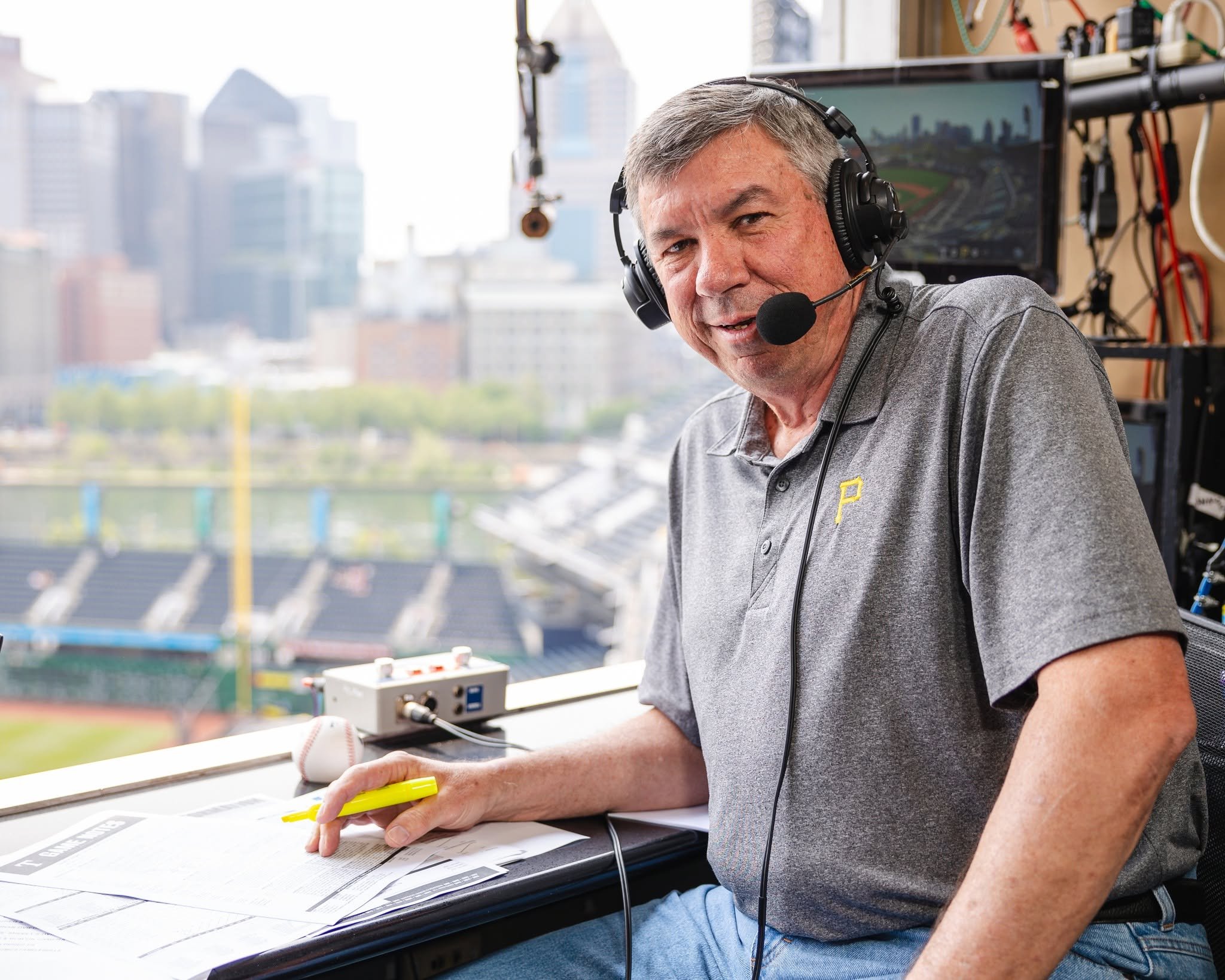
Robby Incmikoski: All right, here we are with Bob Walk. Hey Bob, Sid Bream's knee brace is on display at the Braves Stadium in Atlanta. What memories do you have from that game? Does anything stand out when you remember from that game, Game Seven in 1992?
Bob Walk: There are a number of things that kind of stand out. I thought we could have had a bigger lead at the end of that ball game than just a two-nothing lead. There's all kinds of little reasons that we didn't win. I've never seen a better defensive second baseman than Chico Lind, and he had a defensive mess-up in that inning. It just wasn't to be.
For Sid to cross home plate with that winning run—it's just the way I guess it was meant to be. It was fate. Sid was a really good friend of mine. Still is a good friend of mine to this day. He was a neighbor, in fact—he lived only about four or five houses down the street from me there in Pittsburgh. That whole winter, I had to drive by and wave to him all the time, which was kind of odd. I think people get a kick out of that.
He's lived in the Pittsburgh area his whole life, and he's just a wonderful person, good man. As far as that game is concerned, he's the guy that scored the run. And it didn't have to be like that—he could have stayed in Pittsburgh, but I don't think the Pirates wanted to go the extra mile and keep him at first base. So that's why he was with Atlanta to begin with.
Robby Incmikoski: Sid did say that in my interview with him. You threw a complete game earlier in that series, Bob. How do you describe the intensity of that series? What was that like with those two really good teams?
Bob Walk: Being in an old-fashioned, circular stadium, the noise is just incredibly intensified. I can remember people jumping up and down in the stadiums on the seats, and you can see the whole lower bowl just shaking and moving up and down where they're jumping. And you could feel it in your chest.
I don't know if I've ever felt intensity like that anywhere else—even back in my Philly days with the World Series, nothing was like that. Atlanta was a little bit like that too. I had pitched a game earlier coming in relief—can't remember what game it was at Atlanta. It might even have been the year before that, as we played them two years in a row there.
I can remember they were doing the tomahawk chop, and I was out there and Sid actually was at the plate at that moment. It was a bases loaded, three-two count. Sid was up. They were doing the tomahawk chop, and I just walked back off the mound and looked all around the stadium and stared at it, because I remember thinking, "I'll never be in this kind of a position again for the rest of my life."
These are the kind of things you dream about as a kid. So I just felt the moment, remembered it in my mind. Sid ended up popping up to end the inning. But those are the kind of memories you have of being in those situations and competing and being out there on the field. Win, lose, or draw, it's those memories that mean more than anything else.
Robby Incmikoski: No doubt. I think a lot of people have shirts around that say, "Sid Bream ruined my childhood" and that kind of thing. What was the vibe like around the team after that series? Obviously, it was very disappointing. We know that, but those teams were really good, Bob.
Bob Walk: We lost Bonilla and Smiley the year before, and now we were going to lose Bonds and Drabek. I think in that clubhouse afterwards, everybody knew that this was the last hurrah—that we weren't going to be able to move forward with the quality players that we had lost over those two years. Without Bonds and Drabek, a Cy Young Award winner, it was just going to be impossible to duplicate what we had done in the prior three years.
So it was a little sad—dead silence. Nobody ever said a word. It was just totally quiet, and all you could hear was the shower room, all the showers on, and that was it. Nobody was saying a word to anybody.
That's another one of those memories that I always will have. Good or bad, it doesn't matter—these memories are of your life, things that you've experienced, and you'll never go through again. The way that clubhouse was at the end of the game was another one of those thoughts that will always stay with me.
What's really weird is this has never happened to me before in any baseball situation or after, but for the next couple of months after that, I would wake up in the middle of the night dreaming about that game. That's never ever happened to me about any ball game or any season ever in my life, but that one really stayed with me for a while.
Robby Incmikoski: Why do you think that is, Bob, for a guy who pitched as long as you did and broadcast as long as you have in the game?
Bob Walk: I think it was because it was the end of the road for us. I was 37 years old. That was my last shot of getting back to the World Series. I knew that, and they hit me pretty hard.
Robby Incmikoski: That's incredible insight. Can we just discuss Sid for a minute? He's such a wonderful, kind man, and I think he's misunderstood, but he's made his home in Pittsburgh, right? He's just such a good—
Bob Walk: Misunderstood? He's not misunderstood.
Robby Incmikoski: All he did was play the game hard. He didn't do anything else. He ruined my childhood.
Bob Walk: No, I mean, that's just kind of like a joke. That's nothing. There isn't a single true baseball fan that has any animosity with Sid Bream. Sid Bream played the game the way it's supposed to be played. Always had. It didn't matter what name of the city was on the front of his uniform. He gave it everything he had, whether it was Pittsburgh, Atlanta, that didn't make any difference. That's just the type of baseball player he was.
The reason he had that brace on his leg is because he tore his knee up playing hard for the Pittsburgh Pirates—playing hard for Pittsburgh fans. That's why he had the brace, because he played as hard as he could for Pittsburgh. So hard he tore his knee up doing it.
Robby Incmikoski: How good of a teammate was he?
Bob Walk: He was a great teammate, one of the best you could have. And he was a good man—those always make the best teammates. Now, was he the most talented player to ever play the game of baseball? No. He was talented, but not really at a superstar level. But as a human being, as a person? Yeah, he was more of the superstar-type person.
Robby Incmikoski: Where were you on that final play, when Francisco Cabrera hit the single?
Bob Walk: I was in the bullpen warming up.
Robby Incmikoski: What was your view?
Bob Walk: Just standing there in the bullpen. The bullpens back in those days were kind of on the field, almost down in the left field corner. So the base hit was to left field, so I had a pretty good view of the play. But obviously the plate was a long way away.
I can remember the thought of it being over. There's nothing you can do. It's not like there's a clock where you could call a last-minute timeout or maybe have a shot at a Hail Mary or something. No, in baseball, when the home team scores that final run, it's over.
Robby Incmikoski: Everybody leaves the field.
Bob Walk: Back then, I don't think they used the term "walk-off." But that's just—it's just over.
Robby Incmikoski: Hey, last thing, how crazy is it? I talked to Sid about this. You see baseballs, bats, cleats, jerseys—you see all kinds of things on display. But a knee brace from 33 years ago is still on display at Truist Park. How crazy is that?
Bob Walk: Well, it was a huge moment in Braves history. I mean, this was before they put together that amazing string of division titles. This is when they were just getting started. That was a crazy moment for the Atlanta Braves. They hadn't dominated like they were destined to. And so that was one of the most important pieces of history that organization ever had, especially after that moment.
Robby Incmikoski: That is crazy.