
Sam LeCure (Transcript)
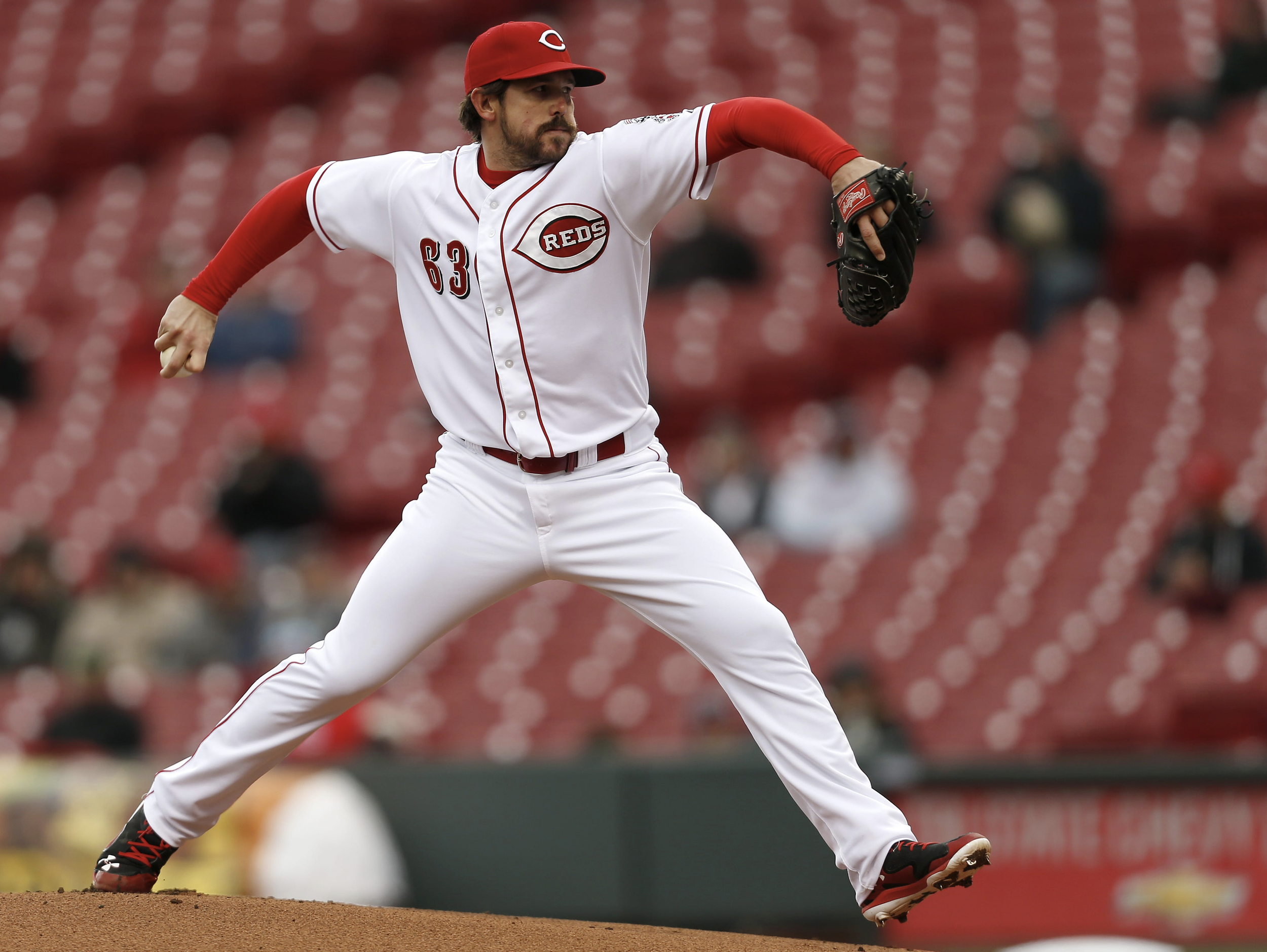
Robby Incmikoski: Sam, I hope you're proud to be interview number 56 for this book. We're getting about 130 total.
Sam LeCure: God, I'm honored.
Robby Incmikoski: I got Jordan, remember George Kontos. He said two o'clock. I'll talk to him about San Francisco. And I got Joe Musgrove tomorrow and Tony Watson on Wednesday, and Jeff Nelson, another umpire. So some good stories.
Sam LeCure: I've got a great tidbit about San Francisco too, but whatever.
Robby Incmikoski: We'll get to that in a minute. All right, I want to talk first of all about Cincinnati. That place is known for giving up a million homers, right? When you're a relief pitcher, you're coming in for high-leverage situations, they might be putting in a pinch hitter against you whose only job is to hit a homer—that's all he's there to do. What kind of awareness do you have to have, calling that your home ballpark, knowing how many homers it gives up?
Sam LeCure: I thought the big difference about Cincinnati was opposite field. For the right-handed hitter, the way that the stadium's constructed, there is a gap. If you assume that home plate to dead center field is twelve o'clock and home plate is at 6 o'clock, at seven or eight o'clock above there on the second level, there's a gap. That creates an airstream that goes out to right field.
Robby Incmikoski: Yeah, we're talking about—I know exactly where you're talking about. By that Budweiser sign.
Sam LeCure: For me it was always trying to limit pull-side power. If you're gonna make them beat you to the big part of the ballpark... In Cincinnati that was a little bit of a tricky deal because that was the way the ball carried. I mean, you can just mishit balls out of there.
So I was aware of it. I mean, I was always trying to keep the ball on the ground and I did a pretty good job of that. So as far as the home run ball, I'm sure I gave up several of them there. I've tried to forget about it. But I didn't want the elements to affect me because they were uncontrollable. I mean, you hear ballplayers talk about controlling the controllables. The weather was something I didn't have anything to do with. Father Time and Mother Nature are both undefeated, you know what I mean? So I was like, I can't worry about that because it might be different in Wrigley Field where the wind's going to be swirling, and that has a different effect on your pitch.
I didn't let that get into my head because I like to keep that baby as empty as possible—my head—while I'm out there trying to pitch. Just like the name on the back of the jersey, the ballpark—that was not a consideration for me, really.
Robby Incmikoski: You raise an interesting question, and I know this having worked in the game—and obviously you played the game. Can you give fans a perspective on how relief pitchers specifically prepare? Starters know they're starting a game, they're gonna face the lineup twice, maybe three times if they go longer. When you're a reliever, you start to look out an inning ahead of time or two innings ahead of time. The bullpen coach comes up to you like, "Hey, all right, if one of the first two batters reach base next inning, you're gonna face Stanton and Judge, you're gonna face Ohtani and Freeman—these are your guys." Can you tell us a little about what the planning is like? Sometimes a pitcher might just run into a jam and all of a sudden you gotta get hot as quick as you can to get in the game. Can you explain the differences when you're sitting in the bullpen and what you have to pay attention to?
Sam LeCure: So I made it to the big leagues as a starter. My transition to the bullpen happened in the big leagues. So that's like learning on the fly. Knowing that I was going to be, I guess at that time, a bulk innings guy—I mean, I was ready from pitch one of the game. I was on call.
The typical format for how it was going to go for me was when the pitcher got to 75 pitches or the fifth inning—that was my cue to get moving around, get my body going. The great thing about our bullpen is, I wish it was because we had guys who got both lefties and righties out. So there weren't necessarily sections of the lineup that we were gonna be keyed in on: "Sam, you're gonna get these three righties. Sean Marshall, you're gonna get these three lefties." We got everybody out. Aroldis Chapman: "Jesus is up. You're right, you're our best bet." Sometimes it's whatever it was.
So we were fortunate—our starters were incredible during the time that I was there. It has certainly changed more nowadays to be specifically based on all the numbers they've crunched with spin rates and other analytics.
Robby Incmikoski: Spin rates, all that, yeah.
Sam LeCure: We didn't know anything about that. So nobody really considered it that way. It was like, "We got a lefty guy, you got your LOOGY (Left-handed One Out GuY)." He was going to get the lefties. Dusty was gonna wait for the biggest spot to use him. I mean, that was really it.
We had one LOOGY guy—it was Bill Bray—and he could only get lefties out. I won't say that, but that's what he was best at, right? He was the guy that if you had two outs, bottom seven, whatever, and they got their stud lefty coming up, it's gonna be Billy. Other guys floated a little bit, but they definitely now have made it more of a science as to who fits better. And now they have the three-batter minimum, which changes a lot of things about when you're gonna use your horses.
I was the swing guy or the long guy. So just for that fact, I was always kind of ready to go, which was exhausting a little bit. Because I felt like I had to be ready from pitch one through the last pitch. They might use my ass anywhere, which I loved—that was my favorite part about becoming a reliever. I was in tune, locked into every game because I had a chance to play every day versus a starter, who was only in every five days. In the days in between, you're in there hanging out with the boys, whatever it is.
Robby Incmikoski: Shifting gears slightly—I always admired this guy, watching the Pirates pitch against him, and it seemed like they could never get this guy out—what was it like watching Joey Votto day in and day out at his peak? How good of a hitter was he? He's one of the greatest in the game, in my opinion.
Sam LeCure: My gosh. I mean, I think for all of us, those peak years—it's pretty cool. It was easier for me to appreciate Andrew McCutchen, watching it from the end because I didn't see it every day. But then in hindsight, I'm like, you saw Joey every day, and it was every day. I mean, pop, patience, all the things, the bat control, the left hand, the opposite field homers. He's one of my favorite bat-drop guys. I'm not a big bat-flip guy, but Joey just kind of let it fall out of his hand. He was one of my favorite guys to watch hit homers. But Joey was incredible.
I'd say fans and former teammates have certainly got to know who this new version of Joey Votto is. I don't know who this guy is. I'm talking about the clown that he is now on social media or whatever.
Robby Incmikoski: Right. He's very active now. Was he like that as a player?
Sam LeCure: My God. Night and day. I'm like, who is this guy?
Robby Incmikoski: What was he like just getting prepped for a game? How would you describe his demeanor?
Sam LeCure: The laser focus. I think it was that there was no distraction. He wasn't trying to be popular on social media. He wasn't trying to do any of that stuff. And I said this many times, and I have not gotten a bunch of negative response because I believe people know what I mean when I say this: The greats are a little bit of an autistic savant. And I think Joey is an absolute—you just have to be so locked on being great in all the nuanced things that go into that. I mean, the diet, the stretching—every box is checked on those guys' list, and they're socially awkward because of it.
I mean, the superstars now are freed up a little bit, I think. Mookie Betts has a great personality. He's a guy that comes to mind. But most of those guys, I mean, they're really locked in and they're not—I mean, greatness, there's a price for it, obviously. I'm an idiot and I never shut up. So I just wasn't gonna be great. I was too busy talking. Those guys shut up and they would work in the cage, right?
So the demeanor was certainly lead-by-example, not a very vocal guy. We'll put it that way.
Robby Incmikoski: Your manager for a number of those years was Dusty Baker. You had Joey as your best player on that team and Dusty, who's going in the Hall of Fame eventually as your manager. What was that dynamic like at Great American Ballpark?
Sam LeCure: I think that it was such a great yin and yang because Joey was very quiet, very focused. Dusty was having the chillest time of all time. It was like when the Dos Equis commercials were coming out—"the most interesting man in the world." Dusty was absolutely, truly the most interesting person I've ever met.
I think Dusty understood how to handle greatness, I guess. I mean, you've seen Dusty's career—man's coached a lot of superstar players: Barry Bonds, Sammy Sosa—I mean, the list goes on forever. And he played with them. We're going to Atlanta and Hank Aaron's coming in talking to Dusty. And Willie Mays. It's like, dude, they're coming to see him.
So I thought that Dusty understood how to handle greatness from being around those players all the time. And I think that Dusty had a huge impact on everybody that he was around, which is why he's so beloved across the game, like you said. He had something for everybody. Dusty's kind of a chameleon—he understood the language of the street and the language of the penthouse, if you will.
Dusty could speak anywhere in between. But understanding the price that greatness demands, I think Dusty really understood and was able to bring that out of Joey by loosening him up a little bit and putting Joey's mind in different places than it had been. And maybe getting it away from some of the real finer points of baseball, but more toward some of the chill stuff—"be a little cooler, bro." So it was probably something like that.
Dusty could speak that language because he knew it from everything that he'd been through—I mean, name it across the board: the racism, the things that Dusty had to go through, the World Series, the high five, all that stuff. So Dusty had something for everybody. To see those two feed off each other and the group as a whole kind of feed off of the different personalities—Dusty was the spider in the middle of the web that kind of brought the common piece of love.
Some teams will win ball games despite their manager because they hate him. People won ball games for Dusty because they loved him. He was the center of the wheel.
Robby Incmikoski: Everybody it's talked about him, they say exactly the same things that you just said about him. It's almost like a resounding opinion of Dusty from anybody who knows and has been around him.
Sam LeCure: Yeah.
Robby Incmikoski: A few more things—I'm gonna let you roll here. Your debut, your rookie year was 2010. Pretty good team you had that year, right? You guys were good. I'm not talking about the team's success or lack of success in the playoffs—I'm not going there. But what I am talking about: People don't realize—and I've been fortunate in my career, Sam, to have been at three opening days in Cincinnati, Ohio—there is no better opening day in Major League Baseball than Cincinnati, Ohio. So few fans know it. How do you describe the vibe, the energy of opening day, not only at Great American Ballpark, but around that city, down at Fountain Square and beyond?
Sam LeCure: So I had the fortune of standing on the foul line for a couple of them, and then once I got done playing, I was the grand marshal of that parade that runs through town. So I've got to see both sides. I always wondered while I was playing—everybody's talking like, "What a great opening day this is." We're in the clubhouse just getting ready to play a ball game, so it's hard to understand what it is.
But then as the year plays out, and you see the difference between that one day versus some of the other days throughout the year—I think that it's a pride factor for the city. I'd say that's what it is. Everybody thinks they have the greatest opening day, right? And they should, and I think that each city should be proud of that. The pride in Cincinnati is the fact that it's happened here more than any place else—the birthplace of professional baseball.
Robby Incmikoski: The entire city shuts down. I don't think people realize—not just the roads around the ballpark. There is a parade that runs through town. I remember one morning I had my alarm set for maybe 9:00 AM, and the game wasn't until 2:00 or 3:00 that afternoon. And I got woken up from all the noise from everybody being downstairs before my alarm.
Sam LeCure: Yeah.
Robby Incmikoski: I couldn't believe I got woken up by the noise.
Sam LeCure: Schools are out.
Robby Incmikoski: It was everybody fired up for opening day.
Sam LeCure: I mean, you probably could really loot the city because nobody is doing anything else but being a part of this parade. If you go a little bit outside of the parade grounds—don't write that, somebody's gonna get an idea.
Robby Incmikoski: I won't do that. Yeah.
Sam LeCure: But no, it is really neat. I think it's the pride of the city. The fact that baseball's been here longer than anywhere else—I think I'm pretty sure, you can fact-check me on this, but I think Cincinnati gets opening day every year for that reason, for being the oldest franchise.
Robby Incmikoski: No, that's correct. You're right.
Sam LeCure: I think that's a big part of it—they know every year where other teams it's gonna be intermittent. It's this year, yes; next year, no. Every year in Cincinnati, there will be an opening day, and I think that's really neat to be a part of. I'll say that.
Robby Incmikoski: What is the feeling like standing on the line as the anthem's playing?
Sam LeCure: Man, I wish I had bottled it better. I wish I wrote it down right after the fact. You see these guys in the grand slams and the Freddie Freeman the other day who blacked out. I don't know. And I'm like, how do you do that? The whole thing about baseball players is trying to slow the game down so it's not moving too fast for you, so you can process everything that's going on. I was good at that part of it, but taking in some of the moments that were notable—I said something about San Francisco...
Robby Incmikoski: Yeah, let's hear that.
Sam LeCure: That would kind of tie into it. It was my first playoff game in 2012, and Johnny Cueto goes out eight pitches into the game.
Robby Incmikoski: Yep.
Sam LeCure: Johnny Cueto won 20 games, probably should have won the Cy Young Award that year, and goes down eight pitches in. We're the number one seed, and I'm warming up on the game mound in San Francisco, my first playoff game. I remembered a snippet of it. I remember the feeling when the coach looked and pointed at me. I'm about to put some Copenhagen in my mouth, and then I've got to go out there.
Robby Incmikoski: Really. What year was that, Sam?
Sam LeCure: 2012. So I kind of remember some of it, but that's why I wish I had bottled the feeling of the moment better. So the question was about standing on the line in Cincinnati.
Robby Incmikoski: Yeah, yeah.
Sam LeCure: And I wish I would have bottled it better. I remember loving the anthems.
Robby Incmikoski: Yeah, of course, yeah.
Sam LeCure: The flyover—I remember. I never looked in the stands to find where people were that I left tickets for. My mom and dad came to all the opening days, but I remember feeling proud and thinking of them, kind of looking down and what a feeling that must have been for them, to see their boy out on the foul line of this gorgeous stadium.
Robby Incmikoski: Right.
Sam LeCure: I mean, it was a perfect blue sky day. It was chilly, but not too crazy. The sun was out. I'd say it was, by my guess, 53 degrees or something like that, maybe 55.
Robby Incmikoski: Yeah, yeah.
Sam LeCure: So you needed a jacket, which they probably had seven of them on. But man, that was such a gorgeous day. Couldn't tell you who played.
Robby Incmikoski: That's unbelievable.
Sam LeCure: But just the feeling of being out there and kind of seeing everything—the grass is green and cut, the dirt's perfect, the lines of chalk, the boys in their fresh whites...
Robby Incmikoski: Yeah.
Sam LeCure: It's like just the cleanest thing you can think of.
Robby Incmikoski: Let's shift over to the wild card game, 2013. That was the Cueto game. That's obviously the most famous game, shows how bad the Pirates are as a franchise. That's their most crowning achievement—and I love the Pirates. But they can't stop stepping on their own feet year in and year out.
Sam LeCure: They're good.
Robby Incmikoski: Yeah, I thought they were gonna make the playoffs this year.
Sam LeCure: They're about to get better too.
Robby Incmikoski: I thought this was their year to make a run with the three-headed starting monsters.
Anyway, Sam, that night—I mean, what was it like standing on the chalk as introductions happen and it's a blackout? Andrew McCutchen started it—he told everybody to wear black. When we landed from Cincinnati, actually—we played Cincinnati to end the season, came home, and then played them in the playoffs that year, if I remember correctly. I'm pretty sure we did.
Sam LeCure: Could be, could be.
Robby Incmikoski: That doesn't matter, irrelevant for the book. But what do you remember of the vibe that night? When those stands were packed 40 minutes before the first pitch was even thrown. Everybody was in their seat. That stuff does not happen in Pittsburgh, Sam. It just doesn't happen, and it hasn't happened since. So what do you remember about that night?
Sam LeCure: I mean, you have to remember that the fact that it's never like that, so it stood out. Immediately, Cincinnati and Pittsburgh—not being from Cincinnati, over the years I figured there's not a whole lot of love lost between the two cities. Football, baseball, whatever it is. They can have a basket-weaving competition—I'm sure somebody from Cincinnati would hate somebody from Pittsburgh.
But maybe the season before, but definitely that season, if you go look at the hit-by-pitches, do a little bit of that research...
Robby Incmikoski: I remember that—Jared Hughes, Brandon Phillips.
Sam LeCure: And I think that's the foundation of that game. It was like, this was a rivalry. We had respect, but also plenty of bad blood.
Robby Incmikoski: Yeah. And two really good teams at that time.
Sam LeCure: I think. But that's how Clint Hurdle was. "We're gonna protect our guys."
Robby Incmikoski: Yeah, no doubt.
Sam LeCure: There wasn't a lot of brawling, but there was a lot of answering the call. So you get in there and you know that it's gonna be hostile because if anybody in that state has been watching all year, they know that they hate Cincinnati, even if they haven't watched Cincinnati play.
Robby Incmikoski: Right.
Sam LeCure: And it's a full house, and everybody kind of raves about that stadium, how beautiful it is. Of course, it's a beautiful stadium. It's even more beautiful when it's packed and everybody there hates you. So that I remember definitely—the hostility of the crowd, as guys are introduced on the loudspeaker. "Here's the really important players to hate: Joey Votto, Brandon Phillips, Shin-Soo Choo. God, what a top three. Jay Bruce—how the hell did we lose anyway?"
Robby Incmikoski: Zack Cozart—you had some good teams.
Sam LeCure: Yeah, we were good.
So we get through, and Liriano, I think it was, who was pitching.
Robby Incmikoski: It was, yeah.
Sam LeCure: He was always really, really hard on everybody, especially because it was Votto, Bruce, and Choo. Joey and Shin-Soo could handle the lefties pretty well. Jay struggled against them, I feel like, for the most part. But Liriano was tough on us. I'd love to look at his career numbers against the Reds, but he felt like Larry Ace. It felt like every time it was six and a third, nine strikeouts, three hits and a run. Maybe we scratch across a run because somebody kicked a ball on the infield.
Robby Incmikoski: Right, yeah.
Sam LeCure: So I felt like he had it going pretty well. The momentum's definitely with them because of him and the crowd, and then they started getting on Cueto, who hadn't pitched in a little while. He was hurt.
Sam LeCure: And had maybe made one start before the regular season ended. And then that one, or maybe not at all, maybe he hadn't pitched in a couple weeks.
Robby Incmikoski: I can look.
Sam LeCure: Take a look at that. It was something along those lines. And Dusty gives him the ball, and I don't think anybody really disagreed with putting Johnny out there. We felt like he could handle the moment.
And I know in hindsight, the narrative is going to be—because he dropped the ball while they're chanting his name—that it was in his head, and he didn't win. I think it was a Russell Martin home run that was the big crack.
Robby Incmikoski: It was, yep.
Sam LeCure: So some of this I do remember, which is surprising.
Robby Incmikoski: You're verbatim—you're 100% right on all that.
Sam LeCure: I remember feeling, while in the bullpen seeing this go on with Cueto and then him drop the ball, I don't think—it just was bad timing. He wasn't affected by the crowd chanting his name. It just happened to have—that's how I felt in the moment. I was like, "That sucks. It looks like he's rattled." Did everybody else?
Robby Incmikoski: Right.
Sam LeCure: Then you get the benefit of hindsight a little bit like, maybe it was a pretty hostile environment. But you could definitely feel when the ball dropped, because the crowd and the Pittsburgh team probably were looking at it through a different lens, and they were like, "We got him." So you could feel the momentum shift. As the ball's in the air about to drop, during the Cueto thing, I felt a shift.
Robby Incmikoski: Where were you? Are you talking about as the ball is headed toward the left field wall, or...?
Sam LeCure: No, I'm talking about when the ball falls out of his glove.
Robby Incmikoski: When he dropped it on the mound?
Sam LeCure: He's rubbing it down, before the home run, wasn't it?
Robby Incmikoski: Where could you see everything from your viewpoint? I mean, do you remember where you were sitting and all that?
Sam LeCure: Yeah.
Robby Incmikoski: What was it like sitting in that bullpen as they start going "Cueto, Cueto"?
Sam LeCure: It's cool. Dude, like, it's good. You want to be hated there because that's how rivalries are. There aren't really rivalries anymore—like talking about, there's the LA-Yankees series going. That's not a rivalry, it's historic franchises. It doesn't feel like there are real rivalries anymore because everybody's out there patting each other on the ass in center field before the games. I wouldn't talk to my college teammates that were on the field in the big leagues—I want to kick your ass. I love you later, but I'm gonna kick your ass now.
During those times, it was a real rivalry, and I think the sport was better. I mean, the game is in great shape right now, but yeah.
Robby Incmikoski: No, I know I get your point. Yeah, I know where you are.
Sam LeCure: So it was cool. I love their energy. I mean, as an opponent, if you're able to accept it, harness it, and put it back to good use, it could be a real big boost for you.
Robby Incmikoski: No question about that. A hundred percent. Now, when Johnny drops the ball, he gives up the homer... Just to be clear.
Sam LeCure: What's the score at that point?
Robby Incmikoski: I'm gonna tell you that right now.
Sam LeCure: I don't even know what the final score was. It felt maybe 6-2 or something.
Robby Incmikoski: You're right—bingo, 6-2 final. So when Russell hit that homer, that was in the second inning. Marlon Byrd led off the game with a homer. In the second inning, Pedro Alvarez lined out, and then Cueto dropped the ball, and then Russell hit the homer after that. So that made it 2-0, and that kind of got the energy going.
Sam LeCure: I don't feel like Johnny dropped the ball that early. I didn't feel like it was still—I don't know. Okay.
Robby Incmikoski: Yeah, that's when the homer, the bomb happened. I just double-checked the video—bottom of the second.
Sam LeCure: I don't remember. So he dropped it and then the home run. Yeah, I guess it happened. I mean, it was in that order.
Robby Incmikoski: Yeah.
Sam LeCure: Okay, so 2-0 early.
Robby Incmikoski: Yeah, it was 2-0 early and then Pedro sac fly in the third, 3-0. And then Jay Bruce singled, 3-1. Neil Walker singled, and then Marlon Byrd grounded out—so it's 5-1 at that point. Russell hit the other homer off Logan Ondrusek. That's what happened.
Sam LeCure: I get it now.
Robby Incmikoski: That's exactly right. And that's exactly what it was. I'm trying to find out when you pitched.
Sam LeCure: I worked backwards. I feel like Johnny came out and then who came in? I felt like I came in the eighth because they went to Marshall, Broxton, somebody.
Robby Incmikoski: Yeah, I'm looking at it right now. One pitch in the eighth. I just looked at the video real quick to confirm that.
Sam LeCure: Okay.
Robby Incmikoski: What was it like—as the game's playing out, the energy is building, and this place is about to erupt after 20 straight losing seasons? Once again, don't print this, Kyle—shows what an absolute disaster of a franchise they have been that this is their crowning achievement. As the main TV reporter for that team, I'm saying that. Believe me.
Sam LeCure: Yeah.
Robby Incmikoski: So when you're going into the game, what was it like pitching at that point in time when everything was just building, Sam? What do you remember about that appearance amongst all the others in your career?
Sam LeCure: As far as a feeling, nothing. Because I tried—every workout that I did, everything was based on Game 7 of the World Series. I had the lowest walk rate with the bases loaded in my career. And that's how I always thought—it's gonna be bottom of the seventh, bases loaded, Chapman doesn't get it done, and I'm the one called in. Every pitch I threw was—I remember the two games where I kind of just thought I'd throw my hat out there and it was gonna go my way, but otherwise, I treated everything the same. So there was nothing different about this.
I felt I wanted to create momentum if I could—somehow have a nice inning, punch out the side. No pressure on it to do it, but it'd be nice to go out there and help us light a little fire under our ass. I remember the people on me, and then a ball gets up and hits McCutchen in the shoulder.
Robby Incmikoski: Right.
Sam LeCure: With the history of what had gone on throughout the year, I didn't know how that was gonna go as far as fighting, because we're fighting for our lives and I don't want it to turn into an actual fight. So the crowd is on me, Clint Hurdle's out there, I think maybe they immediately warned the dugouts after that happened. God, this has got to be the right game, right?
Robby Incmikoski: Yeah.
Sam LeCure: Is this right or not?
Sam LeCure: Clint comes out, I think they warned both sides. And Clint's all pissed off about it because he doesn't get a chance to retaliate. He's got a five-run lead at the time, so he can go out there and retaliate if he wants to, and would have, I'm sure. But I kind of immediately saw this thing as having the potential to get out of control because of the crowd.
The crowds don't understand what an impact they can have on the game one way or the other. They can—when they start booing on a ball-strike call, and their hitter turns around—and he gets more animated because he feels like, "I'm telling you, you'll pay attention to it."
Robby Incmikoski: Right.
Sam LeCure: And then the guy's like, "What the hell," and it snowballs. So I felt just because of the crowd energy, Clint was pissed off—I wanted to make sure that the Cincinnati Reds kept their head on straight in that moment. Let's not let this thing get out of hand, we can't afford to be doing this.
I go right over to Andrew and I'm like, "Hey, you good?" which I never would have done because, one, I did not try to hit him on purpose, and two, I think him being... I'm no leader of my team, I mean in a tiny way maybe. But I wanted to make sure that we stopped this before the crowd allows everybody else to get too excited and somebody says something stupid. And here comes somebody coming out of a dugout, and it gets worse. Let's make sure we stick to playing baseball and honor the game by getting it done.
"You're good? My bad. Let's go to work." And Cutch, I think, even said to somebody after the game, "I don't know if anybody's ever done that, come up and checked on me after they hit me." Because usually, I don't want to give a damn.
Robby Incmikoski: Yeah, so that would have been another game. I'm looking at it—you didn't hit him in that game. He flew out to center field.
Sam LeCure: That's why I asked. I was like, "God, that can't be right?"
Robby Incmikoski: No, that was a different game. I just checked. So Neil Walker—you had a seven-pitch at-bat, he singled. Cutch flew out on the first pitch, and then you got Morneau to ground into a double play to end the inning.
Sam LeCure: That was in the wild card game?
Robby Incmikoski: Yes, single, fly out, double play. You threw nine pitches.
Sam LeCure: Yep.
Robby Incmikoski: That's crazy because I remember that happening but I don't remember it happening that night because there were so many tensions when the Pirates played you guys.
Sam LeCure: Yeah, that's why I'm saying. And when I was—which is why I was going through this, I'm like, "Wow, I'm surprised I remember that because I kept thinking all my life I thought that that was that game." Because they all run together, but it was another night like that where it was a big crowd. It felt like that type of atmosphere.
So as far as the inning goes, obviously, I knew I faced Cutch. And I think that's what threw me off. And I actually got him out, which threw me off, too.
Robby Incmikoski: Yeah, you did.
Sam LeCure: I didn't remember Justin Morneau was on that team.
Robby Incmikoski: Morneau was a trade deadline acquisition. Yep.
Sam LeCure: It's the beauty and the curse of the reliever brain. Because the fact that I remember everything else about that game except my part in it.
Robby Incmikoski: Amazing. I love it, man.
Robby Incmikoski: Which is so wild and I love it. That really is wild.
Sam LeCure: If I'd given up runs or hits, I can guarantee you I would remember it. But the fact that it was such a non-descript inning—I was in and out of there. But that's a bummer.
Robby Incmikoski: That's great.
Sam LeCure: That would have been cooler if it was the other part of the story.
Robby Incmikoski: Yeah, no, that would have made the story way better, but unfortunately that part of it...
Sam LeCure: I was at least good up until my portion of the story.
Robby Incmikoski: Hey Sam.
Sam LeCure: I remember, dude... and you can put it in there because it only came out—I've never liked in my life Matt Latos.
Robby Incmikoski: Hold on, wait—before you say that, can I guess? I think this is going to be the easiest answer ever. Brandon Phillips?
Sam LeCure: No. No, Matt Latos.
Robby Incmikoski: Really? Yeah. He had a cat named Cat Latos. I remember that too.
Sam LeCure: He had a wife that got put in PNC Ballpark jail that night.
Robby Incmikoski: Yes, that's right. I forgot about that.
Sam LeCure: So it sounds good to say: Pittsburgh won, we lost, and Latos's wife is in jail—the end.
Robby Incmikoski: That's right, I forgot about that. He had those tattoos that ran all like that.
Sam LeCure: And she did too.
Robby Incmikoski: Yeah, I remember that Sam. Holy cow.
Sam LeCure: I mean I got no idea that I even pitched in this game, but I remember that.
Robby Incmikoski: And you remember Matt Latos's wife. That's amazing.
Sam LeCure: I remember that.
Robby Incmikoski: My God. All right brother, I'm gonna let you roll man. I appreciate you, Sam. Thank you for doing this. This is tremendous. This is great.
Sam LeCure: Yeah, of course. I look forward to getting a copy of it.
Robby Incmikoski: Yeah, you will.
Sam LeCure: I can read picture books.
Robby Incmikoski: Dude, this one's gonna be all right. It's a lot of stories that are going with it.
Sam LeCure: Yeah, it's cool.