
Jeff Francoeur
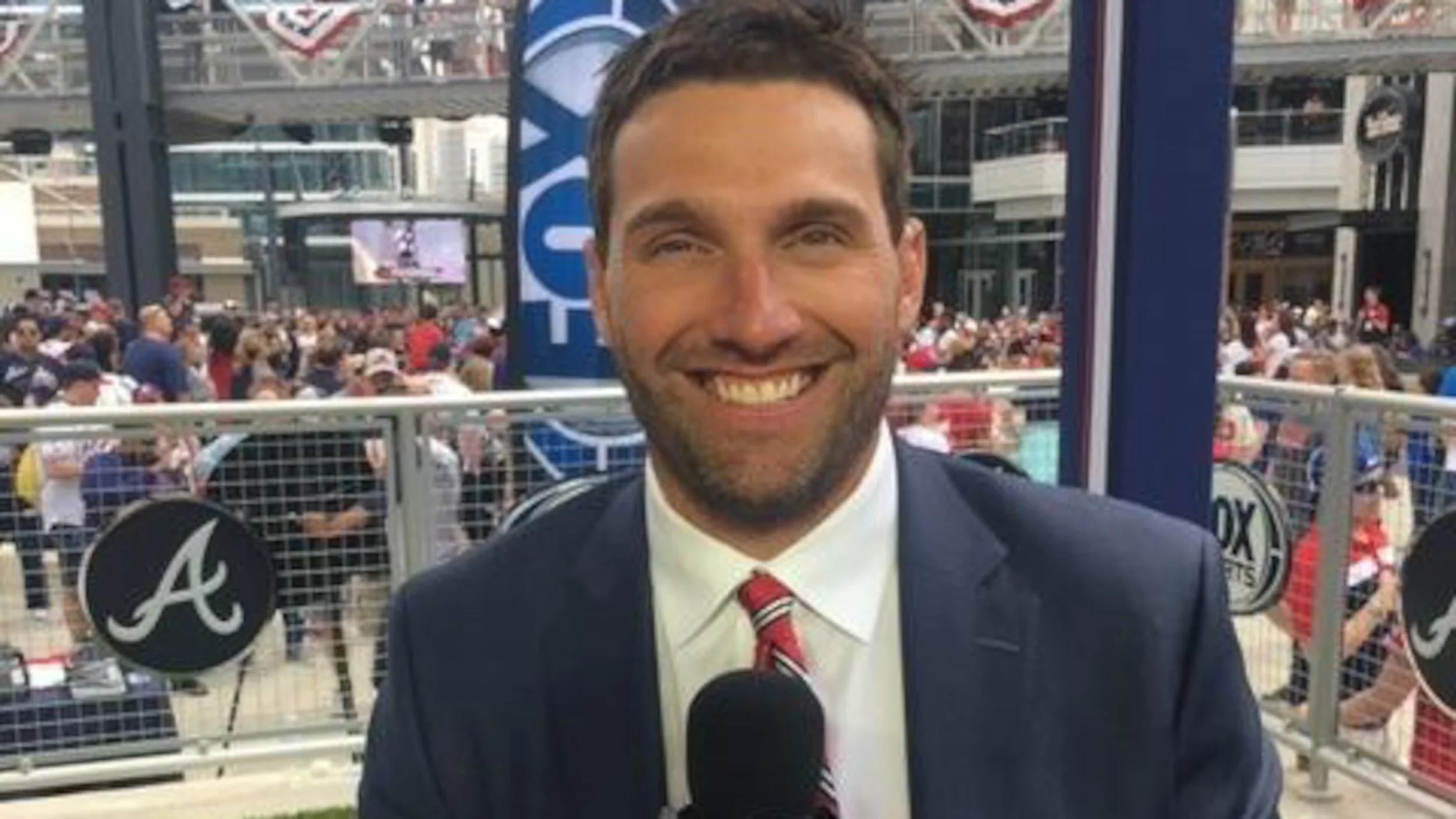
One question I seem to ask in every city is, What makes this ballpark feel like home? Jeff Francoeur answered it by talking less about the ballpark itself and more about generations. He remembered growing up watching Maddux, Glavine, Smoltz, Chipper, and Andruw. Then he talked about today's kids growing up with Acuña, Albies, and Riley—including his own. Somewhere in between, he admitted something that almost every retired player eventually tells me: he wishes he'd slowed down long enough to appreciate it. That's what fascinates me. Ballparks don't just hold baseball games. They quietly hold entire childhoods.
Jeff, if someone has never experienced Truist Park, how would you describe walking through The Battery and into the ballpark? What makes that experience so different from anywhere else?
What I love most is that Truist Park was built to be a baseball park. Turner Field had originally been an Olympic stadium that was converted for baseball, but Truist was designed from day one with baseball in mind. You feel that immediately. The Battery has become this incredible gathering place where families can spend the afternoon letting their kids run around, couples can have dinner before the game, and younger fans can stay long after the final out enjoying the nightlife. They didn't just build a stadium—they built a destination that people want to visit all year long, even when baseball isn't being played.
Once you walk into the park itself, you realize how thoughtfully everything was designed. There really isn't a bad seat in the house. Even the upper deck feels close to the action because the seating bowls are stacked almost on top of the field. My wife and kids actually prefer sitting in the 200 level because you can see everything. That's rare in a modern stadium. The Braves managed to create premium experiences while still making ordinary fans feel like they're part of the game.
One of the ideas behind this book is helping fans who dream of visiting all thirty Major League ballparks. If someone were coming to Atlanta for a weekend series, what would you tell them?
I'd tell them to make it a weekend because that's really how the place was designed. You can park your car on Friday afternoon and honestly not need it again until Sunday when you're heading home. Between the hotels, restaurants, bowling, Topgolf, mini golf, live music, bars, and everything happening around The Battery, there's always something to do. If you leave the game early, there are giant video boards outside where you can keep watching. If you're traveling with kids, they'll never run out of things to do. If you're coming with friends, you'll find plenty of places to spend the evening after the game.
What impresses me most is that it's welcoming no matter who you're rooting for. Braves fans are passionate, but Atlanta has always been a friendly baseball town. Visiting fans aren't treated like outsiders. They're encouraged to enjoy the whole experience, and I think that's one of the reasons people leave with such a positive impression of the city.
You retired just before Truist Park opened. You finally walked in as a fan instead of a player. What was that experience like?
I remember walking through those gates and immediately thinking, I should have played one more year. Brian McCann said exactly the same thing the first time he saw it. It really is that impressive.
At first I wondered if I'd miss being on the field, but now I honestly enjoy experiencing the park with my family. My kids love it. They have as much fun before and after the game as they do during it, and that tells you something about what the Braves created. Baseball becomes the centerpiece of an entire day instead of being the only event.
How much does having a consistently competitive team affect the atmosphere inside a ballpark?
It makes an enormous difference because every generation deserves a team it can fall in love with. I grew up watching Greg Maddux, Tom Glavine, John Smoltz, Chipper Jones, Andruw Jones, and all those great Braves teams of the '90s. We were spoiled.
Now today's kids have Ronald Acuña Jr., Austin Riley, Ozzie Albies, Matt Olson, Spencer Strider, and the players who won the 2021 World Series. That's how baseball keeps renewing itself. Every generation gets its own heroes, and those players become the memories kids carry for the rest of their lives. You couldn't ask for a better time to grow up as a Braves fan.
You grew up cheering for the Braves, then became one of them. Looking back now, what does that journey mean to you?
I wish I'd slowed down and appreciated it more while I was playing. When you're twenty-two years old, you're worried about performing every night. You've got family in the stands, friends in town, expectations you put on yourself, and you're constantly thinking about the next game. Looking back now, I wish I'd taken more time driving into the stadium to simply realize how fortunate I was.
Now, as a broadcaster, I pull into the same parking lot, hear fans yell "We love you, Frenchy," and it hits me differently. I realize how blessed I've been. Very few kids get to grow up rooting for their hometown team, play for that team, and then continue telling its story after retirement. Baseball gave me my career, my friendships, my family, and now a second career. I don't take that for granted anymore.
What makes Atlanta such a great baseball city?
The tradition. The Braves have always believed, "Once a Brave, always a Brave." Alumni come back constantly because they genuinely feel like part of the organization forever. I've experienced that personally. Even after I stepped away from broadcasting every day to spend more time with my kids, the Braves found ways to keep me involved. That's not something every organization does.
Now I get to watch my children become fans of a completely different generation of Braves players. My wife bought all of them jerseys with my name on the back.
They won't wear them. They wear Acuña. They wear Ozzie. They wear Austin Riley.
And honestly, I love that. Because that's exactly what I did growing up.
~~~
More from Jeff Francoeur
NOTE: The above was edited for clarity and length.
You can read the full transcript here.