
Brian McCann
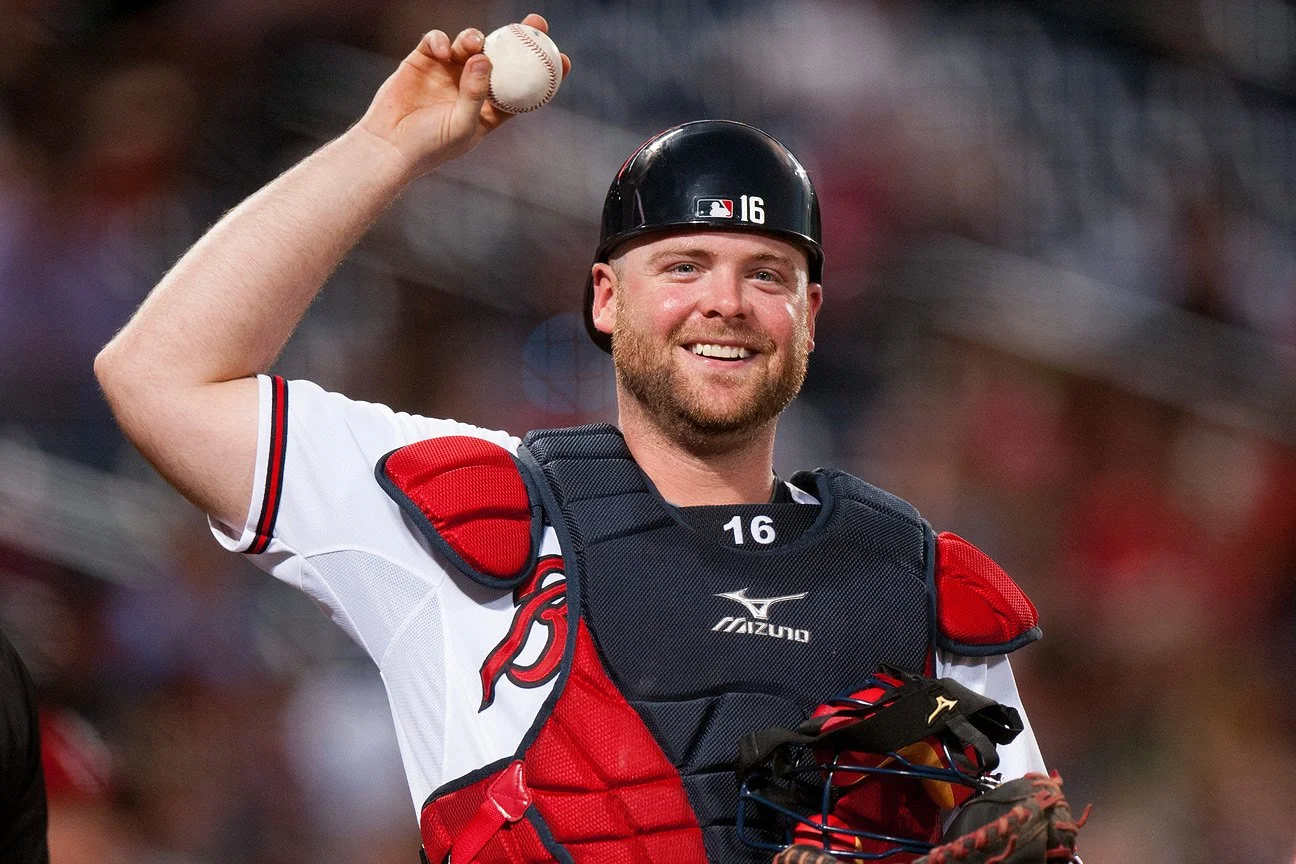
One of the questions I keep coming back to is this: How does a ballpark change when you stop seeing it as a workplace and start seeing it through your kids' eyes? Brian McCann gave me an answer I wasn't expecting. He talked about growing up dreaming of playing for the Braves, then living that dream for fifteen seasons, only to discover that some of his favorite moments came after retirement—watching his son react to a big hit and his daughter step onto the field for the first time. It reminded me that great ballparks don't just create players. They create the next generation of fans.
Brian, you grew up in Atlanta watching those great Braves teams of the 1990s, then spent your career wearing that same uniform. I've talked to guys like Jeff Francoeur, Joe Mauer, and Neil Walker about what it's like playing for the hometown team. What did that experience mean to you?
It was honestly a dream come true. I grew up a huge Braves fan, then got drafted by the organization I had rooted for my entire life. To make it even better, one of my best friends, Jeff Francoeur, and I went through every level of the minor leagues together. We played Low-A, High-A, Double-A, and then reached the big leagues in the same season. Those are memories you can never replace. My family was able to come to almost every game, and every night I looked into the stands I knew I had people there who had been part of the journey from the beginning. There really isn't a better feeling than putting on the uniform of the team you grew up loving.
You had the unique opportunity to play in both Turner Field and Truist Park. What stood out to you about the difference between those two ballparks?
I wish Truist Park had been built when I first broke into the league because I honestly think it's the best ballpark in baseball. There isn't a bad seat in the house. The backdrop is beautiful with the skyline and the Omni Hotel, you've got the Chop House in right field, and it feels like the fans are sitting right on top of you. As a player, you notice those things. Every ballpark has its own personality, but Truist has an energy that immediately stands out.
From a baseball standpoint, it fit my swing much better than Turner Field. Right-center field was always where I did most of my damage, and at Truist it felt like balls carried a little better. At Turner you really had to square one up to get it out to that part of the park. Beyond the dimensions, though, I think the fan experience is what separates it. A lot of organizations are trying to recreate what the Braves built there because they got so many things right.
Jeff Francoeur told me you can park your car on Friday at The Battery and not need it again until Sunday. Now that you've experienced Truist Park as both a player and a fan, what makes that experience so unique?
They've thought of everything. Whatever kind of weekend you want to have, it's there. There are restaurants for every budget, incredible hotels, places for kids to play, great food, and it's all within walking distance of the ballpark. If you want a five-star dinner before the game, you can have it. If you're bringing your family, there are plenty of things to keep everyone entertained. It never feels like you're simply going to watch a baseball game. It feels like you're spending the weekend around baseball.
I remember going back after I retired and just being blown away by how well everything fit together. The Braves have played winning baseball since the park opened, which certainly helps, but even if you're a fan of the visiting team, it's hard not to appreciate what they've created.
How much does a winning team change the energy inside a ballpark?
It changes everything. Fans invest emotionally when they believe their team has a chance, and as players you feed off that energy. There's nothing better than walking onto the field in front of a sold-out crowd that's completely invested in every pitch. It's a partnership. You have to play well enough to bring people through the gates, and when they show up and create that atmosphere, it gives you even more energy as a player. That's the environment every player wants to compete in.
Now you're experiencing Truist Park differently. You're not behind the plate anymore—you're sitting in the stands with your family. What's that transition been like?
Sometimes I honestly have to pinch myself. I'll sit there watching the game and think, I can't believe I used to do that. Baseball looks a whole lot harder from the stands than it did when I was playing. Going back fills me with pride because I know what it meant to wear that uniform.
The best part now is seeing it through my kids. My daughter recently got to go onto the field during a school trip, and watching her excitement brought everything full circle for me. When I take my son to games, I spend half the time watching him instead of watching the field. Seeing his reaction when someone gets a big hit or records a huge strikeout—that's where I get the most joy now.
What do you find yourself doing while you're watching as a fan? Can you actually relax?
(Laughs.) Not really. I'm still thinking like a catcher. I'm trying to figure out what pitch I'd call in certain situations, what I'd be looking for if I were behind the plate. That part never leaves you. But at the same time, I get to appreciate everything around the game in a way I couldn't when I was playing. Back then I was locked into competing. Now I can enjoy the atmosphere, enjoy being with my family, and appreciate what an incredible place Truist Park has become.
If someone has never been to Truist Park, what would you tell them?
I'd tell them they won't be disappointed. Whether you're traveling by yourself, with friends, or bringing your entire family, everything you need is right there. It's one of those places where you can make a whole weekend out of baseball. That's pretty rare.
You also spent three seasons in Houston. What do you remember about the atmosphere at Minute Maid Park during those great Astros teams?
It was incredible. Once the roof was closed and that place filled up, it became unbelievably loud. You could tell right away we had a special team because of the talent throughout the clubhouse, and once the fans got behind us, the atmosphere became electric. There are very few feelings that compare to walking onto the field for a postseason game with a sold-out crowd waiting for first pitch.
NOTE: The above was edited for clarity and length.
You can read the full transcript here.