
Marty Brennaman
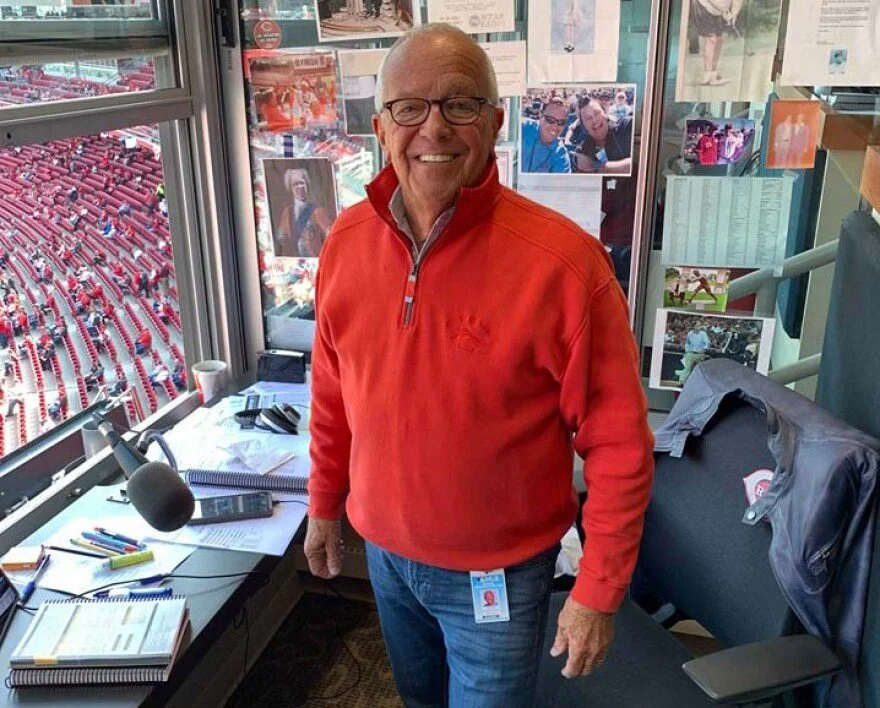
One question I seem to ask in almost every interview is, What makes this ballpark different? Marty Brennaman answered it in a way only someone who spent forty-six years behind the microphone could. He didn't start with home runs or championships. He started with history. He talked about responsibility—about learning the stories that came before him so he could pass them to the next generation. That's what I find myself chasing throughout this project. A great ballpark isn't simply where baseball is played. It's where the game's memory is preserved, one conversation, one tradition, and one Opening Day at a time.
Marty, you spent 46 years as the voice of the Cincinnati Reds. What did it mean to become part of the culture of the oldest professional franchise in baseball?
When I arrived in Cincinnati in 1974, I knew the Reds had an incredible history, but reading about that history and actually living it are two completely different things. Before I ever went on the air, I immersed myself in books, yearbooks, and everything I could find about the organization because I felt a responsibility to understand the franchise I was representing. As the years passed, my appreciation only grew. You begin to realize you're not simply broadcasting baseball games—you're helping tell the continuing story of the oldest professional baseball franchise in existence. That history becomes part of your everyday life, and after enough years you stop feeling like an outsider and begin feeling like one of its caretakers.
Did you feel a responsibility to connect today's fans with the generations that came before them?
Absolutely. One of the privileges of being a baseball broadcaster is that the game constantly gives you opportunities to connect the present with the past. A player reaches a milestone, a remarkable play unfolds, or a statistic appears that reminds you of something from decades earlier. I always tried to use those moments to tell stories about the players and teams who came before because that's one of baseball's greatest strengths. Unlike most sports, baseball treasures its own history, and every generation builds on the one before it. I wanted younger fans to understand they were becoming part of something that had been unfolding since 1869.
You spent your entire Major League broadcasting career with one organization. Looking back, what gives you the most pride?
More than anything, I'm proud that I stayed. There were opportunities to leave—including one that came very close—but every time I asked myself why I would want to go anywhere else. My affection for Cincinnati grew deeper every year. It wasn't just the baseball. It was the people, the community, and the way this city embraces the game. I honestly don't believe anyone born and raised here loves Cincinnati more than I do, and I arrived as a complete outsider. Looking back, staying with one franchise for 46 years remains one of the best decisions I ever made.
I've always believed there's no better Opening Day in America than Cincinnati's. After experiencing forty-six of them yourself, what made Opening Day here so unique?
Nothing else compares.
Opening Day transcends every other event the city hosts. It isn't simply the first baseball game of the year—it's a civic celebration. For many years, Cincinnati hosted the very first Major League game of every season, and that tradition became woven into the identity of the city. You have the Findlay Market Parade, children getting excused from school to attend the game, all the ceremonies before first pitch, and an atmosphere that begins hours before anyone ever throws a baseball.
I've experienced Opening Days throughout Major League Baseball, and I've never found another city that celebrates the game quite like Cincinnati. It truly is one of the great traditions in American sports.
One thing I've always admired about Great American Ball Park is how intentionally it honors Reds history. The riverboat, the smokestacks, the Crosley Field lights—everything seems connected to the past.
I think that's one of the things that makes the ballpark so successful. The people who designed it understood they weren't simply building another stadium. They were creating a home for baseball's oldest professional franchise, and they wanted visitors to feel that history the moment they arrived.
Every detail—from the riverboat to the smokestacks to the references to Crosley Field—exists for a reason. Someone visiting for the first time may wonder why those elements are there, but hopefully they're with someone who can explain the story behind them. That's exactly what baseball should do. It should invite people to learn about the generations that came before.
One person who's become part of that experience is Denise Thomas in the press dining room. How important are people like Denise to baseball?
Denise is one of my favorite people I've ever met in baseball.
She wasn't famous, but everybody knew Denise. Broadcasters, writers, executives, visiting teams—it didn't matter. She had a personality and warmth that made everyone feel welcome. We'd talk during the offseason, and then every spring we'd look forward to seeing her again on Opening Day.
Baseball creates relationships because of repetition. You play eighty-one home games, year after year, and the people behind the scenes become part of your life. That's one of the things that separates baseball from every other professional sport. The number of games allows friendships to grow in ways that simply aren't possible elsewhere.
For someone visiting Great American Ball Park for the first time, what would you tell them not to miss?
I'd tell them to make the ballpark only part of the experience.
Stay downtown so you can walk everywhere. Visit the bronze statues before the game, especially Pete Rose's, which I think is one of the finest sports statues anywhere. Spend time inside the Reds Hall of Fame and Museum because, quite honestly, I don't think there's another team museum in baseball that compares with it. If someone leaves Cincinnati without seeing it, they've really missed one of the greatest parts of the visit.
Then enjoy walking around the entire ballpark. Explore the concourses, take in the views, enjoy the restaurants around the stadium, and appreciate how everything works together to celebrate Reds history.
That's what makes Great American Ball Park more than just a place to watch baseball.
~~~
More from Marty Brennaman
NOTE: The above was edited for clarity and length.
You can read the full transcript here.