
Sam LeCure
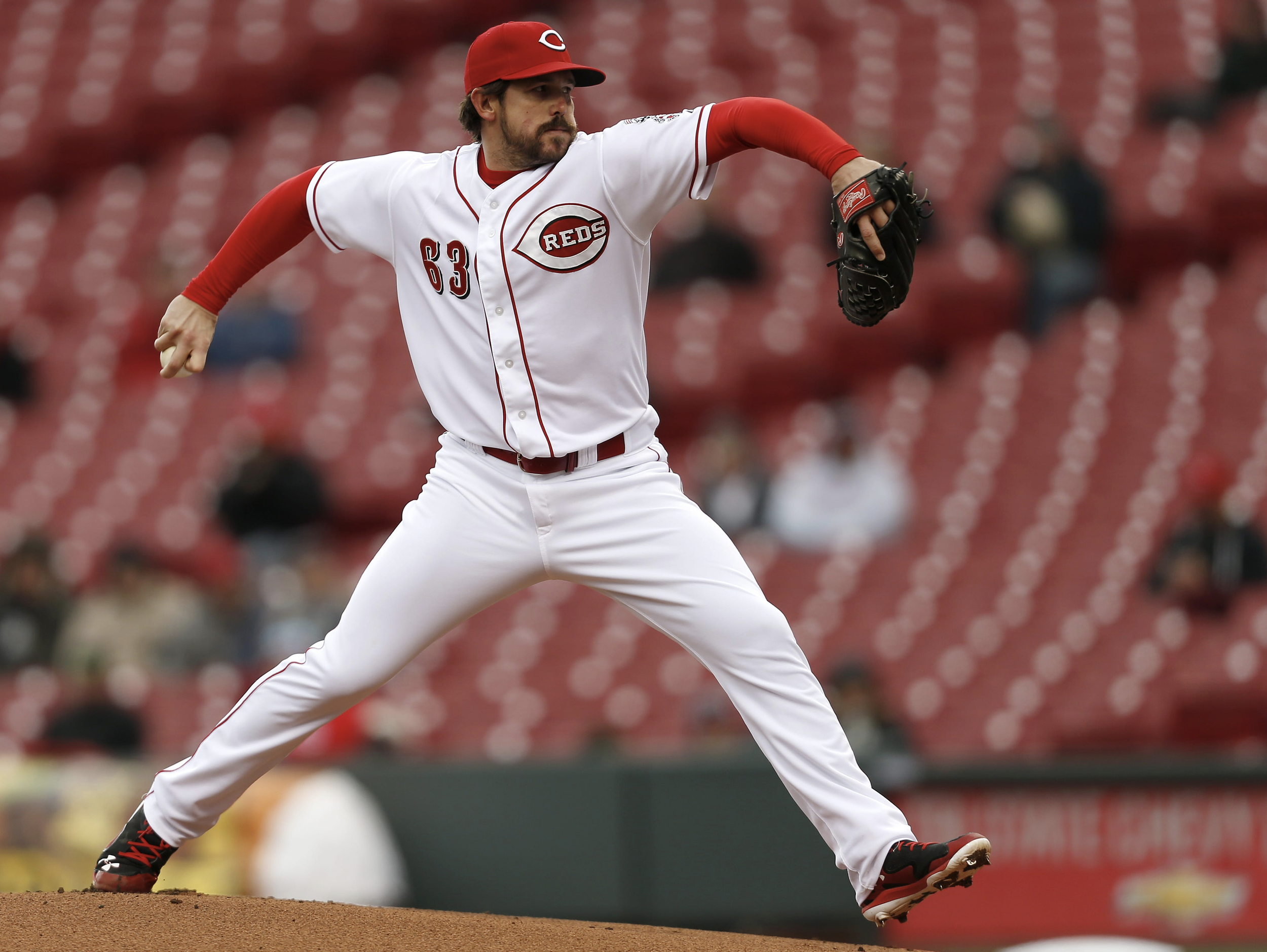
One of my favorite questions to ask former players is this: What do you actually remember? Not the box score or the statistics, but the feeling. Sam LeCure's answers reminded me that baseball memories rarely unfold the way we expect. He remembered the smell of Opening Day more than the score, the sight of fresh chalk more than the lineup, and the pride of knowing his parents were watching more than the game itself. That's the beauty of baseball. The biggest moments aren't always measured by what happened on the field. Sometimes they're measured by where you were standing when you realized your dream had finally come true.
Sam, Great American Ball Park has a reputation for giving up home runs, especially to opposite field. As a relief pitcher coming into high-leverage situations, how much did your home ballpark affect the way you pitched?
You were certainly aware of it, but I tried very hard not to let it become part of my thinking. The way the ballpark is constructed creates an air current that helps carry balls toward right field, and everybody knew that. I wanted to keep the ball on the ground anyway, so my approach didn't really change. One of the things pitchers learn is to control the controllables. I couldn't do anything about the wind or the dimensions of the ballpark, just like I couldn't control the weather at Wrigley Field or anywhere else. The minute you start worrying about things outside your control, you're already losing the mental battle. My goal was always to keep my head as empty as possible once I stepped on the mound and trust the work I'd already done.
Relievers prepare differently than starters. Can you explain what fans don't see when they're watching the bullpen?
Becoming a reliever in the big leagues was learning on the fly. As a starter, you know exactly when you're pitching. As a swingman, I felt like I had to be ready from the very first pitch until the final out because my phone could ring at any moment. Around the fifth inning or when the starter reached seventy-five pitches, I'd start getting loose, but mentally I never relaxed. It was exhausting, but I loved it because I had a chance to contribute every single day instead of every fifth day. Every game mattered to me because I might be part of it.
You shared a clubhouse with Joey Votto during the best years of his career. What was it like watching that level of greatness every day?
Looking back, I probably took it for granted because I saw it every day. Joey could do everything—power, patience, opposite-field home runs, unbelievable bat control—but what impressed me most was his focus. The Joey people know now on social media is completely different from the player I knew. Back then he wasn't interested in attention or distractions. Every ounce of energy went toward becoming a better hitter.
I've often said the truly great players become obsessive about their craft. Every detail matters—the workouts, the diet, the stretching, the preparation. Joey wasn't loud, and he wasn't trying to be the center of attention. He led by example because his commitment to greatness spoke for itself.
What was the dynamic like between Joey and Dusty Baker? They seem like complete opposites.
They really were, and I think that's why they worked so well together. Joey was intensely focused, while Dusty was probably the most interesting person I've ever met. Dusty had lived so much baseball history that he understood greatness better than almost anyone. He'd played with Hall of Famers, managed Hall of Famers, and knew how different personalities needed to be handled.
What made Dusty special was that everybody loved playing for him. Some teams win despite their manager. We wanted to win because of ours. He had a gift for connecting with every personality in the clubhouse, whether you were a superstar or the last guy on the roster. He became the center of everything.
I've been lucky enough to experience three Opening Days in Cincinnati, and I don't think there's anything else like it in baseball. What was it like standing on the foul line before those games?
I wish I'd appreciated those moments even more while they were were happening. As players, you're so focused on the game that you sometimes forget to soak everything in. Looking back, what I remember most isn't who we were playing or even what happened in the game. I remember standing on that foul line during the national anthem, seeing the grass cut perfectly, the fresh chalk lines, everyone wearing crisp white uniforms, and thinking about my parents sitting in the stands watching their son stand on a Major League field.
It was one of those perfect Cincinnati spring afternoons—blue sky, a little chilly, but absolutely beautiful. The flyover, the crowd, the energy throughout the city—it felt like the cleanest, freshest day imaginable. I couldn't have told you the score years later, but I never forgot that feeling.
People outside Cincinnati don't realize the entire city seems to shut down for Opening Day.
That's exactly what makes it unique. Every city is proud of its Opening Day, and they should be, but Cincinnati's pride comes from being the birthplace of professional baseball. The parade, the schools letting kids out, Fountain Square filling up before sunrise, everyone gathering downtown—that isn't manufactured. That's generations of people celebrating something that's part of the city's identity.
After I retired, I actually served as grand marshal of the parade, and seeing Opening Day from that perspective made me appreciate it even more. You realize it isn't just a baseball game. It's something the whole city shares.
You also pitched in the 2013 Wild Card Game in Pittsburgh. What do you remember about that atmosphere?
The first thing I remember is how real that rivalry felt. There was genuine bad blood between those teams, and the crowd reflected it. PNC Park is already one of the most beautiful stadiums in baseball, but when every seat is full and forty thousand people genuinely want you to lose, it becomes something completely different.
I actually loved that energy. Rivalries are supposed to feel that way. As an opponent, you don't resent it—you feed off it. The hostility, the noise, the anticipation before first pitch... that's what postseason baseball is supposed to feel like.
~~~
More from Sam LeCure
NOTE: The above was edited for clarity and length.
You can read the full transcript here.