
Joe Douglas
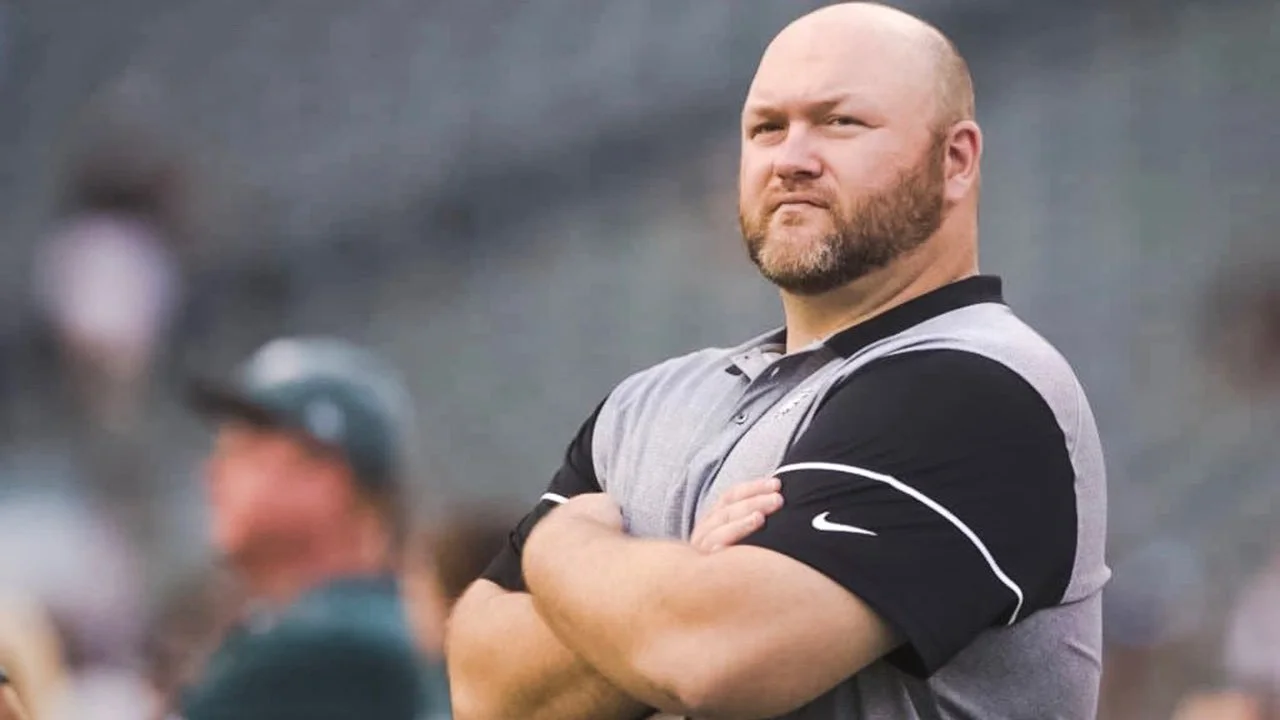
One of the questions I find myself asking over and over is, What makes one ballpark feel different from another? Joe Douglas gave me an answer I wasn't expecting. He didn't start with architecture or statistics. He started with his dad, then Cal Ripken, then his son. Somewhere along the way, Camden Yards became the thread connecting all three generations. That's what fascinates me about baseball. The game gives us heroes, but the ballpark gives us a place to return to them. Joe reminded me that the best stadiums aren't just beautiful—they become part of the story families tell about themselves.
Tell me about your Orioles fandom. How did you become a fan, and where did your love for Baltimore baseball come from?
Growing up in Virginia, I had ties to several teams. My dad was a Yankees fan because, where he grew up, Yankees games were the only ones on the radio, and Mickey Mantle was his hero. I admired Don Mattingly, but the Yankees of that era never really became my team. At the same time, I loved watching the Richmond Braves and became a huge Dale Murphy fan. But the Orioles were the team that kept drawing me back because they were winning, and because of one player in particular—Cal Ripken Jr.
My dad always told me that the greatest ability a person can have is reliability. Cal embodied that. He showed up every single day, year after year, and that consistency spoke to me as a kid. Watching him, Eddie Murray, and those Orioles teams of the '80s gave me my first real love of baseball. Later, when I moved to Baltimore to work for the Ravens, that childhood admiration only deepened. I spent fifteen years in that city, lived through some difficult seasons, and never stopped loving the Orioles because they represented something bigger than wins and losses.
Do you remember your first experience at Camden Yards? What struck you about it?
Even before I ever walked through the gates, I remember seeing it on television and knowing it was different. When I finally got there in person, it somehow exceeded everything I'd imagined. Walking past the statues, stepping onto Eutaw Street beside the warehouse, looking across at the old B&O Warehouse—it honestly felt like walking into a cathedral built for baseball.
The entire place has this timeless quality. From behind home plate or along either baseline, you look out and see the skyline, the clock, the brick architecture, and it almost feels like you've stepped backward through baseball history. There are very few places where the atmosphere itself becomes part of the experience. Camden Yards is one of them.
Janet Marie Smith deserves a tremendous amount of credit for that vision. What appreciation do you have for someone who had the foresight to preserve the warehouse and create Eutaw Street?
I think she created one of the truly legendary sports venues in America. I've been fortunate to visit a number of great ballparks, and Fenway has that unmistakable feeling because of its history. What amazes me is that Janet somehow recreated that emotional feeling in a ballpark that was brand new. That's incredibly difficult to do.
When I first moved to Baltimore, I lived directly across the street from Camden Yards. My friends and I practically lived at Pickles Pub before games, and every chance we had we'd walk across the street and catch another Orioles game. Add in the fact that Babe Ruth grew up right there in that same neighborhood, and the whole area feels like living baseball history. It honestly feels like stepping into another era.
How special was it living across the street from Camden Yards as a lifelong baseball fan?
It was one of the coolest experiences of my life. We worked incredibly long hours with the Ravens, but whenever we got out early enough and there was a home game, we'd grab something at Pickles and head straight across the street. Those first two years are some of my favorite memories. Even after I moved farther away, I still found every excuse I could to get back to Camden Yards.
For me, the ballpark wasn't just somewhere to watch baseball. It became part of everyday life.
You've made a tradition of taking your son Tommy to Orioles games every year. How important has baseball been in your relationship with him?
It's incredibly important, and I tried to approach it the same way my dad did with me. I never pushed him to become an Orioles fan. It just happened naturally. His childhood memories revolve around Buck Showalter's teams, Adam Jones, Chris Davis, J.J. Hardy—those players became his Cal Ripken.
Tommy was the kind of kid who never stopped moving. I used to call him my Golden Retriever because he was constantly running around. The only thing that would make him sit still was an Orioles game. Every summer we'd make sure we got to Camden Yards together, and those trips became our tradition.
Those shared experiences are what baseball does better than any other sport. You're not just watching games. You're building memories that become part of your family's story.
How does baseball bring families together in a way that's unique?
Traditions. That's really what it comes down to.
Whether it's twenty straight Opening Days with your grandfather or one trip every summer with your son, baseball creates rituals that families carry for generations. When Tommy and I visited the Hall of Fame together, he asked questions about players he'd never seen play, and suddenly we were talking about baseball history together. You're passing along stories as much as you're passing along fandom.
That's one of the beautiful things about baseball. Everybody has a story about how they fell in love with their team.
As an NFL executive, what appreciation do you have for the grind of baseball?
An incredible amount.
Football is intense, but you have six days before the next game. Baseball asks people to do that every single day for six months. Building chemistry among that many personalities over 162 games is unbelievable. The culture inside a successful baseball clubhouse has to be incredibly strong because there's no time to reset emotionally. I have tremendous respect for everyone who works in that environment.
If someone has never been to Camden Yards, what would you tell them?
I'd tell them they have to go—even if they aren't Orioles fans.
Start at Pickles. Walk across the street. Spend time around the statues before you even enter. Walk the entire length of Eutaw Street. Get some Boog's BBQ. Stand near the warehouse during batting practice and just soak everything in.
Don't rush.
The stadium itself is a work of art, and the experience is every bit as memorable as the baseball.
One last thing. You told me another Cal Ripken story after we stopped recording...
After we lost the AFC Championship Game in New England, our locker room was devastated. Ray Lewis had just delivered one of the greatest speeches I've ever heard, and everyone gathered to say the Lord's Prayer. I reached over and grabbed the hand of the person next to me without looking. Halfway through the prayer I realized whoever it was had enormous hands. I opened my eyes—and I was holding Cal Ripken Jr.'s hand.
In one of the lowest moments of my professional life, I found myself standing next to the person I'd admired since childhood.
Years later I told Cal that story and explained that he had unknowingly made one of the hardest moments of my career just a little bit easier. That's who he was to me. More than a baseball player, he represented consistency, reliability, and always showing up for your teammates.
NOTE: The above was edited for clarity and length.
You can read the full transcript here.