
Janet Marie Smith
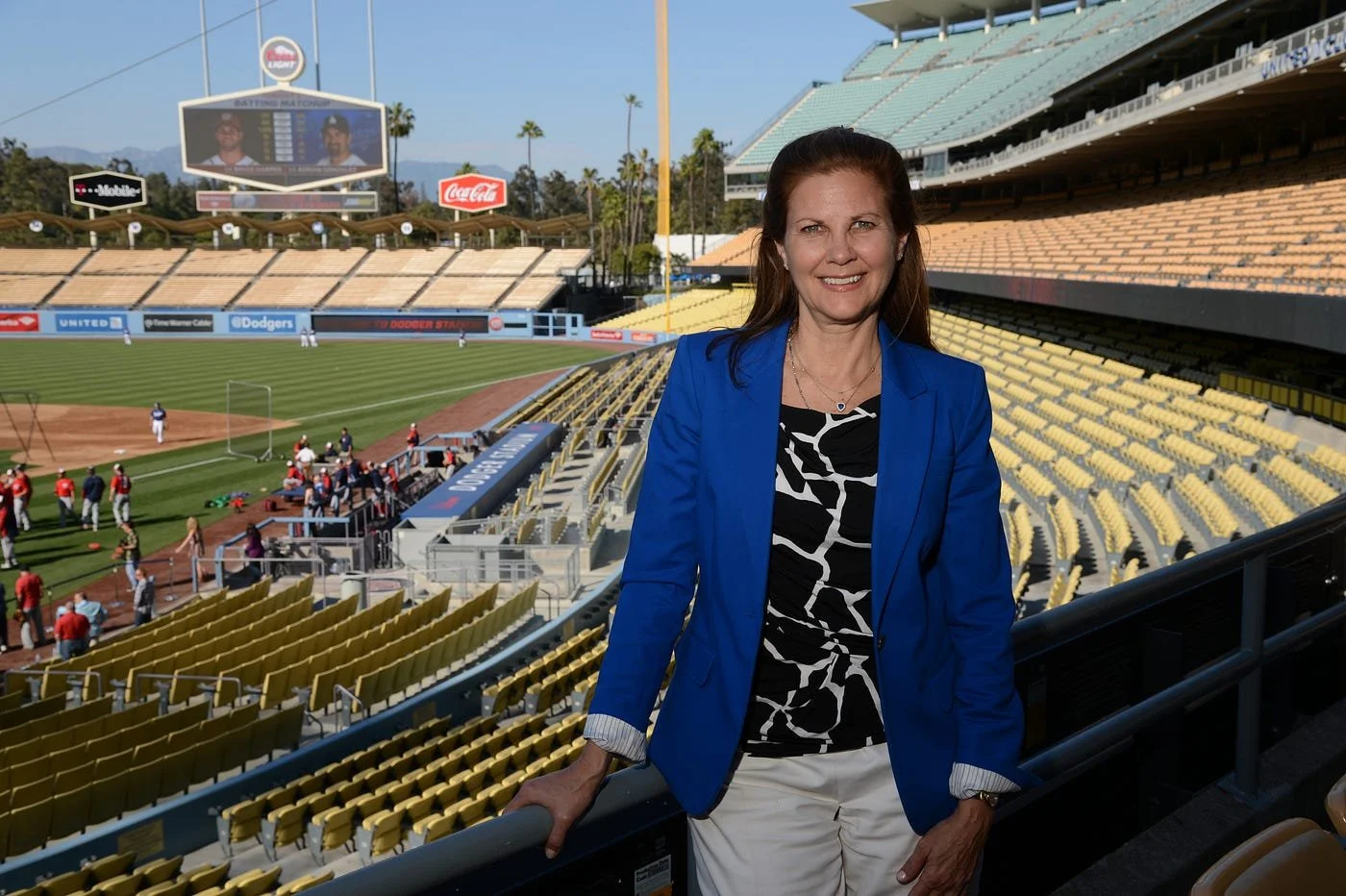
Whenever I ask someone about a ballpark, I'm usually hoping they'll eventually stop talking about architecture and start talking about people. Janet Marie Smith somehow managed to do both. She reminded me that a great ballpark isn't designed around concrete, steel, or sightlines—it's designed around conversations, traditions, neighborhoods, and families. Why do fans gather here instead of somewhere else? Why does one entrance become the place where grandparents introduce grandchildren to baseball? Why do certain details become beloved traditions? Janet has spent a career asking those questions, and the game we experience today is richer because she did.
Where did your passion for baseball parks begin? Where did this fascination with the game—and with the places it's played—come from?
Interestingly, it really started with cities more than baseball.
When I was living in New York and Los Angeles as a young professional, I found myself drawn to baseball because it represented something larger than the game itself. Those are enormous cities, and as someone trying to find a sense of place, I realized that the baseball park became a reflection of the city around it. Every park felt different. The architecture changed. The food changed. The atmosphere changed. Even the personalities of the fans were different.
I loved that baseball wasn't trying to erase those differences—it celebrated them.
I never imagined I'd work in sports until I learned Baltimore was planning to build a new downtown baseball park. At the time I was studying urban planning, and Baltimore was becoming nationally known for transforming its waterfront and reinventing its downtown. The idea that baseball could become part of that civic transformation fascinated me.
I loved Memorial Stadium and hated to see it disappear, but I also understood the opportunity. Baseball could become part of the life of the city instead of something isolated on the outskirts.
Larry Lucchino was willing to take a chance on someone who didn't come from a traditional baseball background, and that changed my life.
When you begin designing or renovating a baseball park, where does your vision come from?
Honestly, from behaving like an ordinary fan.
I don't arrive with credentials or special access. I buy a ticket. I grab a beer and some popcorn. I sit in different parts of the stadium.
Then I watch people. I'm fascinated by how fans naturally use spaces. Where do they linger? What makes them stop? What excites them? What conversations are happening? What traditions are already forming?
Some of the best ideas don't come from architects. They come from listening. That's actually how I first learned Baltimore was building a new stadium. I was sitting in Memorial Stadium talking with fans around me.
Baseball gives you time for those conversations. Because there isn't a game clock pushing everything forward, people tell stories. Grandparents explain things to grandchildren. Friends debate old players. Complete strangers start talking.
That's one of baseball's greatest strengths.
Every community experiences the game differently, and I think it's incredibly important that baseball protects those local identities instead of trying to standardize everything.
Baseball parks feel completely different from football stadiums or basketball arenas. Why do you think baseball creates that connection between a stadium and its city?
Because baseball parks have personalities. The building itself becomes part of the game.
Historically, so many classic ballparks were shaped by the neighborhoods they occupied. They weren't dropped into empty land—they had to fit around existing streets and buildings. Those limitations created quirks, and those quirks became traditions.
Fenway Park has the Green Monster. Wrigley has the ivy. Ebbets Field had its unique dimensions. Those weren't marketing ideas. They grew naturally from the place itself. Even today, baseball embraces that individuality. Another thing that helps is the pace of the game.
Because there isn't a clock, fans have time to tell stories between pitches and between innings. Those stories become part of the experience. They get passed from one generation to another right there inside the ballpark.
Baseball has always treasured its own history. That isn't old-fashioned. It's one of the game's greatest strengths.
My first question was actually, "Why are you calling me? It's already beautiful." Everyone knows the skyline. Everyone knows that postcard view. But as I spent more time listening to fans, I realized something. People could admire the view, but there weren't enough places where they could actually live in it.
If the skyline is one of the great attractions, why shouldn't fans spend more time enjoying it? That led to creating gathering places.
The bars. The terraces. The bridges. Places where people could pause instead of simply walking by. We also wanted to broaden who the park served. Not everyone experiences a baseball game the same way.
Some fans want to keep score. Some want to talk baseball history. Some are introducing a five-year-old to their very first game. Those experiences all matter equally.
Walking into right field today feels completely different than it did years ago. There are children's play areas, retired numbers, the pirate ship, the bridge, statues, photo opportunities—it feels alive.
That's exactly what we hoped for. Think about everything you just listed. The retired numbers. The Hall of Famers. The Negro League history. The pirate ship. The bridge. The giant "P."
None of those require someone to read a history book. They're simply part of the surroundings. They're public art that quietly tells Pittsburgh's baseball story. Children absorb it without realizing they're learning. Adults rediscover it every time they come back.
The idea was never simply to build attractions. It was to create multiple layers of experience so that every visit offered something new.
One thing I appreciate is that those family spaces don't take away from baseball—they add to it.
That was very intentional. Families shouldn't be penalized for bringing children. If you've got a five-year-old, expecting them to sit perfectly still for nearly three hours isn't realistic.
Why shouldn't they have opportunities to climb, explore, play, and still remain connected to the game? Parents can watch baseball. Children can be children. Grandparents can enjoy introducing another generation to the sport. Those moments matter.
Camden Yards opened more than thirty years ago, yet people still talk about it as though it opened yesterday. Why has it lasted?
Because from the beginning we weren't trying to create something trendy. We were trying to create something timeless. People were understandably skeptical. Memorial Stadium wasn't very old. They wondered why another ballpark was necessary.
Larry Lucchino believed that architecture had value. He believed fans responded to places with personality. He wanted a ballpark that reflected Baltimore instead of looking like every other stadium in America. Saving the warehouse became central. Eutaw Street became central. Making downtown part of the experience became central. Instead of hiding the city, we embraced it.
One of my favorite examples is the home run markers on Eutaw Street. That wasn't just decoration. It was designed to create stories. Every new home run adds another chapter. Thirty years later, people still stop to read those markers. That's exactly what we hoped would happen.
What does it feel like knowing an entire generation has grown up thinking Camden Yards has always been there?
That's probably the greatest compliment anyone could give. Many younger fans don't realize how revolutionary Camden Yards was. To them, it has simply always existed. That means the traditions now belong to them. They're no longer our ideas; they're the fans' traditions.
That's exactly what architecture should become.
You've worked on new parks, renovations, and restorations. Has your philosophy changed over time?
In many ways, it's become even stronger. Today's ballparks offer more experiences. More gathering spaces. More opportunities to move around. More food. More family activities.
But the underlying question hasn't changed. How do you make a ballpark a better version of itself?
Not a copy of another park. Not whatever is fashionable this year. A better version of itself. That's the question we asked at Fenway. It's the question we asked at Dodger Stadium. It's the question we asked at PNC Park.
Preservation isn't about freezing something in time. It's about allowing it to continue serving people while honoring what already makes it meaningful.
Petco Park feels like it belongs to San Diego in a way that's difficult to describe.
That's because it became more than a ballpark. It became part of the city. When we first looked at that area, it was mostly parking lots and warehouses. Today it's one of the liveliest neighborhoods in San Diego.
The "Park at the Park" allows people to use the space even when baseball isn't being played. Families picnic there. People watch movies. Children play. The Western Metal Supply building remains because it tells the authentic story of that neighborhood.
Why erase history when you can build around it?
That's always been my philosophy. Authenticity matters. Baseball has always grown from real places.
The ballparks that endure are the ones that continue telling those stories. And when they do that well, they become something larger than sports. They become part of the identity of a city—and part of the lives of the people who gather there.
~~~
More from Janet Marie Smith
NOTE: The above was edited for clarity and length.
You can read the full transcript here.