
Jenny Cavnar (Transcript)
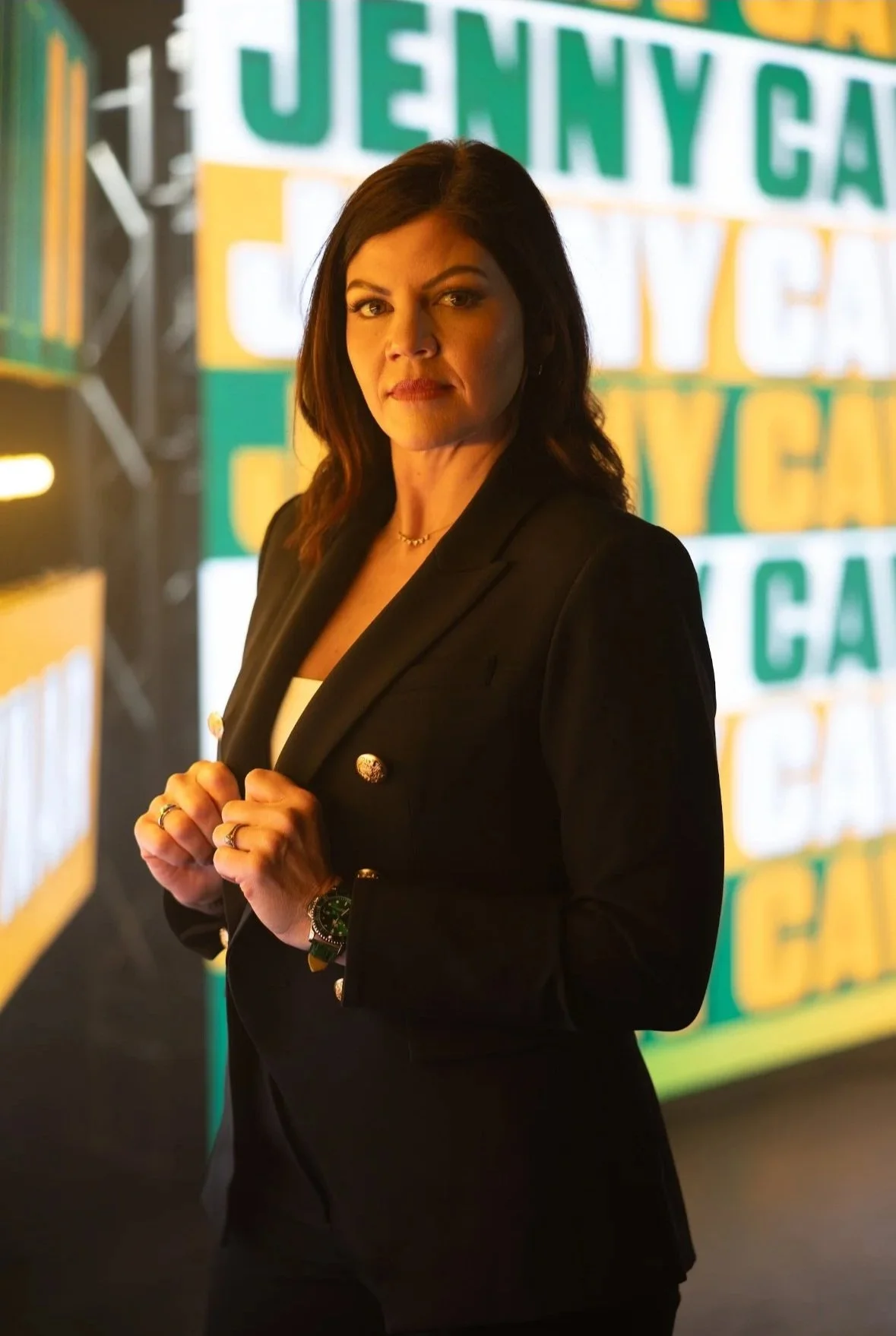
Robby Incmikoski: Jenny Cavnar, interview number 81. Halfway through baseball season. First thing that came to your mind. How programmed is your brain? There's no language restrictions or anything. We're just two people talking, and I'm going to take some of these quotes. By the way, how programmed is your brain to baseball that I said you're the 81st interview and the first thing you said was "halfway through baseball season"?
Jenny Cavnar: There's certain numbers that you can't shake from baseball. And 81 and 162 are definitely two of those.
Robby Incmikoski: The first thing I want to talk to you about—I mean, there's a million things that I would love to talk to you about, Jenny, but the obvious is being a play-by-play announcer and being a female. What has the experience been like now that you're a year into it?
Jenny Cavnar: I think for me, it's really hard to digest what just went down in my life in the last calendar year. I mean, we're sitting here on February 6th. It was announced on February 13th that I was going to be the first female primary TV play-by-play voice in Major League Baseball. To think about what's happened in 365 days is mind-blowing.
I mean, talk about writing a book—I'll have to have therapy before I can write a book about what happened because it's just so much. From being thrust into the spotlight and the national attention and the national media, and becoming the story and not telling the story. Having to get out of my comfort zone with all of those things. And then leading up to there's a job to do, and I'm doing it with a new team in a brand new city, and it just happens to be their very last year—their 57th and final season now in Oakland.
When I took the job, there was still the possibility that they would stay in Oakland until they would move to Vegas, but it wasn't until about six weeks into the baseball season that we found out they weren't going to renew their lease in Oakland. They were going to end up going to Sacramento.
So I am constantly changing, adapting, having to figure a lot of things out on the fly. And that was really hard for me. I'd been with a fan base in Colorado where this was my home state. It's where I grew up. I grew up with the history of the Colorado Rockies. I grew up with the franchise. I lived that franchise for the last decade. The fans knew me.
So had this job happened in Colorado, very different for me than moving to a brand new fan base who also really didn't like any changes that were happening because the biggest change was coming for them—and that was losing their team. And I felt for them. There was a lot of empathy that I had, or sympathy that I had I guess, for that town and that place. My husband's from close by. He grew up a huge Raiders fan. They lost the Raiders a couple years back to Vegas. The Warriors have since moved from the East Bay to San Francisco—from the town to the city, I should say.
Just being there, there were so many emotions. Every day was an emotional roller coaster. And I think, I will say, that's never been done in the history of this game, really ever. Maybe for Vin Scully, maybe the move going from Brooklyn to Los Angeles, maybe for the Giants when they moved from the East Coast to the West Coast, but I don't think this has ever happened for any announcer. And then you put on top: it's also never happened that a female's done this job as the primary.
So every city I went to, Robbie, there was a lot of media attention. There was a lot of your counterparts being supportive. There was a lot where I felt some counterparts—I never felt like, "Why is she here into the boys club?" Because I've been around the game for so long. But again, I'm now American League. I'm not in the National League. So a lot of these announcers don't know me or my body of work that I've done for the last 17 years.
So I felt kind of all over again, when you begin as a woman in sports and you feel like you have to prove yourself, and you have to have conversations with these people before a game where you're proving so much about the game and the team. Then I just had to get rid of all of that at some point in the season and be like, "You don't owe anything to anybody. This is your job. You have to be yourself every day."
For a long time in the beginning of the season, I just wasn't myself. I didn't feel like myself. I think if we're being really real, there's a lot of impostor syndrome that goes on that I've experienced. And it's just been a lot of up and down emotionally.
There's been a huge change for my family. We obviously kept our home in Colorado, but as I'll take it a step past being a female, I'm a working mom and my husband is a firefighter whose job is not 9-to-5. So when he is gone, he's gone from the home for a 24-hour period. So it's our childcare alone, having to go through the logistics of who's with our children what nights. Thank God for our village. I mean, I had to ask my parents, I had to ask my in-laws if I could take this job because I knew how significant they were going to be in helping us raise our kids for a summer.
So that's a lot to unpack, but I think there was just so much more than saying—the other thing is, again, so many of my counterparts, radio and TV, were like, "Are you having the best time? You got the job, you're one of 30, you're in." And they have no idea what I'm going through because I don't think any of them had to go through some of the struggles I went through, and not even just being a female. The struggles I had to go through going to a city that's losing their team, which was really challenging.
Robby Incmikoski: You do interviews. These are people who maybe are meeting you for the first time or maybe have just shaken your hand and said hello in passing a few times. I happen to know you pretty well for the last 15-16 years I've been in baseball. So I know what your reputation is around the game. I know how much people like you, how much people respect you, how good a person you are. You fit in. Doesn't matter that you're female. It matters that you fit in more than anything else.
So I would assume you're pretty confident in who you are and where you are as a host and as a reporter, but going into play-by-play, that's a whole different world. You just kind of enter a new stratosphere of Major League Baseball broadcasting. At least that's how I see it.
I mean, how was that change in mindset? Because it's definitively different. I've been a reporter. I know what that life is like. I don't know what it's like to be a play-by-play guy. I have an idea. I've done play-by-play, but I've never been a Major League Baseball play-by-play announcer. So what is that shift in mindset on how you go from host/reporter to play-by-play?
Jenny Cavnar: I don't think you can shake who you are or your past. And I tried to use that as a bit of a superpower for me. I think when you're a sideline reporter, you really rely on your relationships with players in the game. And I think you rely on storytelling and having a depth of history.
When you're a host, sometimes you have the opportunity to be more reactive, right, when you're hosting a postgame show versus in the game. So I think just kind of being mindful of that shift and learning how to be in the moment more and be more reactive. I think that reps is really the only thing that you can get.
I mean, coming into this season, I had done what, six to 10 major league baseball games for the last six years and then 15 or so basketball games in the offseason. So that was my depth of experience.
So now take that layer away—not even just about calling the games and the nuances of how to do play-by-play, but there is a whole different foundation that you have to have of how do you prep. You just said as a sideline reporter/host, they could call you today and be like, "Hey, I need you to do sidelines for this game." You would know all the information and all the steps you would need to take to be successful in your day and how you would prep.
Part of me is discovering what suits me best and how to be efficient in my day in preparing for a game. We all know what a rabbit hole is. We all have ADHD to some level of—you get on the trail of a story and you want to know more, and then all of a sudden you're way over here and you have so much work to do over here. So I had to learn really early what was going to matter in a game and what wasn't as I was researching.
And then just even like how your scorebook is set up, right? What pertinent information you need in front of you, color coding things that work so that with a quick glance of your eye looking down, you can grab that info and get back to the game.
Even as simple as during batting practice, what suits me best. Before it would be like, I want to be there. I want to be with players. I want to be talking to them. I actually now realize I need to be in the booth because every stadium we were going to, sometimes that was a new level for me. I maybe have been to that stadium, but I haven't called a game there. And so your vantage point, your eyesight changes in every single major league stadium. And that's the beauty of baseball, and that's what this book is about and what you're doing is you're seeing the artistic view of dimensions and how a ball travels and how a batter's eye works and how seat reflections, whatever it might be. So I needed to watch the flight of the ball during batting practice.
I would be sitting in our booth, which is hard for me because I'm a people person. I want to be seen down there. I want to know that I'm working hard. But here I am sitting up in the booth having to kind of do my own thing during that moment. So just feeling comfortable with that.
And then also during the game, I think it's just like trusting yourself, which is hard to do sometimes, especially if you make a mistake or a bad call or you don't read the ball right early in a game. You become a little gun-shy, right? "Oh my God, is that a home run? I don't know." When you're second-guessing yourself—so I got to a place in the season where sometimes I would be overthinking, and that's never happened. It's horrible as a broadcaster. You don't want to think about what you say before you say it. You want to be in a rhythm where things are flowing.
So I just had to come up with certain ways that I was working to be efficient and effective during the game so that I could be free. It's like a hitter. You got to play free. You can't be up there overthinking every swing. You got to get up and hit. So I really had to learn that, and I think I'm still learning that. But having a full season under my belt, I can kind of go back to points where I really sucked and points that I felt like, "That was it." That feeling you have where I'm like, "I felt good about that."
Robby Incmikoski: How hard is that process? "I suck today," or, "I was good today." And I think we all have them at different levels in this business because I've had them, too. I think we all experience that. Except we have a lot of eyeballs on us, and you have a ton of eyeballs on you as the lead play-by-play.
What was that evaluation process like for you as you try to find your footing? Because look, and the reason I asked this, Jenny, I asked this to explain to fans, because fans are going to be reading this book. I know what the business is like. I lived it for 16 straight years. You've done it now for how many? 17. What year is this going to be? 19. You've been in the game longer than I have. I'm proud to have 16 years in the game, and you have a hell of a body of work and a hell of a reputation.
This job is just hard. We have eyeballs on us. You can make a mistake for the simplest of reasons, and people can pounce on you. And now you're a female on top of that in a man's world, right? And you've survived really well in this business. You really have, and I'm proud of you for that. What's that next level criticism, and how do you deal with it?
Jenny Cavnar: Next level criticism is the real deal. I got off social media for a long time this season. I mean, mental health alone. And I think we've both learned this at some point. No matter what you do as a reporter, a forward-facing person in public, you just learn the lesson of you can't please everybody. And I'm a people pleaser by nature.
So it was really hard again in a brand new fan base who just didn't want change. I mean, Glen Kuiper got fired, and a lot of people didn't want him to get fired. So they're still mad about that. It doesn't matter if it's out of your control.
I remember Brian Anderson telling me, "Your first year just kind of sucks, no matter what. It doesn't matter how good you are. It's your first year in that city. It's change for people that don't like change." I mean, you think about anchors on TV. How many of them get to a new market and people are like, "You're terrible"? They're just reading the news, but they're terrible to those people because it's not the person they were used to hearing.
I have a voice that is different than anyone else in our game except for Melanie Newman, and it's going to be different to everyone's ear, and it takes time to adjust. The market has to even out on that, and that's okay. I understand that. I'm aware of that. I can't change that.
But I guess for me, my evaluation is: did we do the game justice? Did we call the game? Did we add stories? Did we give the viewers something to sink their teeth into throughout the course of 162?
The big picture in Oakland last year was I lost a lot of sleep going into September. I started thinking about things around Allstar Break. I was like, "How are we going to end this thing? How is it going to happen? How am I going to tell this story and make it final, but be sensitive to fans, celebrate the history, but mourn the loss?" How do you do that?
And as broadcasters, we're the voice of a team, and we have a responsibility to fans. You're just somewhere in the middle of who you're serving in that. The idea is I wanted to do it justice. I really did, and I'm really proud of what we did on that final game. I really thought so many things worked in our favor, as they tend to do with the baseball gods. The game worked out in our favor.
Dallas Braden's emotion and having to really be a rock for all the things he was going through. Our production crew just did an amazing job putting everything together that last week.
But bottom line is, I think the criticism part—you have to learn who to trust. Your circle has to become smaller. And I think for me, I really realized the people in my corner. And everything else didn't matter. Even if it was valuable feedback, it can't matter right now because I have to grow to a point where I can again listen to the negative and feel okay with it. There was just so much in the beginning. It's hard to find yourself and your confidence again in that.
Shutting out the outside noise and then focusing in on what do the people that hired me think? Let's start there. So your producer—those were important. I relied a lot on Allison throughout the course of the year—the person who ever first gave me this opportunity.
Robby Incmikoski: We're talking about Alison Vigil.
Jenny Cavnar: Yes, who first ever gave me play-by-play opportunity. And then my husband, huge. And Dallas, clearly my television partner. So that was kind of what had to be my circle of trust for the season and wanting feedback, but wanting it to come from those people and having to learn how to grow that way.
And then again, I think as I get better and as I have more years and as I get more experience in this, I can add in the other stuff that you can filter easier. I got to a point where I couldn't filter that stuff anymore.
Robby Incmikoski: Do you have to leave now? If you do...
Jenny Cavnar: I have 10 more minutes.
Robby Incmikoski: Okay, let's try to get through as much as we can. So two things I want to talk about. Number one, was it the Today Show when Carson Daly surprised you? What the hell was that like?
Jenny Cavnar: Dude, it was so ridiculous. That was my whirlwind. So let me just explain this and I'll do it quickly.
Robby Incmikoski: No, I want to hear this. I want this to go to the fans because you're going to inspire a lot of young women and a lot of younger broadcasters when they see this. So I want you to go into as much detail as you can.
Jenny Cavnar: I knew that I had this job. I'd known since before Christmas that I had this job. They didn't want to announce this job until after the football season. They felt like in the news cycle market of the Bay Area that the 49ers were going to have a pretty good chance to go to the Super Bowl. They did go to the Super Bowl. So this announcement was then posted for February 13th.
In the intermediate, I had been asked to do play-by-play for the Warriors. So this is my very first NBA gig. I'm filling in on radio, and it just so happened I'm doing it on the 13th of February. So I'm preparing for the game. I'm preparing a little bit for the chaos. We had a little small snippet of what the media attention would be from 2018 when I first called a game, but knowing this was probably going to be a little bit different. But again, I don't think you can ever prepare yourself for what was about to happen.
So I am boarding the plane to go to San Francisco to call this Warriors game. The announcement came out that morning. I think I had a mid-morning flight. From the time I landed in San Francisco, I had 500 text messages. Literally, it said 500 on my phone. And I was answering texts in the air and emails and stuff. Then I'm like, "Oh my gosh, I have to prepare for this game. I'm doing this game." So now your brain has to just be on this other thing that's really new and how you're going to do that.
And in the middle of the game, my agent texts me and he's like, "I rerouted your flight. You're not going home. You're coming to New York. You're going on the Today Show in two days." And I was like, "What is happening?" So then I don't have any clothes to wear on the Today Show. So I'm on a flight texting my girlfriends. I'm like, "Order stuff to this Nordstrom in New York that my agent can pick up and leave at my hotel." It was just all of these chaotic things, but also super fun.
And then for me, I love the Today Show, and to get to go on it and meet Hoda Kotb—she's so genuine and she's wonderful and just to be in the same room with her. The producer—they always do a pre-interview segment with you on the phone, and they want to gather as much material as they can to make all their storytelling happen. So they asked for very specific pictures. And then I think someone had asked, "Have you ever been on the Today Show before? Have you ever been here?" And I said, "No, but my very first TV appearance in my life was when I was 18 years old on TRL, and I got to request the music video..."
Robby Incmikoski: I remember that.
Jenny Cavnar: ...and Carson. We had a sign for Carson Daly that said he was—I forget what it was. And so they're like, "Oh my gosh, do you have a photo of that?" And I was like, "You know what's funny? I do because I just went through all my old stuff." So I had Steve find it. We sent it to them, and then I was like, "They might show it." I didn't think they'd do anything with it.
And I had seen Carson in the green room. We were getting ready, and I just wait till you're spoken to. I didn't interrupt him. It was his time. And I was in the makeup chair, and he was getting his stuff done right next to me. And then he got up and he was like, "Jenny, congratulations on the job. We're so pumped for you." And he just kept walking. I was like, "That's so funny." So that was it, but when he surprised me, it was pretty cool. It was a fun, full-circle moment.
Robby Incmikoski: I flipped back and forth between the first couple games—the Rangers broadcast to yours. I honestly had tears coming out of my eyes watching, especially the last couple innings of that game. What was that day like? What were the emotions like? What do you remember about that day?
Jenny Cavnar: It was so hard on some level because it was the first time I'd ever broadcast a game or been to a game at the Coliseum where it was packed. And to see that stadium alive, part of you felt energized by that. I know that sounds weird, but there was this really cool energy.
I think again a lot of us weren't sure what to expect. Was it going to be the angry fan mob there? Were people going to be there trying to storm the field and take things out of the Coliseum? Was it going to be angry? I think the overall tone of the fan base there—they'd gotten their anger out at that point. I'm not saying that they're still not angry, but they knew that was their last moment to be together in their cathedral. And they soaked it in. They really did from start to finish.
The energy was in a strange way positive because for a lot of those fans, it probably conjured up memories of however old they are, if it was the run in the '70s or however young they were if it was their recent playoff runs where that place was packed. They were able to enjoy one last time, I think, which was really cool to feel that as a broadcaster.
It was also very emotional because I've known Dallas for a very long time. I knew what this day was going to be and how hard it was going to be for him. And you're sitting next to somebody who's going through all of the emotions every inning, every minute, every hour. Dallas threw a perfect game in that stadium.
You're having to absorb his emotions, and you're having to absorb the fans' emotions and deliver them because there's an entire audience that's not there. And that's my job—to make them feel like they're there. I don't think I understood the physical toll that took on me until we got on the plane.
And all the players—I mean, you could see it on everyone's face. We got on the plane, we had to finish in Seattle, everyone's getting off the plane just drained. Every single person just physically, mentally spent from what that moment meant.
Robby Incmikoski: And what was that flight like to Seattle?
Jenny Cavnar: I think I was in the back of the plane. I just remember that physical exhaustion like waving over me of being like, "I can't believe we just did all that and went through that and experienced that. What a moment."
And so I think again, I didn't grow up going to the Coliseum. I grew up liking the Oakland A's from Colorado of all places because of the Bash Brothers. But I really was experiencing it like—my mother-in-law grew up going to the Coliseum. That was her place that she fell in love with baseball. She has scorecards from the '70s that she was showing me. Throughout the summer, she was pulling out her own archives and her own memories, and her mother had passed away, but her mom was a big A's fan. She brought up all of her pictures. So I'm living it through my in-laws and my family and Dallas and his experience.
I feel like I was able to grasp all the emotions of it, but that last day, I wish you could bottle that for those fans because I really do feel like they were able to capture one last sense of what community meant. And more than any fan base, I mean, we've seen them. They are a unique community of people. They really are.
When you talk about just all the characters—it's like the Raiders. I mean, you think about Raiders and you automatically think about a guy with spikes coming out and face paint, and it's the same way. You think about the guy—I'm going to forget his name, but the guy that wore the yellow suit and handed out flowers. There were characters that were longtime Oakland A's fans and provided so much entertainment in that crowd.
I mean, even Crazy George, the guy, the yeller that started the wave—there's just such a history to what a community of fans means there, too, that was also dying. It wasn't just baseball. It was so much more.
Robby Incmikoski: One last thing before I let you go, Jenny. I know how hard you work, and I know there are people out there who say she's there because she's a female, and that's a sentiment that exists and that's a fact. But anybody that knows you and any of us that watches a game is going to know you've done your work, and you can always tell when somebody has done their work and whether they're prepared or whether they're qualified. You are all the above, and that is not to be debated.
So with that in mind, you belong and everybody knows it. I guess my question is this: It's not that opportunities don't exist for females in sports or females in baseball because there are a ton of them now, right? It's like, are you good or are you not good? That's should be the only thing that matters. What message do you hope to send to females who aspire to report, host, or do play-by-play in the game of baseball?
Jenny Cavnar: Do you have a purpose for something? Are you willing to put in the time for something? Then all of that is worth it, especially sports. You really have to love it. You have to want to be there. It is not a job for the faint of hearts. It is a cool job. There's no question. We have so many perks. But as all of our colleagues know, you choose this lifestyle. It's a lifestyle career. You're not off on holidays. If you want to start a family, it's going to be different. It's going to look unique. But is it worth it? It's always worth it to me.
I love what I do. It's what I've always wanted to do. I've been so blessed by the game. I feel like it provided me a path that I didn't even know existed for me. And it takes someone to believe in you. Alison showing me—there's no way in a million years I ever would have been like, "I think I want to try play-by-play." That wasn't on the radar. I was happy in my lane. But sometimes other people see something that pushes you off the cliff. I always joke with Alison like, "You pushed me off the cliff," and I'm so glad she did.
So I guess you're right. There's opportunities. There's jobs. But how bad do you want them? I just did a book talk with Melissa Ludtke. She has a book out about her access to the locker room. She had a Supreme Court hearing about going to the locker room from the '70s. So did she set out to go all feminist and women's rights and change paths? No. She loved being a sports writer, and she was working for Sports Illustrated, and her assignment was to cover the World Series, and they put the limitation in front of her. What did she do? She just said, "No, I want to be here, so I'm going to push back."
She didn't choose at 26 years old to be this advocate for this big picture that was going to change the way that women in sports media are treated. But it did, and she was just the vessel and the tool. She did it. And sometimes it takes a little being naive to push the barriers open, but she did it. And I think that's so cool and such a lesson for all of us.
She was saying there was no woman in front of me to show me the way. And I kind of feel that way at points. There's no road map for me necessarily. I think there's some amazing women who have paved a road, and my job is to pick up and keep going, and I have to do that and I have to do a good job at that and make it worth it.
I might not have that woman who's been play-by-play in baseball to follow, but I have a lot of women who are super encouraging and have done other unique things in their own life that can help me in that direction. Susan Waldman being one of them. And I'm so lucky when I look around at the village that's been created for me because of this job and this career path. And the wonderful men too that are in my life who have been super supportive. You mentioned Vin Scully at the beginning of this.
I think there's a little piece of me that—the relationship when I was with the Padres and the Dodgers would come to town and being able to have those conversations with Vin Scully and the way he treated me, and not just me, but watching how he treated every single person that he came across and interacted with. It was this tug in my heart of "I hope one day if I ever have a son, he would be as gracious as that man."
Who, listening to him—any of us could listen to him for hours talk about a baseball game obviously, or any sporting event that he was describing, but just to talk and hear and listen to him tell stories. But it's the way he treated people that really got me and his genuine spirit and his aura. So I always had in my heart I would love to name my kid Vincent one day, and then my husband having grown up a Dodgers fan loved Vin Scully too. So it was a really cool mix. But it's really crazy that all these years later, here I am in a seat that was his job.
And one of the guys that worked very closely with him for decades is now doing some stuff with the Angels behind the scenes, and he pulled me aside when we were in Anaheim this year, and he was like, "I just want to tell you that Vin would be so proud of where you are."
Robby Incmikoski: That's amazing. Last thing I want to say, and I'm gonna let you roll because I could do this for another 20, 30 minutes with you, Jenny, is this: You're one of the coolest people I've ever met in the game, and there's no question about it. Just your accessibility, your demeanor, the way you carry yourself, the way you dress, just everything, the way people talk about you—you have a really good reputation in this game. And I really mean that because you can't say that about a lot of people. And it's not because you're a female. It's because you're Jenny. You're just Jenny. You're affable, you're easygoing, everybody roots for you. We all root for you. We want you to succeed.
When we see criticism, it bothers me to see criticism to people who say, "It's just that." No, you don't know Jenny. People that don't know her don't know how hard she works and what her reputation is, how she can navigate a clubhouse, how she can navigate a team.
So I guess with that said, I would assume you have been pretty accessible to people who have come to you for advice, right?
Jenny Cavnar: Yeah, I try to be.
Robby Incmikoski: How much responsibility do you feel, given that you're breaking glass ceilings? There's almost an unwritten rule for you, Jenny, to be there for others who want advice, guidance, who want to know how to deal with criticism, because you've done that.
Jenny Cavnar: Yeah, absolutely. I think it's 100% a responsibility. I mean, even before this job, I took it as that. I look back on my college years and again, my passion, my pursuit of this business, and the amount of people I bothered for advice or for help or to shadow or whatever. So many said yes and so many helped, and so that was my foundation: this is a business that you help the next generation. I've always felt that way.
I took an executive-in-residence job with Colorado State last year. So it's really cool because I get to help mentor some of those students as part of a working job for me. But yeah, I get questions all the time on LinkedIn or Twitter or Instagram. I did have a social media shutdown, so I probably missed a lot of them. But you get people that come up, talk to you at the ballpark, and want to ask for advice about this or that, or they want you to be on their podcast.
I think before I definitely said yes to everything. I've had to kind of, not for public consumption, weed through it, but you do have to be more mindful after a while.
Robby Incmikoski: You do have to weed through it for sure.
Jenny Cavnar: But it's cool to think that—I'm still 29 forever, and yet I've had enough years in this business. All of a sudden I'm like, "My gosh, people that were interning for us!" Taylor McGregor is now crushing this business. And it makes me so proud to know that there's a generation of girls because of my visibility in this market that I may have influenced, who are now also doing this as a job.
And that's really special to think about, leaving that mark or that legacy behind and knowing too what good people they all are and the amount of time that they now spend in colleges and giving back. That's the cycle. Creating community has always been something I've been so proud of. And so to do that inside of the baseball world is really, really cool.
Robby Incmikoski: You are the best. I'm going to stop recording and I'm gonna stop transcribing.