
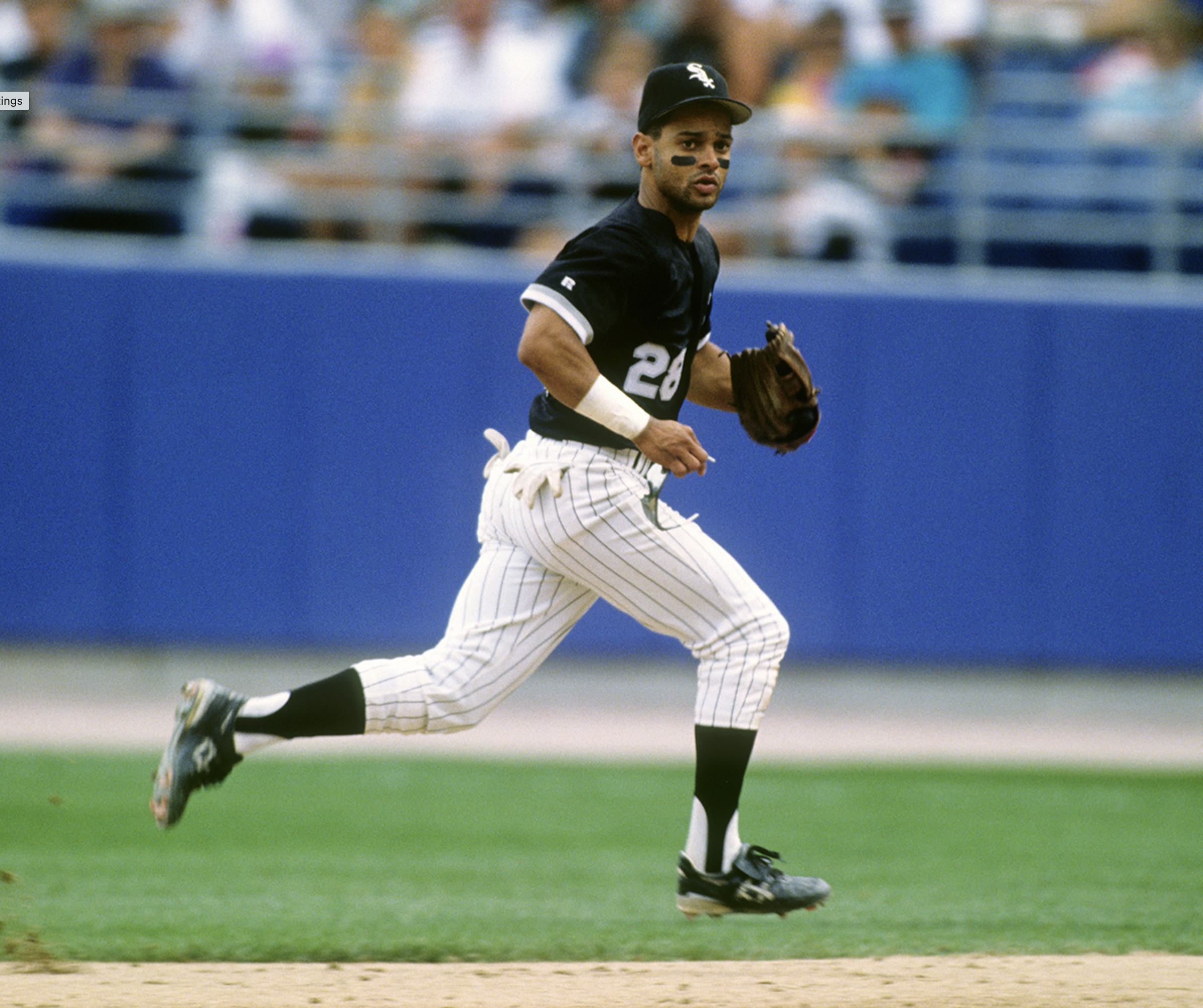
Robby Incmikoski: All right, here we go with Joey Cora. Joey, the 2005 White Sox, that team was pretty damn good. What drove that team and why were you guys able to win?
Joey Cora: First of all, Robbie, obviously they were very, very talented. We had very good players, and they all blended together and played for each other. We had an extremely good team and extremely talented team. We could do it all. We could run, we could field, we could throw, we could pitch, we had power, we played the game the right way.
We had a great manager in Ozzie that got everything together. Because it's not easy—people say, "Oh, you guys had good players, you should have won," but sometimes that's probably the toughest team to manage, big personalities with great players. And he did it well, and he got everybody together, pulling on the same side of the rope, and they played for each other, and they loved each other.
Robby Incmikoski: You know, it's hard to win a World Series, Joey, just in general. It's hard. Just how tough is it to win a World Series? What is that challenge like, having a good regular season and having everything go your way in the playoffs to win it all?
Joey Cora: Well, especially that year, we did it wire to wire. From first day to last day, we were in first place. We were very good. And then at the end of the season, Cleveland gave us a run for our money—they almost got us, which made us even tougher. Once we stood up to that challenge, we ended up finishing the regular season strong.
The toughest thing about winning is when the regular season is over. You had a great regular season, and then all of a sudden you're 0-0 against whoever you're playing. Once the regular season is over, it doesn't count anymore, and you have to almost start all over again. But obviously, you take all the lessons that you learned during the regular season and put it all together.
The postseason is tough. Obviously, you're facing the best pitchers and the best teams that are left, and it's every day. It's an everyday thing. You're playing the best, and if you did good and you got used to winning during the regular season, that's going to help you make it all the way to the end.
Robby Incmikoski: Joey, let's talk a little bit about the Crosstown rivalry. The Cubs had struggled a little bit in the mid-2000s—they didn't have a great year in '05. What was that like, having all the attention on the White Sox, as opposed to the Cubs that year? What was that dynamic like?
Joey Cora: It was different because we had the manager with a big personality. We had players with big personalities. Usually it was the other way around. Most of the time, the Cubs get all the attention, all the TV time, all the media time. But specifically that year, it was all about us, because we were really, really good.
We had Ozzie, who is obviously the biggest personality ever probably in baseball, having a great season and being a great manager. And he knew how to handle the media, which was part of the winning too. He kind of shielded the team from the media, even though we were good and we were getting all the attention. If there was a hint of negative or something like that, Ozzie knew how to take the heat off the team and put it on himself and just let the team play.
So it helped that—sure, in the years past, it was all about the Cubs, all about the Cubs. That year, specifically that year, it was all about the White Sox. But we had the right guy, the right manager, to handle that situation.
Robby Incmikoski: Ozzie's personality, it's huge. You're right. He might be the biggest personality in the history of baseball, and that man was not afraid to say anything that was on his mind. What was that like day in and day out for you to ride shotgun with Ozzie every day?
Joey Cora: Like I said, he took the heat for the team, and he knew when to push the buttons and did it the right way. Obviously, he knows baseball, and he knows how to manage strategy and all that kind of stuff. He was really good at that.
Like I said before, we had a great team, great talent. But he knew how to handle the media, which you need to do well in Chicago, which is a big media market. Not everything in years past was positive about the White Sox. People were taking shots at the White Sox just about every time, until Ozzie got there.
Ozzie knew how to handle the media because he did it as a player. He played there for a number of years, and he was an All-Star and all that stuff with the White Sox. So he knew how to handle the media, and he knew when to push the buttons at the right time, and that was a big part of why the team was successful in '05—because Ozzie, obviously, was the manager.
Robby Incmikoski: Joey, going to work every day for home games in the playoffs and especially in the World Series, what was the vibe like around the ballpark? And how would you describe what it was like from the time you walked in until the time the last out was recorded?
Joey Cora: There was a lot of energy throughout the season in Chicago about the White Sox—a lot of energy. You could feel the energy from day one. We knew coming in that we had a good team, but obviously you don't know you're going to win the World Series. You hope, you get a shot at it, but you don't know.
But as the year went by and we kept winning, we kind of knew that we had a shot at this. All we had to do was, obviously, stay healthy—that's number one every day, every year for any team—and keep playing the way we were. We had a shot at it.
The energy in the city was amazing. Anywhere you went, we kind of turned the city into a White Sox town. The Cubs, they've been in baseball forever, but most of the time in Chicago, it was about the Cubs, whether they were winning or losing. That year kind of turned things around, and everybody started looking at the White Sox a little bit differently, because we were so good and we had a shot at the World Series. The city got behind us and helped us out a lot during that year.
Robby Incmikoski: Where does that stand out, just in terms of baseball memories for you, Joey? You've been in baseball for decades. Obviously, everybody knows your story. They know your brother managing the Red Sox and all that. When you look back on that 2005 season, what memories come to mind, and where does that stand out amongst a lifetime of memories in baseball?
Joey Cora: That's the ultimate goal. When you become a professional baseball player and you play for an organization in Major League Baseball, that's the ultimate goal—winning the World Series at the big league level—and we achieved it that year.
That's the goal every year. Like you said, I've been in baseball for a long time, and that's the only time that I've been part of the World Series, other than my brother winning the World Series with the Red Sox too. But as far as participating on the team that wins the World Series, that's the ultimate goal every year, and you achieve it with a bunch of great guys, which was a lot of fun. That's what you strive for, to win a World Series—not to only be there, but to win it. And the way we did it was fun.
Robby Incmikoski: You know, Joey, not only that, but the freaking Pope was at Game One! How crazy is that? Future Pope was at the game. How crazy is that, Joey?
Joey Cora: Well, I guess we just found out a week ago—we didn't know that at the time. So I guess now that you know, you probably know why we were so blessed that year. Come on!
Every team that wins the World Series has a history, a story behind them. And we had more than a few, and that just became part of the story after 20 years or whatever it is.
Robby Incmikoski: How crazy—divine intervention, in a sense! Twenty years later—
Joey Cora: Twenty years later we find out even more about that team, which is cool, which is crazy.
Robby Incmikoski: What was your reaction when you found out the Pope was at Game One? In the ninth inning, they had a shot of him on television as Adam Everett was batting with two outs in the ninth inning.
Joey Cora: I didn't know what to say, but it's cool. It's cool to know that at that time, we had the future Pope on hand to cheer for us. So we were blessed. We were blessed in so many ways, and obviously he was part of it.
Robby Incmikoski: Isn't that funny—you can say, "Hey, the Pope is a White Sox fan," right?
Joey Cora: We won the World Series. Hey!
Robby Incmikoski: I'm going to let you go in a minute here, Joey. You talk about the White Sox—like, the Cubs, everybody talks about the Cubs, the Cubs, the Cubs, but the White Sox have a hell of a history themselves, Joey. And you played there in the 90s, early 90s, you played for the White Sox as well. Then you win a World Series with them a decade later. How cool is it for you to be associated with that franchise as closely as you are in your life?
Joey Cora: It's cool. I've been with the White Sox longer than with anybody else. I mean, I played and coached for them for quite a few years. For the most part of my career, I was a White Sox, either playing or coaching.
Like I said, being part of the World Series team, which is part of history, is cool in a city like Chicago and a franchise like the White Sox with all the history behind it. Once you win the World Series, you're part of history forever. And I was blessed to be part of that team, and the way we did it, and the people that were around the team and part of the team—my teammates, the coaches, the manager obviously, the owner, the fans, and the city in general. It's a cool thing to be part of, and I was blessed to be part of that.
Robby Incmikoski: What was that parade like? What was it like when you guys got back from Houston after you won it?
Joey Cora: The city was crazy. They were waiting for us when we landed the next day after we won it. They were at the airport, and then the parade the next day, and obviously the whole offseason was crazy.
That's what you strive for. That's what you want. You want to be part of winning the World Series, and we did it in a city like Chicago. It's cool to be part of that.
Robby Incmikoski: Is it special for you to go back each time, even today as a coach?
Joey Cora: It's always great memories. But I've got a job to do. I'm part of the organization now, and that's what we're trying to be—to be like them.