
Chuck Morgan
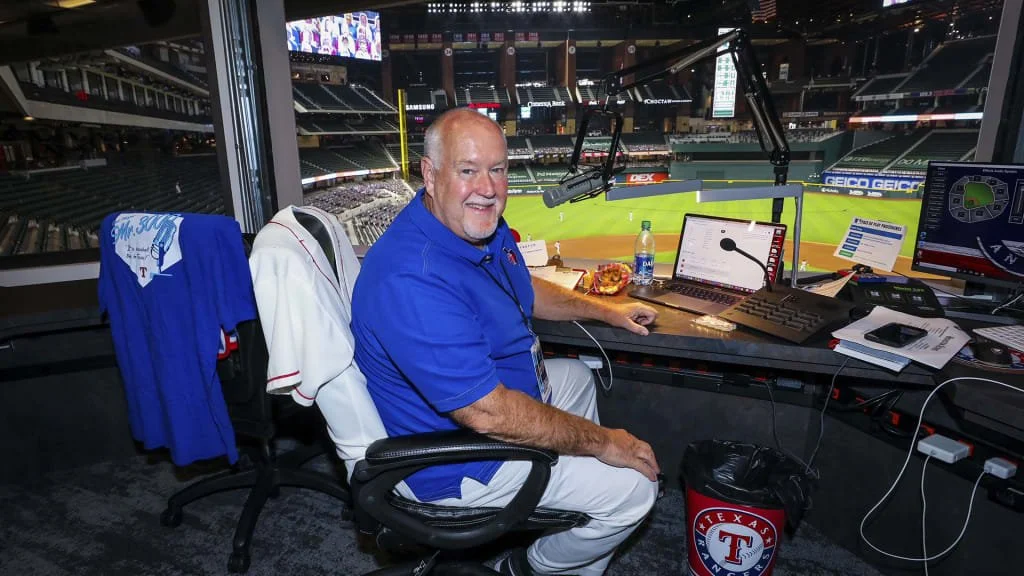
I've learned that every ballpark has its own language. Sometimes it's the crack of the bat. Sometimes it's a walk-up song or a vendor's call. And sometimes it's something as wonderfully ridiculous as thousands of people cheering for colored dots. That's why I wanted to sit down with Chuck Morgan. If you've ever been to a Rangers game, you've experienced traditions that probably felt like they'd always existed. The truth is, someone had to dream them up. Chuck reminded me that the best ballpark traditions don't start with grand plans. They start with simple ideas that give strangers one more reason to cheer together.
You've spent more than four decades with the Rangers. How did you get into baseball?
Pure luck—and a lifelong love for the game.
I was doing radio in Nashville and working at the Grand Ole Opry when Larry Schmittou started the Nashville Sounds. I told him I wanted to be the PA announcer, and he paid me ten dollars a game. A few years later he called and said he was taking a job with the Rangers and asked if I'd come with him.
People have asked how I could leave the Grand Ole Opry, but I never looked back. Baseball has given me an incredible life.
Let's get right to one of the great traditions in baseball—the Dot Race. How did it start, and why has it lasted so long?
It all started because I was trying to sell a sponsorship. Back then our video board was primitive. I built the race myself using a character generator, a homemade track, railroad-model grass, and cinnamon for the dirt because it looked better on television.
Every day I'd create a new race because I believed if someone bought a ticket, they deserved something different every night. It was simple: pick a color and cheer.
That's probably why it's survived.
Eventually you turned the dots into actual people running around the ballpark.
A lot of people thought that was a mistake. I thought the opposite. Now fans could actually meet the dots, take pictures with them, and interact with them. They became part of the ballpark instead of something that only existed on the video board.
Ballpark entertainment changes constantly. Why do you think the Dot Race still works?
Because simple wins. Between innings you only have about a minute. You don't need some elaborate production. People hear the horse-race bugle, they know what's coming, they pick a dot, and suddenly 35,000 people are cheering for a colored circle. It's become part of the rhythm of a Rangers game.
You've been around long enough that the Dot Race may outlive all of us. What pride do you take in creating something that's become part of the ballpark experience?
I honestly don't think about it that much. I'm just happy people still care. In fact, they may enjoy it more now than they did years ago. It started as a sponsorship idea, but somewhere along the way it became a tradition.
Fans in Pittsburgh bet on the Pierogi Race. I imagine Rangers fans do the same with the dots.
They absolutely do.
One of my favorite stories happened when George W. Bush owned the Rangers. His friend Larry Gatlin wanted to bet on the Dot Race, so President Bush came into my booth and said, "Tell Larry to bet on the wrong dot."
So I did. Larry lost his money.
You also created other racing characters over the years.
We added Texas legends like Davy Crockett, Jim Bowie, Sam Houston—even Nolan Ryan and Earl Campbell. But everything traces back to those original dots.
NOTE: The above was edited for clarity and length.
You can read the full transcript here.