
Eric Nadel
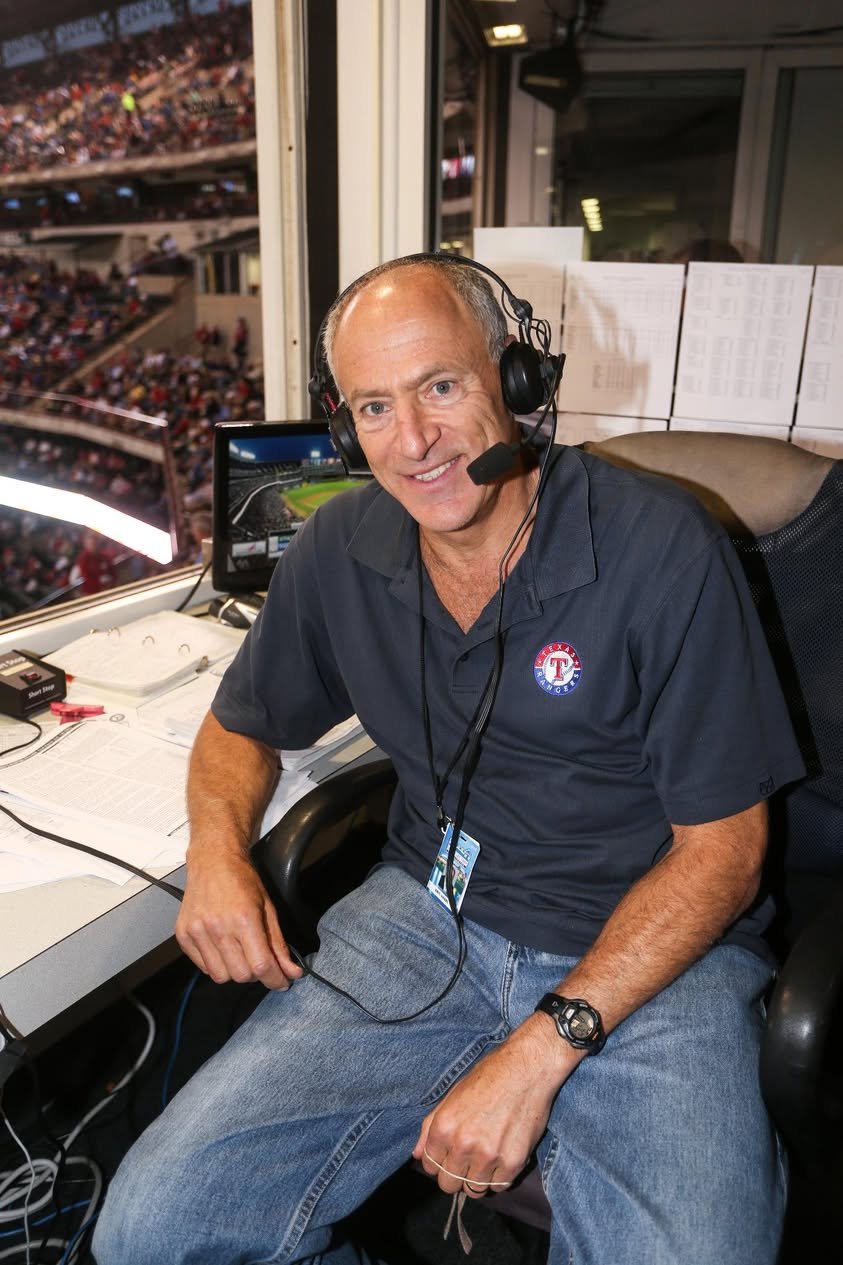
Whenever I ask people about a ballpark, I'm secretly hoping they'll stop talking about bricks and scoreboards and start talking about people. Eric Nadel did exactly that. Yes, Globe Life Field changed baseball in Texas by giving players and fans relief from the summer heat. But what fascinated me even more was how he described baseball itself—not as three hours of action, but as three hours of conversation. A place where broadcasters become part of your family, where a ballpark becomes a refuge, and where the soundtrack of a summer evening can become part of the story of your life.
Globe Life Field is still a young ballpark. How would you describe the impact it's had on baseball in Texas?
It completely changed baseball here.
The biggest difference is the retractable roof. In the old ballpark, summer baseball was physically exhausting for everyone. Players couldn't work outside before games. Fans dreaded day games. Pitchers wanted nothing to do with Texas.
Now people can come to a game in the middle of July and enjoy it. Players stay fresher throughout the season, pitchers are willing to sign here, and I honestly don't think the Rangers win the World Series without this ballpark.
You really think the ballpark itself helped them win a championship?
Absolutely. After a ten-game homestand in the old stadium, everyone—players, broadcasters, staff—was exhausted. We'd actually look forward to long road trips because they gave us a break from the heat.
The cumulative effect over six months was enormous. With Globe Life Field, that physical drain disappeared.
You've spent more than four decades calling games outdoors. What's it like now broadcasting from an indoor ballpark?
Refreshing.
At the old ballpark we'd watch the temperature inside the booth climb into the 90s. We'd finish games drenched in sweat, go home exhausted, shower immediately, and hope we'd recovered enough to do it again the next day. Now I can simply focus on the game. Ironically, the new broadcast booth is farther from the field, so it's harder to read balls off the bat. But I'd never trade that for the misery of the old conditions.
Opening a new stadium during COVID had to be unusual.
It was surreal. There were cardboard fans instead of real people. No ambient noise. No energy. As broadcasters, we had to create all of the excitement ourselves. Oddly enough, every Rangers ballpark has opened under strange circumstances—labor strikes or a pandemic. None of them ever got the normal celebratory first season.
What has Globe Life Field done for the Rangers fan base?
Eric: It transformed the experience. The ballpark has become a refuge from the Texas heat instead of something people have to endure. People now come because they know they'll be comfortable for three hours. Once they experience it, they're much more likely to come back.
You've stayed with one organization for 46 years. What's the secret?
Don't make the important people mad.
(Laughs.)
Seriously, loyalty matters. Relationships matter. I was fortunate to grow into the job and work alongside Mark Holtz, who helped make both of us better.
Robby: What makes baseball on the radio different from every other sport?
Baseball is conversational. Most of the connection happens when the ball isn't in play. Because of the pace, listeners get to know you. They invite you into their homes, their cars, their summer evenings. People tell us, "It feels like you're part of our family." That's the greatest compliment a broadcaster can receive.
Is there anything else about Globe Life Field that stands out to you?
I love how intimate it feels. The seating is steeper than almost any other ballpark. Instead of stretching the crowd away from the field, every deck feels stacked on top of the action. It gives the stadium an intimacy that's easy to overlook but impossible not to feel once you're there.
What's it like having President George W. Bush at Rangers games?
It's special because he genuinely loves baseball. When he owned the Rangers, he'd sit with us during batting practice. Later, as governor, he'd tell us he listened to our broadcasts while sitting on the veranda at the Governor's Mansion smoking a cigar.
Whenever I wondered who might be listening, I'd picture the governor sitting there with a radio.
~~~
More from Eric Nadel
NOTE: The above was edited for clarity and length.
You can read the full transcript here.