
Dave Raymond
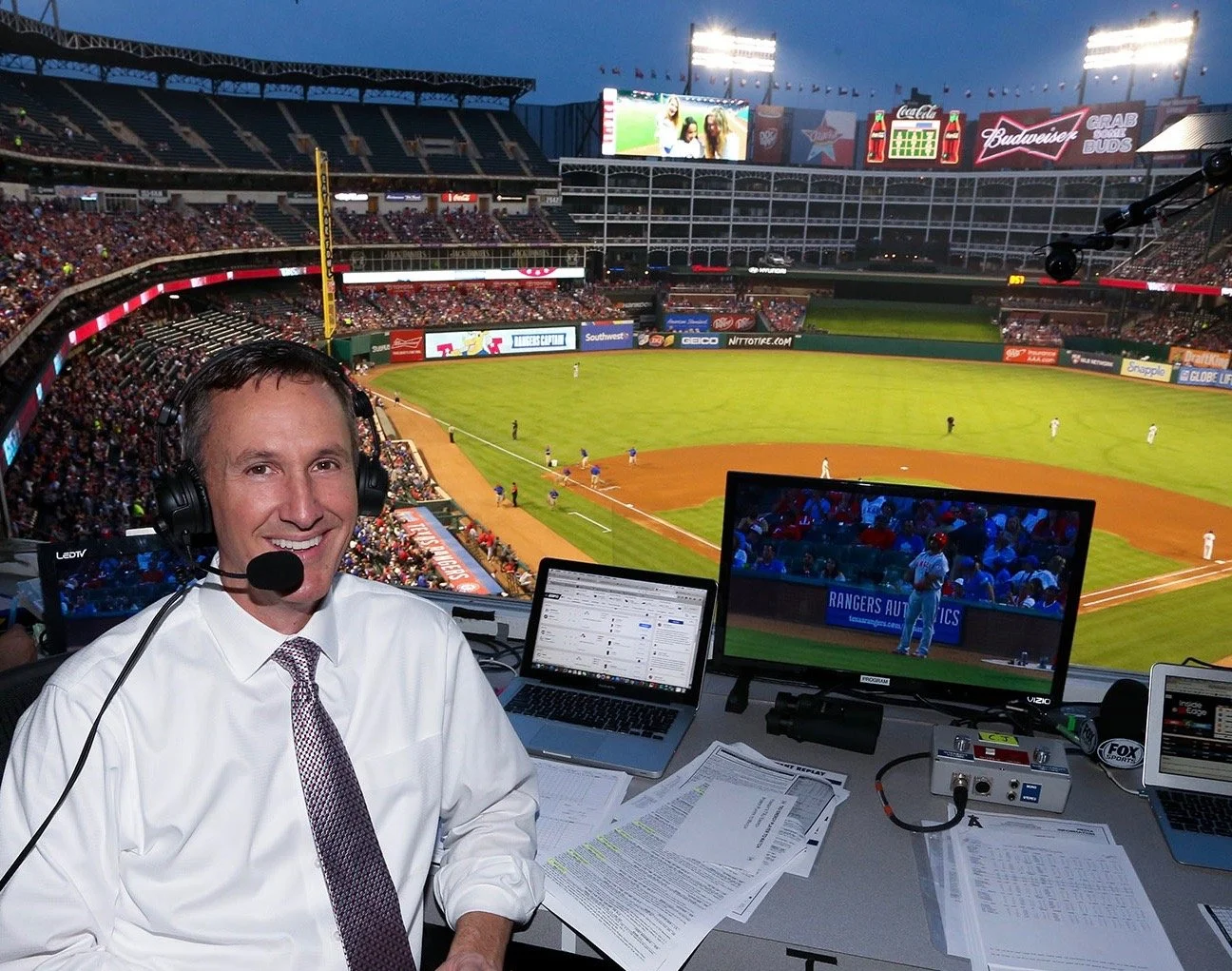
I've spent enough years around Major League ballparks to know that fans don't just fall in love with the game—they fall in love with places. So whenever I sit down with someone, I usually end up asking the same kinds of questions. What changed when the new ballpark opened? What does the crowd sound like when it really matters? Why do certain traditions outlive generations of players? Dave Raymond's answers reminded me that a ballpark is never just concrete and steel. It's memory. It's identity. Sometimes it's celebration. And sometimes, when it's taken away, it feels an awful lot like losing part of yourself.
What was it like watching the Rangers go from Globe Life Park to Globe Life Field—from outdoor baseball in brutal Texas heat to an indoor ballpark?
Globe Life Park represented a turning point for the Rangers franchise. It was beautiful, and people loved it. When plans for the new stadium came out, there was actually sadness. Fans said, "Yeah, it's brutally hot... but it's our brutal." There was nostalgia before anyone had even left.
Then the new park opened during COVID, so it never got the proper introduction. But once baseball returned to normal, everyone realized what a difference it made. Instead of surviving 100-degree heat, fans could simply enjoy baseball. The old park regularly saw people carted out with heat exhaustion. The new ballpark completely changed the experience.
How much do you think that helped the Rangers attract players—and eventually win a World Series?
More than people realize. Pitchers flat-out told the Rangers they wouldn't sign because of the heat. Some literally said, "When you get the new ballpark, call me." It's hard enough to make thirty starts in a season. Add triple-digit temperatures every night, and you're asking guys to do something almost impossible.
After winning the World Series, what changed about the atmosphere around Globe Life Field?
Everything.
Before, people came to the ballpark thinking about survival: Drink enough water. Don't overdo it. Hopefully we make it to the eighth inning.
Now they come to celebrate baseball.
They're excited to watch Corey Seager hit or Nathan Eovaldi pitch. They're there to cheer for champions. Instead of worrying about the weather, all of their energy goes toward the game itself. That changed the personality of the ballpark.
As a broadcaster, what is it like calling unforgettable moments?
I never prepare lines ahead of time.
Every game feels like my own athletic event. Do I have my fastball today? Will I be quick enough if something incredible happens?
The challenge is finding the words while still letting the moment breathe. Sometimes you think you nailed it and didn't. Sometimes you think you missed it and realize afterward that saying less actually made the moment stronger.
One thing I love about baseball is how ballparks develop their own traditions. Allen McDaniel, Chuck Morgan, Dancing Hannah... these people become part of the experience.
That's exactly what makes baseball special.
Chuck Morgan. Allen McDaniel. Dancing Hannah. They're all part of the ballpark's identity.
A first-time visitor may not understand it, but everyone else does. That's community. That's what makes a baseball park feel like home. It takes hundreds of people—most of whom fans never know—to create that experience every night.
I watched your broadcast during the final series in Oakland. You spoke with incredible emotion about what the Athletics leaving meant to that city. What was that experience like?
I'll never be part of another broadcast that means as much to me. There were several moments where I simply couldn't talk because I was crying. A baseball team isn't just entertainment. A ballpark is like a church in a community. It gives people identity. It gives them purpose. It gives strangers something that instantly connects them.
I grew up in Nebraska. If someone had somehow moved the Cornhuskers to another city, it would've devastated the entire state. That's what Oakland was losing. The A's were part of who those people were. When I met another Nebraskan recently, we immediately connected because of that shared identity. That's exactly what baseball does.
Oakland had history. It had championships. It had legends. It had a unique place in baseball culture. To take that away hurt baseball itself.
The moment that completely broke me was seeing the players wear their road jerseys with "OAKLAND" across the chest during that final homestand. Fans couldn't even buy merchandise with "Oakland" on it anymore because everything had already been stripped away.
Taking a team is painful. Taking away a community's identity is heartbreaking. If you don't want the franchise, sell it to someone who does.
I have never been prouder of anything I've done professionally than that broadcast because I felt like someone needed to say those things.
~~~
More from Dave Raymond
NOTE: The above was edited for clarity and length.
You can read the full transcript here.