
Mike Zagaris
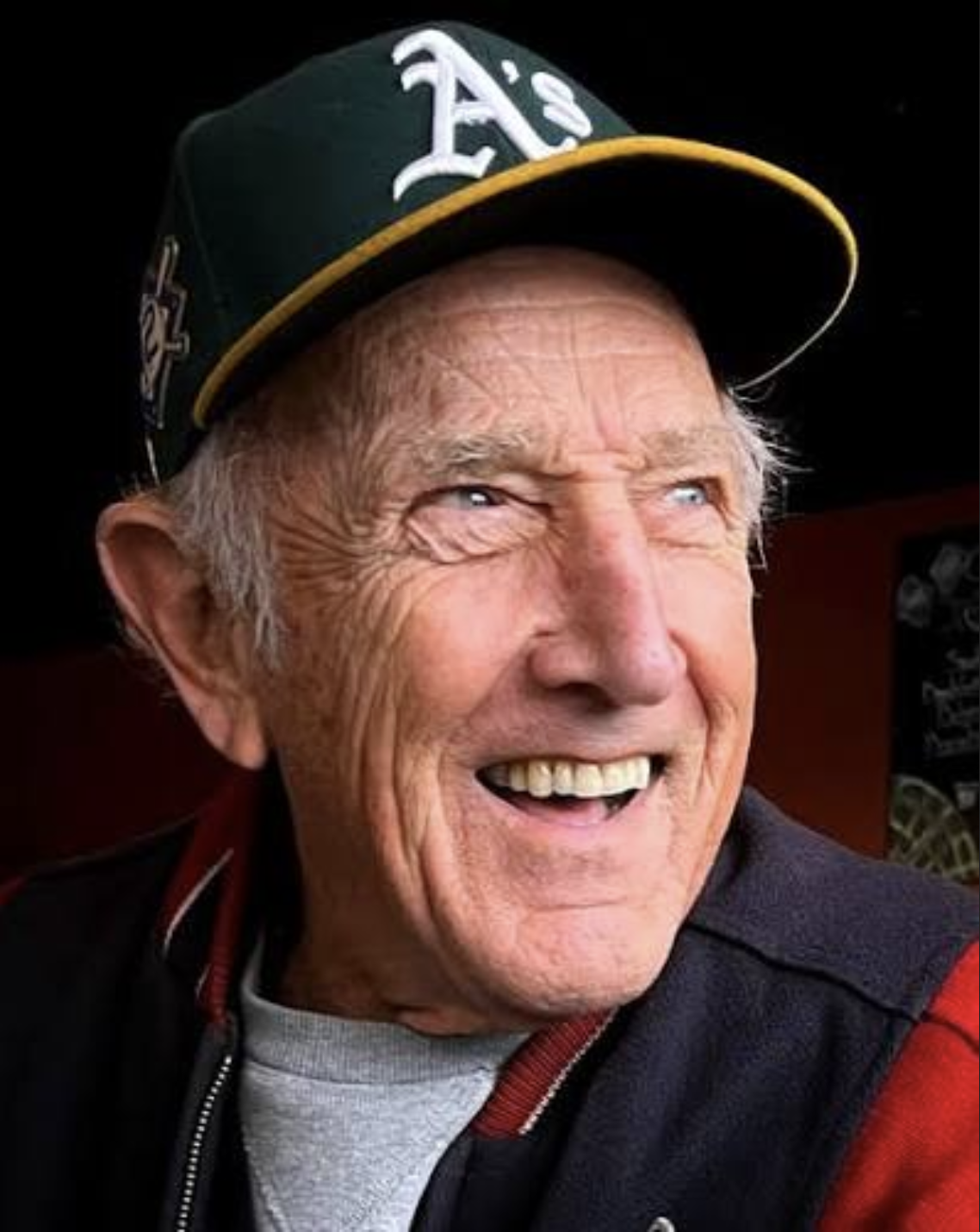
Every ballpark has its own story, but the ones I find myself chasing usually have very little to do with architecture. I'm much more interested in the people who spent decades inside those walls. What made them stay? What did they see that the rest of us missed? Why does an old tunnel or a battered clubhouse still bring tears to someone's eyes? Those were the questions I wanted to ask Mike Zagaris, who documented the Oakland Athletics for more than four decades. His answers reminded me that a ballpark isn't remembered because of its concrete. It's remembered because it became home.
Z, you photographed baseball in Oakland for decades. You saw the dynasty years, Billy Ball, the Bash Brothers, and everything in between. When you think about the Coliseum, where does your mind go first?
I think about how different it all was. When I first started shooting the A's in the early '70s, they were winning World Series, but the ballpark was practically empty. Charlie Finley had assembled one of the greatest teams baseball has ever seen, yet there were games where Reggie Jackson was batting in front of sections of empty seats. Then the Haas family bought the club, Billy Martin arrived, Billy Ball exploded, Crazy George climbed onto the dugout with his tambourine, and suddenly the Coliseum became one of the loudest places in baseball. Nearly three million people came through the gates. The place absolutely rocked. That's really when Oakland baseball became something special to me.
I've always described the Coliseum as a dump that I somehow loved. How do you explain what baseball meant to Oakland and why that ballpark mattered so much?
It was a celebration every night. Oakland was a blue-collar city, and the fans reflected that. The Giants always felt like the polished, established franchise. The A's were the scrappy kids across the bay. Oakland loved being the underdog. They reminded me of the Mets compared to the Yankees or the White Sox compared to the Cubs. When the team was winning, that place was electric. As a photographer, it was my favorite ballpark because everything felt relaxed and authentic. You could sit on the dugout steps talking with opposing players before the game. Fans and players still felt connected. Even though the Coliseum had too much foul territory and plenty of flaws, before Mount Davis blocked the hills, you could look beyond the bleachers and see Oakland itself. It felt open. It felt real. Baseball there belonged to ordinary people. Today so much of professional sports feels corporate. Oakland still felt like baseball from another era, and I don't think we'll ever see that again.
One of the things people who never visited Oakland don't understand is that tunnel leading from the visitors' clubhouse to the field. What made it so unique?
There isn't another experience like it. Visiting players literally walked through the same space as fans heading to the diamond level seats. Even after they emerged from the tunnel, spectators were standing only a few feet away. Sometimes it was playful, sometimes it wasn't, but there was a closeness between fans and players that doesn't exist anymore. I remember Jack McDowell walking to the dugout while one fan kept heckling him. The fan yelled, "Last year Cy Young. This series, sayonara!" Jack and I just started laughing. Those interactions were part of the Coliseum's personality.
That access really was unlike any other park. Do any other stories stand out?
One day a fan rode one of the Red Sox so relentlessly that Reggie Smith finally defended his teammate. The fan immediately turned on Reggie, and within seconds Reggie was trying to climb onto the dugout roof to get at him before teammates pulled him back. That's Oakland. Fans were close enough to become part of the game itself. You couldn't script moments like that.
What was it like photographing those final days in Oakland?
I tried not to anticipate the emotions. I wanted to simply experience them as they happened. After the final game, players drifted into the clubhouse because they had to catch a flight, but I walked back onto the field by myself. People were collecting dirt. Others were taking pictures. I didn't want to stand around talking. It felt deeply personal. Without really thinking, I knelt down and kissed the pitcher's mound. That photograph ended up on the back page of the New York Post, but I wasn't trying to create an image. It was simply gratitude. That ballpark represented my entire adult life. Baseball lets you remain a kid forever, and when it ends, what you miss most isn't the game itself—it's the clubhouse, the friendships, and the people you shared every day with. There isn't another place in the world quite like that.
You've spent your entire life around baseball. What keeps pulling people like you, Vince Cotroneo, and Mickey Morabito back year after year?
It's love. Nobody stays in those jobs because of the money. You stay because baseball becomes part of your identity. It's much bigger than wins and losses. It's a culture. It's a lifestyle. It's friendships that last fifty years. It's walking into a clubhouse and feeling like you're with family. Once baseball gets into your blood, it never really leaves.
NOTE: The above was edited for clarity and length.
You can read the full transcript here.