
Jenny Cavnar
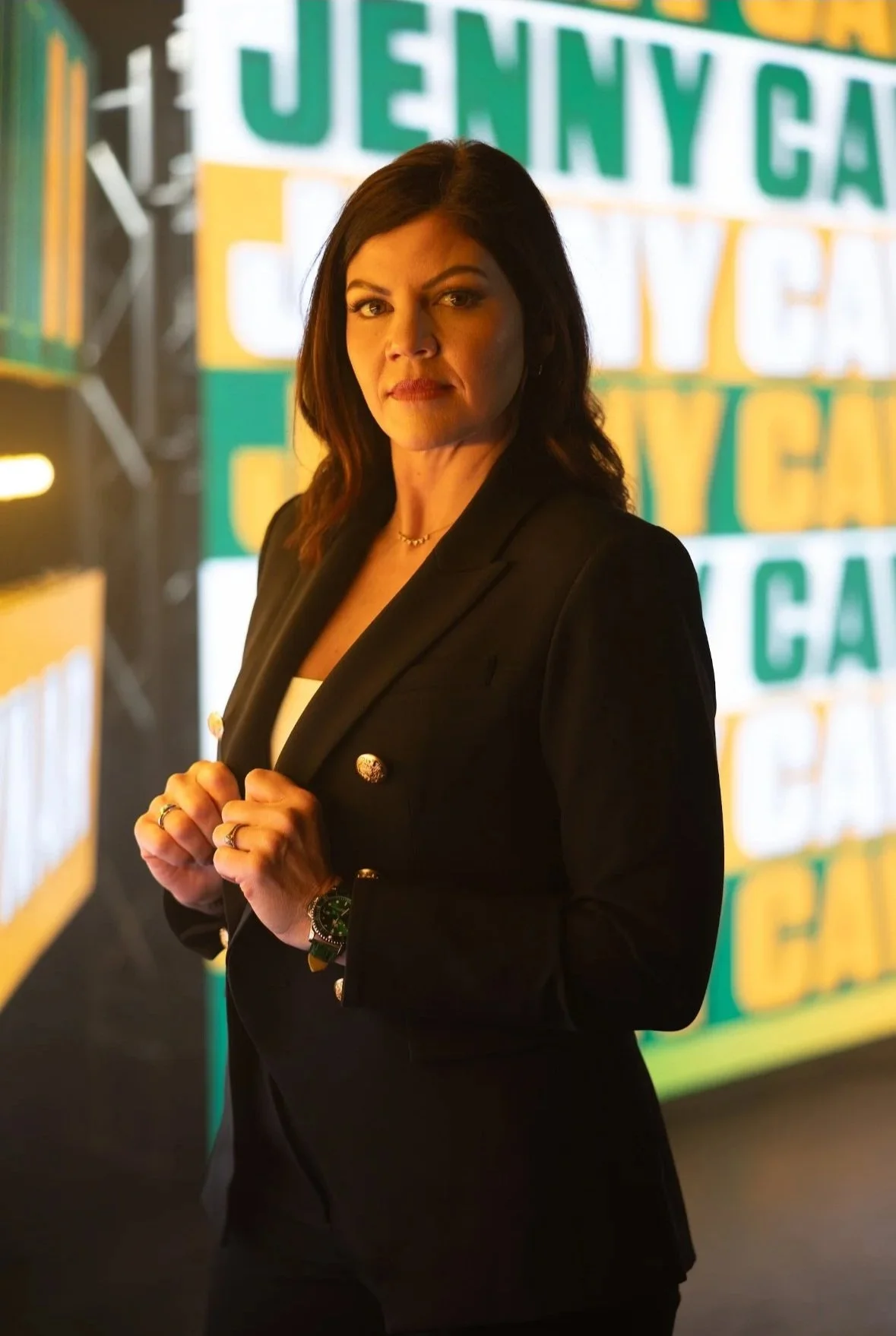
I've always believed the most interesting conversations about baseball begin with questions that have nothing to do with batting averages. What does it feel like when an entire city loses its ballpark? How do you tell that story without getting in the way of it? Can a broadcaster carry the emotions of tens of thousands of fans while still calling the game? Those were the questions I wanted to ask Jenny Cavnar after her remarkable first season in Oakland. What she described wasn't simply the challenge of broadcasting baseball. It was the privilege—and the burden—of helping an entire community say goodbye.
Jenny, you've just finished your first season as the first female primary television play-by-play broadcaster in Major League Baseball. At the same time, you stepped into a franchise that was living through its final season in Oakland. What has this year been like?
It's honestly hard to process. In one calendar year, I went from becoming the story instead of telling the story to learning an entirely new job in a brand-new city, all while that city was losing its baseball team. I came from Colorado, where I had spent years earning the trust of a fan base that knew me. Suddenly I was in Oakland, where people understandably didn't want any more change in their lives. The biggest change imaginable was already happening to them, and I felt that every day. There was excitement, but there was also empathy, grief, impostor syndrome, and the challenge of balancing all of it while raising a family hundreds of miles away. It wasn't just a new job—it was living through baseball history.
You've spent years as a reporter and host. What changed when you became the voice of the game?
I leaned into what I already knew—relationships, storytelling, and preparation—but play-by-play requires an entirely different way of seeing baseball. Every ballpark changes how you call a game. During batting practice I stopped roaming the field because I needed to sit in the booth and study how the ball carried, how the dimensions played, where the shadows fell, and how my eyes would track the action from that particular vantage point. That's one of the beautiful things about baseball. Every stadium has its own personality, and every broadcast has to adapt to it. Eventually I realized I had to trust my instincts and let the game breathe instead of overthinking every pitch.
Fans hear a broadcaster every night, but they probably don't realize how much self-evaluation goes into the job. What was that process like?
It was difficult because criticism came from every direction. I eventually left social media for my own mental health. But the bigger question became whether we had done the game justice. As September approached, I couldn't stop thinking about how we were going to tell the final story of baseball in Oakland. How do you celebrate generations of history while mourning the loss of a franchise? That's an enormous responsibility. Broadcasters become caretakers of a community's memories, and I wanted to honor the fans who had given so much of themselves to that team.
I watched the final game and had tears in my eyes. What do you remember about that day?
The first thing I remember was seeing the Coliseum completely full. It was the first packed house I'd ever experienced there, and the energy was unlike anything I'd felt all season. People wondered whether the day would be angry, but it wasn't. The fans had already processed their anger. They came to spend one final day together in their cathedral. They soaked in every inning because they understood it would never happen again. That crowd brought back memories of championship seasons, playoff runs, family traditions, and everything that ballpark had represented for generations. As broadcasters, our job was to make everyone watching at home feel like they were there, and carrying all of those emotions while sitting beside Dallas Braden—who had thrown a perfect game in that stadium—was physically exhausting. By the time we boarded the flight to Seattle, every single person on that plane looked emotionally spent.
Even though you didn't grow up in Oakland, it seems like that place found a way to affect you.
Absolutely. I experienced the Coliseum through the people around me. My mother-in-law grew up going there and started pulling out scorecards from the 1970s. She shared pictures of games she attended with her own mother. Dallas shared what that stadium meant to him. By the end, I realized that I wasn't simply covering a baseball team—I was witnessing an entire community saying goodbye to the place where they fell in love with the game. I wish you could bottle what happened that last day because those fans experienced one final reminder of what community feels like. Oakland wasn't just losing baseball. It was losing a gathering place filled with characters, traditions, and memories that existed nowhere else.
What message do you hope young broadcasters—especially young women—take from your journey?
You have to love this game because this isn't simply a career—it's a lifestyle. The hours are demanding, family life is different, and success only comes if you're willing to put in the work. I never imagined becoming a play-by-play announcer until someone else believed I could do it. Sometimes another person sees your future before you do. I also think about people like Melissa Ludtke and Vin Scully. Melissa changed opportunities for women simply because she refused to accept unnecessary barriers. Vin showed me what greatness looked like, not just behind a microphone but in the way he treated every single person. If I can carry a small piece of that forward while helping the next generation, then this journey has meant something bigger than myself.
You've become someone younger broadcasters look up to. How important is that responsibility?
It's incredibly important. So many people helped me when I was starting out that I've always believed it's my responsibility to help the next person. Looking around now and seeing young women thriving in this profession—and knowing maybe I played a tiny role in encouraging them—that's one of the most meaningful parts of this entire experience. Creating community has always mattered to me, and if I've helped strengthen the baseball community even a little, then that's something I'm deeply proud of.
NOTE: The above was edited for clarity and length.
You can read the full transcript here.