
Dallas Braden
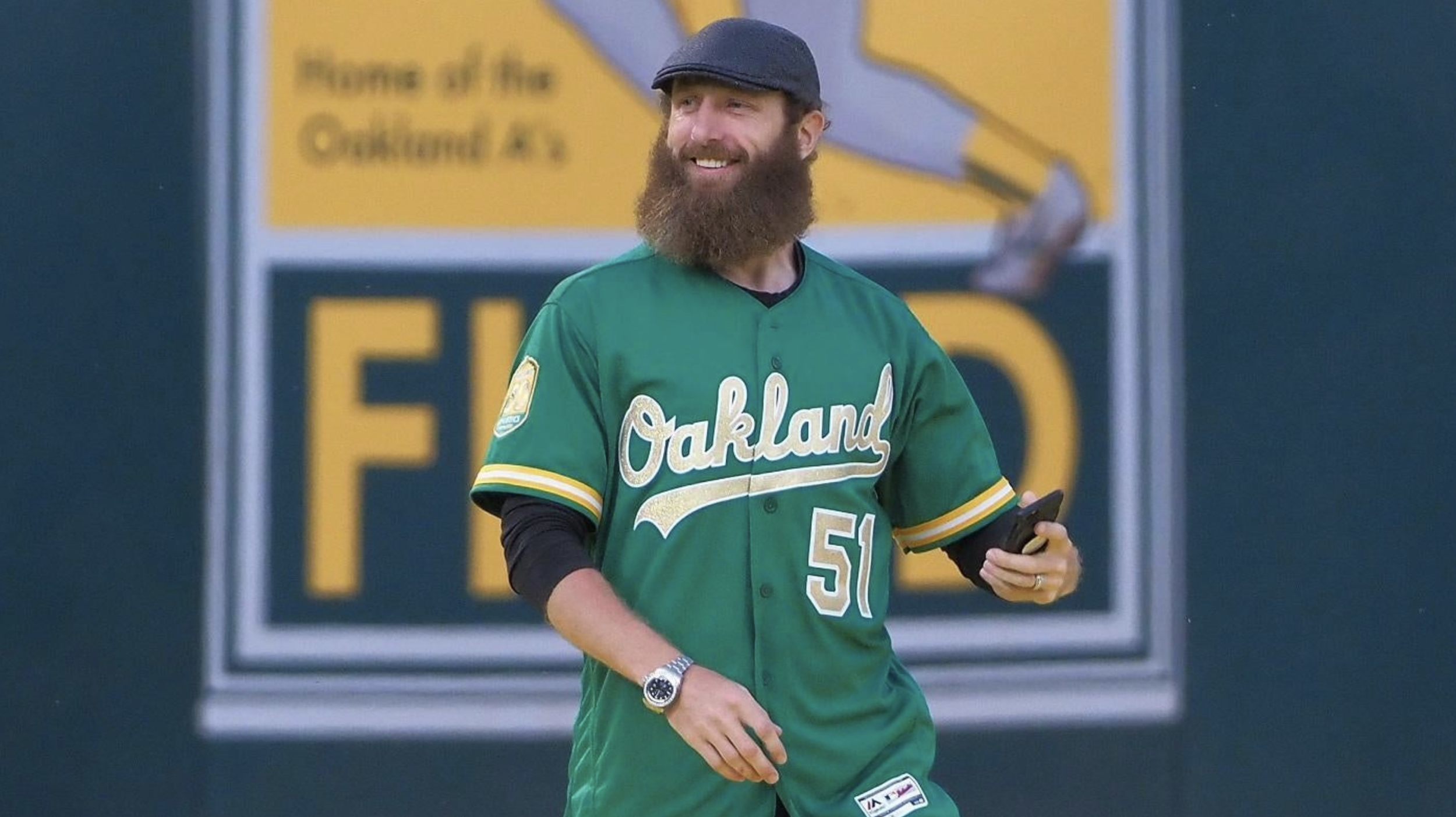
When I talk to people about ballparks, I usually find myself asking the same question in a dozen different ways: What made this place feel like home? Not what made it beautiful. Not what made it modern. What made people love it enough to carry it with them long after the lights went out? That's where my conversation with Dallas Braden kept leading. Every answer came back to the same idea: baseball isn't just played in a ballpark. It's lived there. For Dallas, the Coliseum wasn't simply where he threw a perfect game. It was where his entire life came full circle.
Dallas, you've gone from growing up an A's fan, to pitching for the Athletics, to now becoming one of the voices of the franchise. What has it meant to be a steward of baseball in Oakland during such an emotional chapter?
It's difficult to put into words because there are so many emotions wrapped up in it. I don't wake up thinking about my place in baseball history. I wake up grateful that there are people who care about this team and this game as deeply as I do. That's why I've always felt such a connection with A's fans. I understand that a Tuesday night game or a Sunday afternoon game isn't just entertainment—it can shape your day, your week, even your life. As broadcasters, we have the privilege and responsibility of narrating those moments. Ray Fosse taught me that your job isn't simply to explain baseball; it's to represent the franchise, the fan base, and your love for the game without apology. I've tried to make every broadcast feel like a group of friends sitting together watching baseball because that's what the game has always been for me.
Ray Fosse meant so much to Oakland. What's it like carrying that torch after someone so beloved?
That's something I think about every day. Ray helped generations of fans fall in love with baseball. Someone once told me, "My father grew up listening to Ray. I grew up listening to Ray. My children are growing up listening to you." That's overwhelming because you're suddenly reminded that you're narrating people's summers and becoming part of their family's memories. I can't be Ray, but I can carry forward the way he treated people—with kindness, honesty, and genuine joy for the game. That's what I try to honor every time we go on the air.
I remember seeing fans become emotional around you during the final series. Years from now, what do you think you'll remember most?
Honestly, I haven't fully processed it because there was still a job to do. I wanted the emotions to inform the broadcast without overwhelming it. I wore a custom pair of shoes that day featuring Brian from the Last Dive Bar, Right Field Will, and every retired number in Athletics history because I wanted something tangible to preserve that moment. After Brian and Will signed them, I locked them away forever. But what stays with me isn't the shoes—it's the fans. Whatever impact people think I've had on Oakland baseball pales in comparison to what those fans have given me. They welcomed me as a player, as a broadcaster, and as part of their summers. Standing in Seattle watching people who had traveled from Oakland to say goodbye, seeing them hold up heart signs and messages, there were moments I had to step away because I simply couldn't keep myself together. I'll never forget that day.
How much did baseball in Oakland mean to you? Because I loved that place. Everything about it should have driven me crazy, but I couldn't wait to get back there.
That's because the Coliseum was dripping with history, nostalgia, and authenticity. I grew up cheering for that team. Then I was drafted by my hometown organization, played my way through Stockton, Midland, and Sacramento before finally driving into the players' parking lot at the Coliseum—not as a fan, but as an Oakland Athletic. Then life came full circle when I became one of the broadcasters. At every stage, it was the same fans. They watched me dream, they watched me play, and now they've watched me tell the stories of the next generation. That's an incredibly rare journey, and it's one I'll never stop appreciating.
Your perfect game on Mother's Day is one of baseball's unforgettable moments. Looking back now, what does it mean to you?
It's probably why we're having this conversation. But for me it was never just about the baseball. After my mother died, my grandmother and I essentially erased Mother's Day from our lives. It became the one day we tried not to acknowledge. Then, somehow, the baseball gods gave it back to us. My grandmother was there in the stands. That perfect game transformed the saddest day on our calendar into our happiest memory together. If everything ended tomorrow, I'd be at peace knowing I got to wear my hometown team's uniform in front of the people who helped raise me and that my grandmother experienced that moment with me. That's worth everything.
How would you explain baseball in Oakland to your grandchildren one day?
I'd tell them it was something they may never truly experience anywhere else. Not because other fan bases aren't passionate—they absolutely are—but because Oakland's love was different. It wasn't polished. It wasn't manufactured. It came from commitment. Fans donated hundreds of thousands of dollars simply to thank the organization. It was the birthplace of the wave. It was Crazy George and the drums. It was Rickey Henderson growing up nearby and becoming a hometown legend. It was Root Beer Float Day and Fantasy Camp. The Coliseum turned things that should have existed only in stories into real life. It made baseball feel personal, and that's why people still miss it.
NOTE: The above was edited for clarity and length.
You can read the full transcript here.