
Bengie Molina (Transcript)
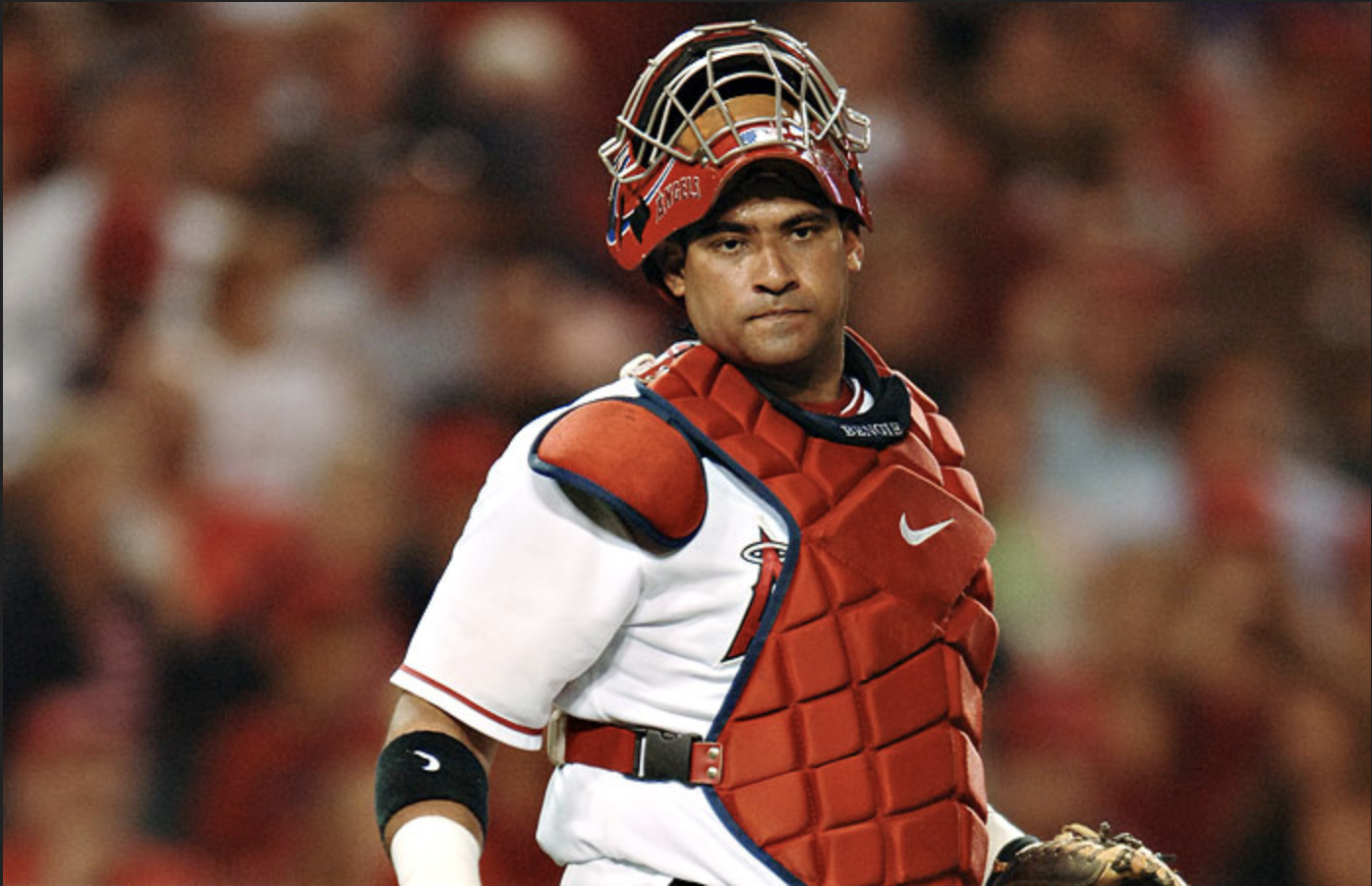
Robby: All right, here we go with my man Bengie Molina. Bengie, first of all, how do you describe you and your brothers and your lives and just the role that the game of baseball plays in your collective lives as brothers?
Bengie: Wow, that is a really good question, man. To describe us, it's hard. Well, we can tell you a few words about us. I think the first one will be obviously God, because he's the number one up there, and he made it happen for us. But also the humility in us, knowing where we come from. Respect is a big one. We have a lot of respect for people, so we look for the same towards us. Obviously, very talented. We have done so much good for the baseball game, for the game of baseball, but also for community, right? Because we have been involved in community. I got to the big leagues, my first full year was 2000, and ever since, I've been involved. And Yadi got in in 2004, and ever since then, he's had the charities and all that stuff, and José does it the same way. So we have been involved. So there's probably a few words that can describe us. We have a lot of heart. Our heart is huge, man. That's why I said humility, which is very important for us—not only in the game, but outside the game. Like Roberto Clemente is our idol, and he was a great player, Hall of Fame player, but man, outside the lines, he was a great human being. And I think my dad was part of that. My dad put that in our hearts to be a good human being first, and then you're the baseball player. So there's so many things that I'm so proud of our family, of what we have done, helping people and being just good human beings out there.
Robby: So that one's a tough one, buddy. Yeah, well, you know, because that's kind of what we're doing here, Bengie, is the story behind the story. Can you just tell me a little bit—and you don't have to answer it very long, but you and your two brothers, what was it like around the house and in the yard or at the local baseball field? How much did you play baseball? And what were those moments like for you?
Bengie: Let me tell you this. We were playing baseball seven days a week. Really. Here's the reason. We're three boys, and our practices run from Monday and Wednesday, Tuesday and Thursday, and then Friday, ourselves. And then Saturday and Sunday, one of us had a doubleheader. So we run from—I mean, I'm talking about when I was five years old, and Yadi started when he was four. So José started like around four too. So all of us were at the field every afternoon after school. It was right in front of our house, so it was easy to get to, and we were at the field every single day. That's what people do not understand. We were out there either playing real ball or playing stickball or just practicing. We were doing something. We were very talented in basketball. We were very talented in soccer, but those were not our sports. Our way out of the island was playing baseball. So we did it every single day. Plus my dad went to work, and he went to work at 4:30 in the morning every day, weekdays and sometimes Saturday for overtime money.
Robby: So what does your dad do?
Bengie: He worked at a Westinghouse factory making those transformers that are on the street right now that you see on the street for electricity. He made them. He worked standing up making those transformers for 40-plus years. I mean 30, 35-plus years. And then in the afternoon, he got home by around 4:30, and watched his favorite show—Sanford and Son. He loved that show, and then he rested for a few minutes and he'd meet us at the field. So this is routine every single day. So people do not know that my dad worked that hard for more than eight hours a day, and he worked that hard. He never had a credit card. He never had a debit card. He never had a bank account. Every money was spent in the week. You know what I'm saying? Whenever he got paid, he had to pay groceries. He had to pay the power, electricity, or whatever, water and the house or whatever it was. So he never had a bank account or anything like that. So that's how our household was. And then every day we had hand-me-downs from my cousin, we got some hand-me-downs on Nintendo or PlayStation. And guess what we were playing? We were playing baseball. So you know, it was all around our heads. And also, we eat, we sleep, we did everything baseball. So I think that's where it starts from. My dad, you know.
Robby: Bengie, when you look at you and your brothers, it is hard to make the major leagues to begin with. And obviously Yadi is going to the Hall of Fame, and that should not even be up for debate. Number one. Number two, playing 13 years in the big leagues like you did is no slouch. That's not easy. José had a nice, long career in the big leagues as well. I can't remember exactly how long he played, but it was a long time.
Bengie: He played 15 years, my brother José, right?
Robby: Yep, yep. And obviously, Yadi's career is Yadi. But how much did those lessons from your dad, watching him go to work, then take a rest, and then come out and meet you at the field—how much did that shape the fact that the three of you were not only able to make it to the big leagues out of Puerto Rico, but one of you becomes a Hall of Famer, and the other two play a decade and a half in the big leagues?
Bengie: I think it helped so much. It helped out a lot, physically, mentally, you name it. I think it was everything for us to stay healthy. I had a career where I was never a backup. José started being a backup later in his career, but Yadi never was a backup. So we not only made it, but we stayed there for a long time. We stayed there and did a good job, which is really hard right now. You see a lot of kids that make it, but they fade away after one or two years because they can't keep up. So for us to have that, it's amazing, man. I think all those lessons from my dad, all the lessons from him teaching us the game of baseball, to respect the game. Oh, man, I tell you, my dad was so humble. So I think all those lessons helped us so much. That's why I made a book called "Molina" about my dad and my mom, about how important they were to our success. This is not a biography. This is not about my numbers. This is not about Yadi's Gold Gloves. This is not about José's championship. This is a tribute to my dad and my mom, so parents out there can understand the sacrifice you have to make for your kids' success later on. So it's going to be a movie pretty soon. We're working on it, but it's a way of teaching the parents, hey, support your kids. Be positive with them. Take them out to play. Take them out to run around. Just make them better people. And this is one of those things. I think my dad's lessons kept us grounded, kept us humble. And other than that, we dedicated ourselves. We worked hard. We were very positive, and then in the end, you saw our careers. It's amazing.
Robby: It's really been an amazing career to watch all of you. So let's ask this, because I don't want to take up much of your time, but when you look at 2002, you won a Gold Glove that year, which, again, is so hard to do, Bengie. It just is. It was your first Gold Glove that you won that year, and you're a World Series champion in seven games. How do you describe the year 2002 for you and for the Anaheim Angels?
Bengie: Well, first of all, I think it's a dream when it happens, because you obviously can't believe that you're the last team winning. You didn't lose when you went home, you won when you went home, and you're the last team doing that. Not only that, like you mentioned, a championship, a ring which is hard to get, which is tough to get, and we were walking away with one of those. Not only that, but I spent five years with my brother in Anaheim, José, and it was the most amazing time I had in baseball. With my brother being there as a backup and me being a starter. It was amazing. Amazing. By the way, José, his birthday is today. Oh, nice. So he's 50. Can you believe that? Oh, I'm going to be there in a couple months, brother.
So the fact that we not only won the championship, but you won it with your brother, then you go out into a parade filled with people of the city that you represent, it is the most amazing, unreal—I have no words to describe it. It is the biggest feeling, the best feeling I ever had in a baseball career, not only because José was there, but we won it. It was super, super amazing.
Robby: Tell me about catching Game 7. What do you remember from that day? Like from the time you left your house or apartment or wherever you were, driving to the stadium, getting ready and catching a young rookie named John Lackey. What was that day like? What do you remember?
Bengie: I remember a lot of anxiety, a lot of nervousness. We were facing a really good team in the Giants, and I remember waking up and telling myself, "You got to calm down. You got to calm down, because this is it. There's no more game tomorrow. This is it." So we win or lose, we were going home no matter what. Obviously, you want to win. So you start thinking about the pitcher you're catching and everything that's happening. It's Game 7 at your house, at your home. So people are going to go crazy for you guys. And I mean, it was a bombardment of things thinking that I was thinking before the game, and I was so worried about myself. I calmed down once the first pitch, second pitch was thrown. I calmed myself down because it's a baseball game at the end. So but before that, the anxiety, the anxiousness just to go out there, and by that time, we didn't know who was going to pitch, so we got to know John Lackey was pitching when we got to the stadium. So it was just a lot of emotions going through, especially the ones where you're nervous and you don't know what to expect. Actually, I got a double to tie the game. I know they talk about the double that Garret Anderson hit with the bases loaded, which is the game winner, right, but I had a double against Livan Hernandez, an RBI double that tied up the game at one. So it was an amazing feeling, I tell you, but it was a lot of nervousness and anxiety, anxious for the game to start and see what happened.
Robby: You had a double to get the scoring going. What was that feeling like as you're standing on second base, just supercharging the crowd, like you did, Bengie?
Bengie: You know what? It felt great, obviously, because you just tied the game up at one. But a lot of things come to your mind, and it did to me when I was standing at second. First one was my dad and my mom were there. They were watching at home. Yadi—they closed off the street at my house, and they were watching on a big screen. So the fact that they were watching me standing at second tying the game at one on a double in Game 7, I almost cried. I almost cried at second base just from emotions, man. Just the fact that knowing that your parents and the whole family of Puerto Rico in Dorado were watching, it was, man, it was a proud moment for sure.
Robby: Can I get this straight? They shut down the street back home in Puerto Rico, and that's where Yadi was watching Game 7 of the World Series in 2002?
Bengie: Yes, sir, the whole town was there. My mom and dad closed up that street, and they put a big screen TV in front of our house, right next to the stadium, and they were watching it outside in the street.
Robby: What town was that, Bengie? Just so we're accurate with this.
Bengie: It was Espinosa, Dorado, Puerto Rico.
Robby: That's amazing. That's amazing. Now, just so you know, I have an umpire who umpired a Game 7, and who was behind the plate for Game 7, Jeff Nelson in 2014, the Royals and Giants. And then in this story that I'm putting you in, we have Tim Tschida, who was the third base umpire for your Game 7 in 2002. They talked about what it was like from an umpire's perspective. What is it like for a player's perspective? Because you had gotten ready for 162 regular season games, plus an entire playoff run, and this is the last game that's going to be played of the entire season. Was there a different feeling, or was it just another game?
Bengie: No, no, not just another game. Whatever tells you that it's just another game is lying. Tim was behind the plate in Game 6. So he was—it was and he was amazing. He was amazing. He kept talking to me. And so to hear these names whenever they come up now, and I can see them now and say hi, man. They love the fact that I'm still around. They love the fact that I was very nice to them. I'm very respectful to the umpires, so. But the meaning of the game. It is not just another game. You want to win this World Series. Think about it. A lot of teams have won World Series only once in their lifetime, and we are one of them. Angels have not gone to the playoffs in a long time, let alone win a World Series. So that's why you want to win it. The Giants had never won it, and they lost to us, but they came back three times later on, three times they won it in five years, but at that time, the Giants—that could have been their only chance. You know what I'm saying. So it's not just another game. Look at the Angels—they have never gone to the World Series since. So if we would have lost, they would have never won a World Series. You know what I'm saying. So you cannot sit here and say that it's just another game. No, there's a lot of nerves. It's a lot of—you want to do so much for the city, for the team, for the coaches, so it's not another game, buddy.
Robby: No, I knew that. That's why I left it open-ended, because I knew your answer was no. Hey, how did you manage Lackey through it, Bengie?
Bengie: Once he threw the first pitch or second pitch, we got into a groove. You know, even when they scored that run on him, even then I went to him and I said, "Hey, listen, I don't think we're gonna go without scoring. You hold these guys as long as you can, and then we're gonna be fine. So go out, get people out." And each inning, I told him, "I gotta get this batter out. I gotta get this guy out." And that made it easy for him. He's also a rookie, right? So I made it easy for him, thinking about separating the whole inning. Instead, he went out and got out by out, out by out, and before you know it, he was done. He did a great job.
Robby: What kind of guts did he have in that game, Bengie, for a rookie in Game 7 of the World Series? Come on, man.
Bengie: His whole career, he had bigger guts than most. He's a horse, man. He told me, he goes, "They're not gonna score. Let's go, Bengie. They're not gonna score anymore. I got this," and he's a rookie, right? So we had a bunch of rookies, but those rookies had played with Jose in the minor leagues, so José was my backup. And we were talking the whole time, "How do you catch Lackey? How do you catch [Tim] Salmon? How do you catch these guys?" And he was helping me with them. So, man, Lackey, big heart, and he showed it later on in his career. He showed it with Boston. He showed it with the Cubs, wherever he went. He showed people, "I got guts, you know, I can pitch anywhere I want."
Robby: Yes, that's what I'm saying. This is—I mean, of all the games you played in your career, how much does that one stand out, just in terms of what it represented for the franchise, the Anaheim, Los Angeles Angels of Anaheim? Not only that, Bengie, but just to see a rookie do that—five innings, one run, give his team a chance to win the game when he goes into the dugout.
Bengie: I think it's the number one. It's the top game of anyone's career when you win it, unless you're like Jeter and the Yankees when they won six. That's hard to pick, but for us, since we won that one, it has to be the number one game of our life, because it was super awesome. We got together, man. The whole year, we didn't have any arguments. We didn't have any issues with the team. We had great chemistry. We knew we had a great coach and great coaches that all they wanted to do was win that day, separate tomorrow, separate yesterday, and we win today. And we did it. We did it like that, man, we did it like that. And we did it with a lot of people involved in that championship. But that number one has to be number one game of anybody that has won just one championship.
Robby: Let's shift to St. Louis. How do you describe—it's almost like nothing else in the game, Bengie. How do you describe baseball in the city of St. Louis? What's it like? Somebody's never been there? How do you describe it to them?
Bengie: Oh, wow. I would say there's many words you can describe it, but I think classy. Classy is the word, because I think the fans understand the game. They're very respectful to the other team. They're very respectful to our team. They know what's happening out there. Perfect example: Albert gets a ground ball to second, gets the guy to third with one out, and he got a standing ovation, almost, because he got the guy to third. When I went to Anaheim, and Albert got the same hit, I mean, people were booing him because he did not get a hit, or he did not get a home run, or whatever. They're booing, right? So it's a different ballgame here. It's an experience. If you haven't been here in St. Louis and you want to get the experience of baseball—meaning the fans, meaning the fans inside the stadium, and the people going out of the stadium, enjoying the game, and people are into the game. I mean, this is a different experience. I can tell you. I've been working doing the Spanish radio for the Cardinals for 10 years now. And this is an amazing feat, just to come over here and be able to be part of the Cardinals organization. It's amazing.
Robby: Yadi, how do you describe the way your brother, your little brother, has impacted baseball in the best baseball city in America, in a lot of people's opinions?
Bengie: Let's say Yadi has a way of earning people, meaning he earned people by playing hard, by being a great teammate, by being a great human being in the community. I mean, you name it. And then when he played, he not only played, he had a Hall of Fame career, right? So he separates himself from maybe me, because I had a great career, but I did not have a Hall of Fame career. You know what I'm saying? So what he has done for the city, it's unreal. He kept the tradition going—the Lou Brocks, the Ozzie Smiths, the Bob Gibsons. He kept all that going by being the next Ozzie Smith, being the next Hall of Famer. You know what I'm saying. So he is part of St. Louis. You know, he's part of St. Louis, not only him. Obviously, there's more out there that did their part, but I think he's done so many amazing things in St. Louis, and people have loved him and still love him, which is amazing.
Robby: Why do you think your brother thrived in a Cardinals uniform?
Bengie: I think his dedication, his heart, the people behind him that when he was a rookie, put it in his heart to play the Cardinal way, to play the game right, to respect the game. The Albert Pujols, the Scott Roelens—what was the other guy? I forgot, but they put that in him. So yeah, he already had dedication and heart. He had everything. He had it in him. And then he came to an organization who was proud of winning, who was proud of working out, who was proud of getting people to the next level of their game. And he took off, man.
Robby: It really is incredible to see. You just don't see that anymore.
Bengie: No. Yeah, and obviously Albert went elsewhere. But when you look at the three of them, have you ever seen a group of three players more closely associated with a city than Adam Wainwright, Albert Pujols and Yadi Molina? I don't think it's happened. I mean, has it happened in the last 30, 40 years? I could be missing a few, but for that long to have that kind of an impact in a city?
Bengie: No, I have not seen it anywhere. I think these three guys have done so much for the organization, taking care of communities, taking care of hospitals, taking care of kids, taking care of schools, telling them and guiding them to the best way of doing it. So I think they have done great, man. I think they have done their part. Now it's time for these young guys to step up and feel the same way. Feel, have the same heart. Have the same feeling that these guys held on to for so long and step up and take care of the city how these guys did. It's amazing.
Robby: Final thing I'm gonna let you go. How proud are you to be Yadi's big brother?
Bengie: Oh my goodness. I'm so proud of him. Everybody knows him as Yadi, right? Obviously, I was his coach when he was five years old. I was 15, and I was his coach when he was playing. So I am super, extremely proud of him. He busted his butt. He worked so hard. He put family as a motivation, and he went and took it, man. I am really, really proud of him, not only inside the game, but outside the game. You know, the way he takes care of people, the way he loves taking care of people, he takes care of kids, and he has a foundation out there. So I'm extremely proud of the man he is. I'm extremely proud of the family man he is with his family. And I really, really, I can't even say enough words for him, because I am super, super, super happy for him.
Robby: Last thing, really, there are a lot of fans who've never been to St. Louis for a baseball game, Bengie. What would you say to them if they were going there for the first time? How great an experience is it to see a baseball game at Busch Stadium? I'm talking about overall, I realize the team's had a little bit of a bumpy road the last couple of years, but that place is the place to watch a baseball game.
Bengie: Yes, to come and enjoy it, man, to come out early and enjoy the outside of the stadium, which is really family friendly, and it's also adult friendly. Also to come over early to go watch BP, get the whole experience. Watch the whole game from whatever seat you are. You're having a great experience. When the game is over, it's very safe, it's very family oriented. There's kids around, you know. So to come over early and enjoy the whole thing, man. And not only that, we haven't even talked about Opening Day, which Opening Day should be an off day for everybody, because it's a really, really holiday here. I mean, I never—I've been to a lot of Opening Days around a lot of ballparks, but I tell you what, I have never experienced Opening Day like St. Louis. So that's part of it. If you want to have a bucket list, St. Louis should be on it. I love it.