
Chris Iannetta (Transcript)
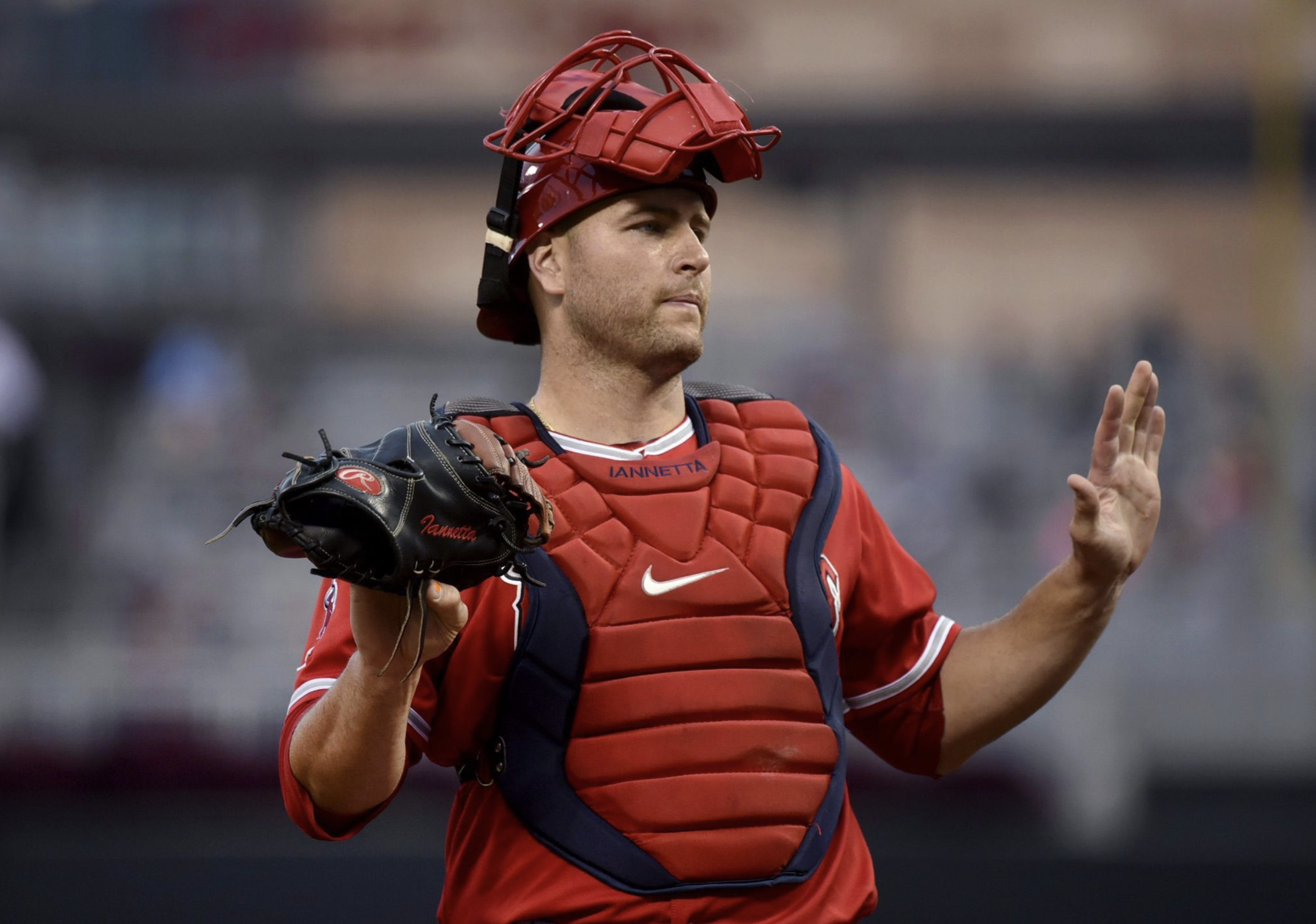
Robby Incmikoski: All right, here we are with Chris Iannetta. You're the 87th person I've interviewed for this book—coaches, fans, former league MVPs, Hall of Famers, people that serve beer at the ballpark. We got it all in this book.
First thing I want to ask you, Chris—it's been a couple years since you've retired from the big leagues, but when you look back now, five, five and a half, six years later on your career—how cool was it to catch a no-hitter?
Chris Iannetta: I mean, the whole thing was cool. I never thought I'd get an opportunity to even play Major League Baseball in my life or professional ball. Getting that opportunity and then being part of that small group that got a chance to experience being in a game that was a no-hitter, but then also being the one to be on the field and catch it was something I'll never forget.
Robby Incmikoski: You just said you didn't think you'd ever play Major League Baseball. This has nothing to do with the no-hitter, but you put together one hell of a career, Chris. How do you go from doubting whether you'd even play Major League Baseball to spending 14 seasons in the big leagues?
Chris Iannetta: I'm not sure. I think I took it one day at a time. I know that's very cliché, but maybe I took it one level at a time. When I was in little league, all I wanted to do is play high school. When I was in high school, I wanted to get an opportunity to play in college, and then from there was get drafted. Once I got drafted, it was go level to level as fast as I could.
I never really thought I'd have a chance to play in the big leagues until I was having success in AAA. When I had some success, I was like, "This might actually be a possibility." Then at the end of August, I got a call up in '06 and couldn't believe it.
Robby Incmikoski: What point—and this is a good lesson I'd like to do a feature on at some point down the road, Chris, for the younger generation of baseball players out there who may be thinking similarly to how you thought when you were a kid—when did the switch kind of flip for you? Was it one day, one at-bat, one moment, one game, or was it a process?
Chris Iannetta: I got called up from AA, I think it was in 2006. Between the end of June and when I got called up at the end of August, I was hitting 350-360 with some home runs and RBIs. I'm like, I don't know how much more I can do. I thought there's a chance. I didn't know if it was going to be this year, a September call-up, or out of spring the next year I'd at least get a look. So that was kind of the time.
Robby Incmikoski: So, I want to talk about Jared's no-hitter in 2012. As it was developing—can you just give fans as much or as little details you want to get into on this? What is that communication like? First inning, second inning, he doesn't give up a hit. Third inning. Then you get to about the fifth, sixth, and the broadcast, the TV starts talking about it, fans start realizing what's going on. What is it like on the inside between the two of you?
Chris Iannetta: For me, it started off as a normal game. Didn't really recognize anything different in the pen coming into it. I think our communication was about status quo going into the first three innings. If we had to talk or discuss anything, we had a brief conversation between innings. I wasn't a guy that would hover around pitchers all the time and really pepper them while they're in the middle of their job unless there was something I needed to say, and even then I'd keep it brief.
But I would say for me it started in the fourth where I'm like, "We haven't given up a hit." I just happened to look up at the scoreboard and noticed that. Then we got through the fourth and it was the fifth. After we got through the fifth, I'm not going anywhere near him at this point.
I was dealing with some of my own stuff because I got hit my first at-bat in my right wrist when I was hitting and it was killing me. I kept talking to the trainer in the sixth or seventh. I'm like, "Dude, this is killing me." He's like, "You're not coming out of this game." I was like, "No, I'm not at all." I was like, "Something feels weird." So, we could talk about that after. But I finished the game and it was a little bit of a grind, though obviously the adrenaline of what was going on in the stadium was pretty awesome.
Cool thing that probably a lot of people don't know is Jared had a walk-out song—he picked his music in between innings that they would play in the stadium. As we're rolling through the innings in the sixth, seventh, I was hearing ones that I had heard, and then by the time I got to seventh, eighth, ninth, my adrenaline was up because I hadn't heard a lot of these songs. It's not every day that a pitcher goes eight, nine innings. So when I started hearing those songs, the excitement was building.
Robby Incmikoski: Let me understand what you said correctly. Did he have a different song each inning when he went back in?
Chris Iannetta: Yeah.
Robby Incmikoski: Nine different songs perhaps?
Chris Iannetta: I believe so. That was my understanding. I can't remember what the ninth inning song was, if it was a Michael Jackson song or whatever it was, but it was awesome running out there.
Robby Incmikoski: Starting pitchers are interesting in that—and I know this from a reporter standpoint—stay the hell away on the day they're pitching. I try not to walk within two lockers of those guys when I'm roaming the clubhouse before the game. Stay away, try to have a little feel around the clubhouse. So, what is it like for you guys? Is there kind of an unwritten rule in terms of "feel"? We see it all the time on TV where guys stay away from a pitcher. But then I talked to Edwin Jackson for the book—he threw around 147 pitches in his no-hitter for Tampa—and he was like, "Guys were avoiding me. I'm like, 'Guys, no, treat this normal.'" And he said he felt terrible coming out of the bullpen.
Chris Iannetta: I think everyone was going to pretty much stay away. And Jared's extremely intense on his start days. So, we kind of knew status quo was give him the space. If he was going to talk or we needed to talk to him, he's very approachable. Unbelievable professional when it came to that. But it was like, the unnecessary stuff—we knew to let him go about his business, give him his space to work, and then the other four days he's going to be just like everybody else.
Robby Incmikoski: You said it was kind of later in the game when you noticed—around the fourth?
Chris Iannetta: I said about the fourth is when I started. I just kind of looked up and saw there wasn't a hit. I'm like, we'll see what happens. It's interesting. And then it builds as you go.
Robby Incmikoski: Pardon my ignorance, I should have looked this up. Is that the only no-hitter you caught in your career?
Chris Iannetta: I think Matt Shoemaker came close—I think he went to the seventh or eighth in Boston. I think Will Middlebrooks broke that up in Fenway.
Robby Incmikoski: Who was Matt pitching for at the time?
Chris Iannetta: Angels.
Robby Incmikoski: So Jared's was the one no-hitter you caught in your career?
Chris Iannetta: Yeah.
Robby Incmikoski: This is something I've always wondered, and I've talked to catchers and players during a perfect game. I talked to Don Kelly, who was inserted for defensive purposes on Armando Galarraga's near-perfect game with the missed call by Jim Joyce. Players talk about how they don't want to make a mistake if a pitcher has a perfect game going—you don't want to be the one that makes that mistake, and it really is a true team effort in baseball.
So, how much do you think, "I don't want to call the wrong pitch" or "I don't want the sequencing to be out of order"? What is that like? What responsibility do you feel there?
Chris Iannetta: For me, I lucked out. I had Jared Weaver on the mound who was as much of a student of the game and truly understood his arsenal and what he was capable of doing and how he wanted to attack guys inside and out. For me, he was up there with the Zack Greinkes of the world that just understood what they wanted to do.
I always knew that I had the freedom to put down whatever I wanted in terms of the pitches, and he was going to shake me off if he had a feel. Sometimes through the course of me catching him, I'd put a sign down twice and be like, "No, I really believe in this pitch." But there wasn't any way in hell I was putting a pitch down twice if he wanted to throw something else, because, like you said, I wasn't going to be the one to be wrong.
If he's gonna lose this no-hitter, it's gonna be because he lost it for whatever reason. The trust that I had for him and what he was going to suggest—if I called curveball and he wanted to throw a change-up, I knew he had ten reasons why he wanted to do that. So, I was good with it.
Robby Incmikoski: It's interesting you mentioned that a no-hitter could end for any reason. A pitcher could throw a perfect pitch in the perfect spot and it's a swinging bunt that's a hit, or a duck fart that lands in short left field or short center field. They're like, "You've got to be kidding me, right?" How much are you hoping that something like that doesn't happen?
Chris Iannetta: I didn't care what it looked like, I didn't want him to give up a hit no matter what—whether it was a bullet homer or broken bat hit, I didn't want that to happen whatsoever. I didn't want to do anything behind the plate that would break rhythm, tempo, momentum. Make sure I blocked every pitch, make sure I kept the game moving as efficiently as possible, make sure I'm calling the best pitch possible.
Even the last out, off the bat, I was like, "Oh my god, did he just hit it off the wall or hit a homer?" And then, in Torii Hunter fashion, he kind of played it like it was off the wall and then really had it in his back pocket the entire time.
Robby Incmikoski: I was just going to ask about that. Alexi Casilla was the hitter, and I was at the end of the Angels dugout waiting to interview you. In that last at-bat, I didn't have a great look at it off the bat, but as soon as you see it—and just from watching 16 years of baseball games, 140 games a year—you have a pretty good idea if a ball has a chance or not. I'm thinking, "That ball has at least a chance at being a homer or a hit." What's your first thought as he makes contact?
Chris Iannetta: Off the bat it sounded great. The trajectory looked great. I was like, "Wow." And then I'm watching Torii and then watching the ball, watching Torii, and then, like I said, the way he caught it and played it wasn't like he was standing under it. It almost looked like he was about to play it off the wall and then had it over his left shoulder like it was nothing.
Robby Incmikoski: What was that moment like? As soon as Torii catches the ball, then what? Just take me through the next couple minutes. What do you remember?
Chris Iannetta: I was just elated. Threw my hands up, if I remember correctly, and ran out to the mound, gave Jared a hug and it was awesome. I was so happy. Being a part of it is awesome, but I mean, he's the one who did it. It's a huge accomplishment for him, his family, everything. I was just so thankful to be a part of that and be a part of history.
Robby Incmikoski: Chris, I've seen so many pitchers talk about how they could not have done it without their catcher. I can give you endless examples—just talk to a pitcher about throwing to Yadier Molina. Do you appreciate how much pitchers, especially a guy like Jared, a veteran who played the game as long as he did and had the success he did, value you and what you bring to the table?
Chris Iannetta: I don't think it's me in general. I think it's every catcher that they talk about. I would say 99% of pitchers have the utmost respect for the guy battling behind the plate for them because they're throwing the gear on, they're sacrificing their body.
As a catcher, my job is to do whatever I possibly can to get the best out of the guy that I have on the mound. And they know that and appreciate that. 100% of my job is to make them better and make them successful. I think there's an unwritten rule, there's a lot of admiration for pitchers and catchers and what they have to go through for each other.
Robby Incmikoski: Did you keep anything, Chris, from that day? Do you have your helmet, your bat? Do you have any memorabilia from that day?
Chris Iannetta: Jared was very generous to everybody on the field. He got everybody an inscribed bottle of champagne with the date and stats of the game. I know I got a signed canvas of the last out signed by Jared with a personal message to me. I got a copy of the scorecard with a picture of us, signed. And then he also, customary, got me a watch, which I was very thankful for.
Robby Incmikoski: That is really cool. What does it say about him as a teammate?
Chris Iannetta: He was a great dude. Really was. He cared about the game, cared about his performance, cared about his team, wanted to win. Was a little bit of a throwback. I think I was part of a generation of baseball players that saw a lot of transition in the game. I think I bridged the gap—the tail end of the quote-unquote "old school" way of doing things to that new school approach that I saw at the end. He was kind of a throwback, truly a part of that old school group of guys, which I really admired.
Robby Incmikoski: He certainly was, no question about that. No-hitters are obviously very hard to do for a pitcher, but how big an accomplishment is that in your eyes? As a guy that played the game as long as you played, how good do you have to be that particular day to do that against any team?
Chris Iannetta: I don't care if it's a 40-win team or 140-win team. To no-hit a major league lineup—I can't even fathom how difficult that is on a night-in, night-out basis. You look at how many starts there are in a year and the amount of times that actually happens. It could be once or twice a year. It might not happen for a couple years in a row. It's just one of those things that's so difficult to accomplish and to be that good.
It's funny because the old saying in baseball is like, "If you're terrible in the pen, you're going to be great during the game. And if you're great in the pen, you're going to be terrible during the game." Not necessarily, but just one of those old sayings. And just seeing him go out there and dominate the way he did was just fun to be a part of. Really was.
Robby Incmikoski: This isn't specifically about Jared on that particular day, Chris, but how much of a feel can you get when you're catching a starter in the bullpen for how he might be that day? Is there a lot to that or no?
Chris Iannetta: I've seen guys be absolutely electric in the pen and go out and give up six runs. And I've seen guys throw water bottles in their glove and spike baseballs and go out there and go eight scoreless. There's something about a major league baseball game that changes you, for better or worse.
I've seen guys coming out of spring training who have had a ton of success because spring training is one level of play, one pace. Then once the lights come on during the season, it's another gear and you see things at a whole another level. It's the same going from a pen, getting your warm-up reps in a controlled environment, to getting out on the mound and doing it for real. It's a whole another level.
Even if you weren't able to lock in during the pen because adrenaline is not necessarily flowing to the same level, true competitors just know how to find it on the mound.
Robby Incmikoski: Chris, you had a hell of a career. A lot of big moments. I'm just looking here—you're a 15 WAR player. I don't know if you quite realize how hard it is to accomplish a 15 WAR in a career. That's really, really hard to do. Let me ask you this: where does that day stand out among the big moments in your career and big moments in your life—catching a no-hitter in a major league game?
Chris Iannetta: It's up there. It's really high up there. I don't know, I can't say it's definitely one of the top five. I've never really collected a top five, but I know for me, making the playoffs and those games are always huge. Actually contributing with walk-off homers are always big. And I had a couple games in Arizona one year that were two of my best in my career. And then the no-hitter's right up there with all of those.
Robby Incmikoski: Last thing—this is lighthearted and there is no right or wrong answer, but I'm doing a feature and I don't think a lot of fans realize what this is, and you're going to laugh when I ask. So feel free to go as long or as short as you want. How would you describe—I'm trying to get fans an insider's look—how would you describe what "the ass" is? What is it when a coach, an equipment guy, when somebody "has the ass" on a given day? If somebody goes, "Chris, what is the ass?" what would you say to them?
Chris Iannetta: I would say it's the moment before the gunpowder gets ignited. It's like, before that powder keg truly explodes, that's what you're witnessing—those infinitesimal amounts of sub-seconds that happen before one more thing gets piled on in the wrong direction and you're going to see some fireworks.
Robby Incmikoski: That might be the best answer I've gotten. And you are the 13th person I've asked this question to.
Chris Iannetta: I mean, it's the moment you have that powder keg just ready to explode for sure.
Robby Incmikoski: Jack Wilson told me, he said it's like you're hungry, you're on your way home, you don't have time to cook, you go home and you just stop by the drive-thru or get a fast casual quick to-go bite, and the meal's wrong, and you don't realize it until you get home. You're like, "Dude, I'm not going back over a $3 thing that's wrong, but holy hell am I pissed off right now." That's how he described it.