
Tim Tschida (Transcript)
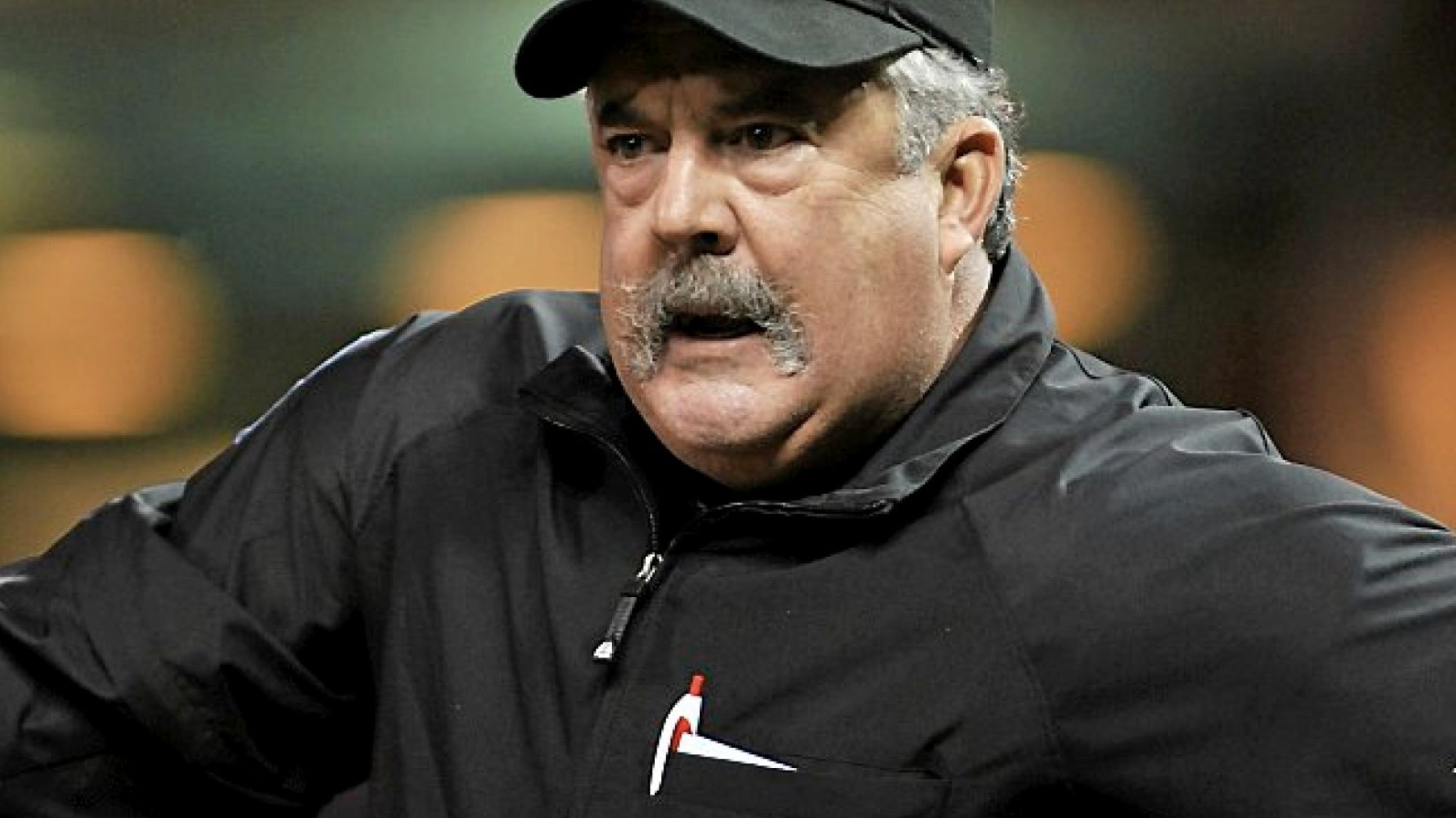
Robby Incmikoski: So right now, we’re on the record. So in 2009, you and Nelly, you and Jeff Nelson, who’s still umpiring in the big leagues . . .
Tim Tschida: No, he retired at the end of last season.
Robby Incmikoski: Oh, that’s right. He did.
Tim Tschida: Wegner’s the only guy left from St. Paul.
Robby Incmikoski: Wegner’s left. Okay. I saw Wegner this year too, actually.
Tim Tschida: Yeah.
Robby Incmikoski: Okay, all right. So what happened now? So 2009, the ground rules—
Tim Tschida: So we’re going over—
Robby Incmikoski: The ground rules on the back of the lineup card.
Tim Tschida: We’re setting the ground rules for the stadium. So it’s Jeff and myself and Terry Ryan, Billy Smith, and Matt Hoy—you remember Matt at all?
Robby Incmikoski: I know Matt, well yeah.
Tim Tschida: The stadium—yeah, I thought so. So well, yeah, you being a stadium nut, you’d know what he did.
Robby Incmikoski: Yeah, of course.
Tim Tschida: So we’re at home plate. We look over to the third-base dugout. We go, “Okay, there’s one step down, so any ball that rests on the top of the step is in play. If it goes down, it’s in the dugout. There’s the screen in front—play it live off the screen. And the backstop is the backstop, you can reach behind it,” all those things. Then we go down the left-field line. If you can picture Target Field, if you go down the left-field line, the stands run into that limestone wall, right?
Robby Incmikoski: Yep.
Tim Tschida: The wall extends over, into, past the stands.
Robby Incmikoski: Yes, I know exactly where you’re talking about.
Tim Tschida: Right, so Jeff and I are looking at it, and [said] said, “Well, we’re going to have to put a line on that wall, because part of it hangs over into the field of play, and the other part is out of play.” So yellow lines and all that stuff. And said, “Yeah, you’re gonna have to put a yellow line or some line of demarcation on that limestone, because it can’t be over the field. You’ve gotta be able to tell when it’s in and when it’s out of play.”
Robby Incmikoski: Right.
Tim Tschida: After I said that, you would think that I’d just canceled Christmas. I mean, Terry and Billy and Matt all looked at each other deadpan. And I said, “What’d I say here, boys, what’s up?” And Terry says, “Tim, there is no way that Mr. Pohlad will let us put a drop of paint on that limestone.” He said, “That is the signature of this ballpark. It is a Minnesota product, and we’re gonna have to come up with different than that.” And I went, “Okay, all right. Well, the only recommendation I can make to you is we might have to the rules. The rules that that—what we’ll go with is a bounding ball, a fair-batted ball that bounces up into that area and it hits the wall. It’s gonna be whatever it does: If it comes back into the field, it is in play; if it stays in the stands, it’s a double. Okay?”
Robby Incmikoski: Right.
Tim Tschida: I said. “We gotta get dispensation from the commissioner’s office on that, but that would be my recommendation.” And they were all like, “Yeah, we can live with that.”
I said, “The one thing you’re gonna have to do, though is visiting teams—the umpires are going to have to go into their visiting dressing room before game one of the series and tell every one of the outfielder, ‘Hey, play everything down there. Don’t assume that it’s out of play, because sometimes it’s back in play if it’s not touched by a fan or anything else.’ At any other ballpark, that wouldn’t be the case.” So that became part of the routine when a team came into Target Field.
So now let’s swing over to the foul poles. The foul pole—that limestone comes like this, and then there’s a gap that’s literally about this big.
Robby Incmikoski: I’m looking at it right now.
Tim Tschida: And then there’s the foul pole. Okay. And we’re looking at that foul pole, Jeff and I, and we looked at each other and started laughing. You know, we said, “Well, it’s just a matter of time before that’s gonna be controversial; that’s way too tight.” And we said—I mean, there’s no real way you could fix that, other than bringing home plate back like six inches and then resetting the foul lines.
Robby Incmikoski: Okay.
Tim Tschida: But we go, “Well,” fortunately at, I think that might have been the first year we had replay that was available in what was called foul pole to foul pole.
Robby Incmikoski: Yep.
Tim Tschida: We didn’t have plays, but we did have home-run calls that could be reviewed.
Robby Incmikoski: It was, yep.
Tim Tschida: So, and then we go around the rest: the flower beds, this, that, and the other thing, everything’s great. So we’re done. We’ve filed it with the league office. Now fast-forward to the very first game, and our crews, we were all on different crews that year, but they let us pair up for that series. So obviously, I wanted to work home plate—I was the senior guy, it would have been my call—but my crew was opening in San Francisco, and I would have had to redeye—I did have to redeye anyway to get there for a three o’clock game. And redeye flights, you can’t sleep, and you’re all messed up for a day. And I thought, “I’m not gonna go in there and be dog-tired, you know, and I know ESPN’s there, I know the Commissioner’s gonna be there, everybody’s gonna be there.”
Jeff was working in Milwaukee, and he drove up on Sunday night. He got to the Twin Cities by eight o’clock.
Robby Incmikoski: Right.
Tim Tschida: So he was rested, and I said, “You know what? It’s your game. You work it.” And then Mark was coming from Houston or someplace, and he got in about eleven. So anyway, we’re out there, all the fanfare, and that’s when you and I talked and—
Robby Incmikoski: Yep.
Tim Tschida: So we start the game, and Kerwin Danley was the fourth umpire with us.
Robby Incmikoski: Yes, it was. Yep.
Tim Tschida: And I don’t know what inning—it was early in the game—they’re playing the Red Sox. Francona was managing, and Mike Cameron hit a ball. It’s high, deep down the left-field line, and I’m working second. And a lot of times, when you have balls that go around the pole, the second-base and first-base umpires have as good—maybe a better look—because we can see how far the ball is hit.
Robby Incmikoski: Right.
Tim Tschida: A lot of times, the third-base umpire, you’re looking right at it, and it does that to you. They all look like they went around the pole, but a lot of times, they cut in front of it. They didn’t made it as far as the pole.
Robby Incmikoski: Okay.
Tim Tschida: So the process is, when the balls hit near the line, I want all four sets of eyes on the ball. I don’t want anybody—I don’t want to hear about somebody missing a base or some stupid nitpicky thing. Where the ball, that’s where I want everybody looking. So go, travel, travel, travel. Watch the ball. Watch the ball.
Robby Incmikoski: Yeah.
Tim Tschida: The ball goes through that opening between the foul pole and the limestone, hits the stairs, and comes straight back through the same opening onto the field.
Robby Incmikoski: Field.
Tim Tschida: And I’m looking at that, and I’m going, “I mean, we knew there was going to be a controversy eventually, but the first game, in about the fourth inning of the first game ever played, somebody hits the ball to that spot.” That is impossible. You can’t—
Robby Incmikoski: What kind of luck is that?
Tim Tschida: You can’t write that script. And Danley—I looked at Kerwin—and Kerwin, he kind of looked at me, and he pointed back. He pointed fair. He goes, “Home run.” I said, “I agree,” but at the same time, I’m thinking, “We gotta check this. We gotta make sure we’re right on this, because again, the whole world of baseball is at this game.”
Robby Incmikoski: Yep.
Tim Tschida: And do I looked at Jeff, and I—we used to have a signal back then—we would look at each other and go like this [makes a motion], you know, like it was, we gotta go look at the TV. So the replay system, the way it worked then, we didn’t have the head—what we did was down in the third-base dugout behind, out of sight, there was the little weather room. for Larry DiVito and his guys.
Robby Incmikoski: Yep.
Tim Tschida: But there’s also a monitor that’s about the size of your typical desktop screen.
Robby Incmikoski: Right.
Tim Tschida: And there’s a phone right there. We just pick up the phone, and it goes directly to New York, and then the technician already has it queued up. He’s ready. He’s waiting for us. And he goes, “You ready? You want me to run it?” “Yep, go.” And he runs it, and we look, and sure enough, it goes through and back. Run it again like three times. We didn’t have, we only had—there was no umpires in that room at there are today, okay. It was simply technical people.
Robby Incmikoski: Right.
Tim Tschida: And I went, “Wow.” And the guy says, “I know. That is unbelievable.” “Okay. Okay. Thank you.” And I walked back on the field, and indicate that it’s a home run and go back to second base, and Orlando Hudson’s playing second base, and he goes, “Timmy, that might never ever happen again as long as you’re alive—the ball goes through the opening, yeah, but then it comes straight back, and it never touched anything.” And I was always reminded of what Tom Kelly used to say, and that was, “If you stick around this game long enough, you’ll see a lot of things.”
Robby Incmikoski: That’s unbelievable. Isn’t that amazing?
Tim Tschida: And it was the first game. I mean, I don’t know what’s more phenomenal: the fact that it happened or that it happened in the first game. It was just—
Robby Incmikoski: Wait, the final call? Wait, was it called a homer?
Tim Tschida: Yeah, it was called a home run to begin with, and it was upheld, yeah. And we got it right. It was . . .
Robby Incmikoski: That’s unbelievable.
Tim Tschida: Yeah. Isn’t that something?
Robby Incmikoski: What are the odds of that? And then so when the stone was originally made—refresh my memory. Actually, I have pictures at Target Field. We were there before. We were there in ’09, that summer.
Tim Tschida: Yeah.
Robby Incmikoski: That winter, they took us there.
Tim Tschida: Right.
Robby Incmikoski: So it would have been past the foul pole in the beginning, or no, it was right here. This is it when it was being built. So that’s what it looks like when it was being built. That was before they put the stands in, so yeah, right up against it.
Tim Tschida: Let me go back, you know, now that I think about it, it was called a foul ball. It went between the pole and the limestone.
Robby Incmikoski: Right.
Tim Tschida: And we called it foul. That’s what it was. It’s all coming back.
Robby Incmikoski: The only reason why I said that is because Cameron didn’t hit a homer in that game. I was like, “Maybe it was the next,” but I do remember the controversy.
Tim Tschida: Right, it went the other—exactly right.
Robby Incmikoski: [Inaudible.] called it foul ball.
Tim Tschida: It went through and came back. Because the question we had was, Did it glance off what would be considered the foul side of the pole going through? How did it not nick that pole? That was exactly—
Robby Incmikoski: Right. I remember that.
Tim Tschida: That was it, yeah.
Robby Incmikoski: And originally, that limestone went past the foul pole? Is that right, originally?
Tim Tschida: No, the limestone stopped right there, but show that picture again.
Robby Incmikoski: Yeah, yep, I’m just pulling—’cause it’s crazy. I hadn’t looked at these in fifteen years, and now, I’m looking at them again. This is September 2 of ’09, when I took this.
Tim Tschida: Right, yeah. But as you look at the foul pole, you see how the limestone hangs over into the field of play?
Robby Incmikoski: Oh yeah, I’m well aware of that. Yeah. It’s crazy. It’s crazy.
Tim Tschida: That was the first obstacle that we had to get past. But yeah, that was the fact it made it through that opening without nicking the pole.
Robby Incmikoski: Yeah, you got the call right. I remember you guys got the call right.
Tim Tschida: Yeah.
Robby Incmikoski: And where’d you say the limestone hangs over—where’d you want to put the paint, Tim, on what part?
Tim Tschida: Right where your finger is. It’s gotta be right there, because you see the stands, but the limestone extends over into the field of play. See that?
Robby Incmikoski: Oh, right here.
Tim Tschida: Right. [Inaudible.] Right. That little hangover there, which is probably a foot and a half—
Robby Incmikoski: They have it at Wrigley. They have it at other places.
Tim Tschida: Right.
Robby Incmikoski: Now I know exactly what you mean, and I know how much that Minnesota limestone matters to them.
Tim Tschida: It’s everything, yeah.
Robby Incmikoski: As it should. Remember, they had all the Mortenson Construction workers with the flag and everything?
Tim Tschida: Right.
Robby Incmikoski: That was one of my favorite days of my life, it really was.
Tim Tschida: That was a huge day, and maybe the most beautiful thing about it was, it was like seventy, what, seventy-some degrees? It was a gorgeous day.
Robby Incmikoski: It was amazing.
Tim Tschida: Absolutely gorgeous.
Robby Incmikoski: Let me ask you this: How cool was it for Major League Baseball—for Bud Selig, obviously was the commissioner at the time—what was that like for them to know that they had three native Minnesotans on their umpiring roster, and they elected to put the three of you together for that? How special was that to you, being a Minnesota guy?
Tim Tschida: It was great. It’s not unprecedented
Robby Incmikoski: Right.
Tim Tschida: Any park where someone was from—this all started back in ’93 when Camden Yards opened, and then you had that run of twenty years of new parks, new parks, new parks, renovated parks, all that stuff. At the time of ’93, when Camden opened, we didn’t have anybody. We had a couple guys from Virginia, but Larry Barnett was the senior man in the American League, and he worked his first ever game in Baltimore at the old stadium, back in 1969.
Robby Incmikoski: Yep.
Tim Tschida: He said to the commissioner’s office, “I want to work home plate in the first game in Camden Yards,” so they were always very accommodating to that. Also, there were times when, let’s say, a guy was assigned an All-Star Game in this year, today, this year, whatever. And he asked, “You know, in two years, it’s going to be in Denver, and that’s where I’m from, can you give it to somebody else if I can work Denver.” They’ll accommodate that.
Robby Incmikoski: That’s really nice. How special is it though? Tim, I’ve talked to players, like retired players now, and it’s interesting hearing their perspective. Especially for this book, because when you’re in it, you want to do the best job can. When you’re a player, you want hits; if you’re an umpire, you want to get every call right. You’re focused on what you’re doing. You’re looking at it from five feet away, not five thousand, right?
Tim Tschida: Right.
Robby Incmikoski: Five thousand feet away, does it kind of resonate a little more, being a little more special that you did that? Like nobody can take that away from you—it’s a priceless moment.
Tim Tschida: Right, and I still do my fair share of speaking engagements or podcasts, and all those kind of things.
Robby Incmikoski: Right.
Tim Tschida: I always get the same question as far as, “What’s your best moment?”
Robby Incmikoski: Right.
Tim Tschida: You can never say that. You can’t pick one. There’s a lot of them. They’re typically your first, you know, your first game, your first All-Star Game, your first playoff game, your first World Series game. All those things, and they all add up. Your first game that was a memorable no-hitter or something along those lines. You can’t put one in front of the other as to which one is more memorable than the other. People are always amazed at the memory that we have. In fact, I’m surprised that I mixed that up on the foul ball call.
Robby Incmikoski: Yeah.
Tim Tschida: ’Cause I was thinking, “Wait a minute, no, it went through.” Anyway, we remember everything. I mean, we really do.
Robby Incmikoski: Yeah.
Tim Tschida: And I worked, gosh, 3,700-and-some games, and it goes fast, as you know, Robby.
Robby Incmikoski: Yeah.
Tim Tschida: We’re not getting any younger.
Robby Incmikoski: Brother, I know.
Tim Tschida: I’ve either been a bartender or a major league umpire my entire adult life, and I’ve never had a “job,” as far as I’m concerned, and I got paid to do both.
Robby Incmikoski: That’s amazing. One question. I really want the fans to know this. I’m curious myself because I never asked this question to an umpire on the record or off the record. I don’t know how in sixteen years in baseball I’ve never asked this. Players remember exactly where they were when they got “the call” that they were going to the big leagues. Do you remember your first call to the big leagues, and does it resonate the same?
Tim Tschida: Oh boy, I can tell you every detail of every minute. I don’t know if you want to hear it.
Robby Incmikoski: I would love to hear it if you don’t mind sharing, absolutely.
Tim Tschida: Yeah. Well, back in those days, I had worked spring training with the American League, and you that if you went to a big-league spring training, that they were looking at you. And it was one of those things where all the minor-league umpires throughout baseball knew that I was the next guy up in the American League—everybody knew it except me; I didn’t pay any attention to it. I simply did my job the way I was told because that’s the only thing I could control. I don’t know who they’re going to call up; I don’t know when that call is going to be made. I just have to get my next pitch right, wherever I am.
And we didn’t have cell phones. We didn’t have pagers. We didn’t have any of those things. So what we had to do was—and there was only like two of us for the American League and then two guys for the National League, that were Triple-A guys that they had our schedule and a way to get ahold of us.
Robby Incmikoski: Okay.
Tim Tschida: So we filed our hotel list—
Robby Incmikoski: 1985, right?
Tim Tschida: Yeah, and the American Association office in Wichita had my list of hotels for every city. The only thing we had was we would go to lunch and come back, and everybody would check their phones, you know, the hotel red light flashing. We used to call it the “red-light blues.” You check it. “No red light. Okay. Maybe tomorrow.” So I come back, put my head in—nothing.
So I was in Buffalo, New York, and I went out to the pool with a book. And we have a night game that night, and I was all full of Hawaiian Tropic and all that, fun stuff, and just getting nestled in, opened my book. One of the guys I work with comes walking out. I said, “Hey, what’s up?” He goes, “Well, you are.” And I said, “What?” He goes, “Yeah, the American League’s trying to get ahold of you, like, right now.” “Oh, really?” He said, “Yeah, here’s the number.” So it was bittersweet because the guy that they’re not calling up, they call him to tell him to come and get me. That was a little awkward. Anyway, I call up, and Mr. Butler said, “Yes, I need you in Chicago tonight.” And I went, “Okay, well, here we go.”
So it was probably two-thirty Eastern when I got the phone call. So first I gotta shower, get all this oil off me, then I gotta get dressed with a tie and a coat, and everything else. Then I had to pack my personal stuff. Then I gotta get to the ballpark to get my equipment because typically it would be shipped ahead of you, but we don’t have time to do that. I’ve gotta drag my bag all the way to Chicago myself. I’m more than happy to do it to get to the big leagues. I didn’t have time to call my parents. I just had to get there.
So I got to the Buffalo airport. Now this was before 9/11 obviously. so I mean, I arrived at the airport about ten after six. I made a six-thirty flight with fifteen minutes to spare. You know you—
Robby Incmikoski: Wow.
Tim Tschida:—just get on and go. And so I took off out of Buffalo at six-thirty Eastern. I landed in Chicago at six-thirty Central. Game’s at 7:35, 7:35 first pitch.
Robby Incmikoski: Wrigley or White Sox?
Tim Tschida: White Sox, because I was exclusively—
Robby Incmikoski: Oh, American League. That’s right.
Tim Tschida: Actually, that comes into play. So I don’t know where—I’d never been to Chicago. I don’t know, I have no idea that O’Hare is forty-five minutes away.
Robby Incmikoski: How old were you, Tim?
Tim Tschida: I was twenty-five.
Robby Incmikoski: Wow.
Tim Tschida: And so I don’t know where I am. I don’t know where I’m going, nor do I know how to get there. So I get into the cab, and I said, “Comiskey Park.” That’s all I do. So we’re driving, and I’m looking around. Finally, way off in the distance, I can see the skyline of Chicago. I go, “I’m not gonna make it.” And all of a sudden, the guy—he was of Latin descent, the drive—and he looks at me and he goes, “Who Cubs play tonight?” And I went, “No, no, no not Cubs. White Sox. White Sox.” “Oh, oh.” “Yes.” So he hauls right or whatever he did, I don’t know. But we get to the park, I got to the locker room at 7:25 for a 7:35 first pitch, which means we had to be at home plate at seven-thirty.
And I just throw myself on. I didn’t have time to be nervous. I didn’t have time to think about anything. I just reacted to everything. And they typically throw you at second base when you’re joining a crew from the minor leagues. They don’t throw you behind home plate right away.
Robby Incmikoski: Okay. Yeah.
Tim Tschida: Get your feet wet a little bit, get comfortable with your surroundings. So the upside was two things: Number one—
Robby Incmikoski: Do you remember who you played?
Tim Tschida: Yeah, the Tigers. They were defending world champions.
Robby Incmikoski: Do you remember what month? I’m just looking right now.
Tim Tschida: July 24.
Robby Incmikoski: There you go. There it is. July 24 was White Sox at Oakland. They played who you said—Detroit?
Tim Tschida: No. It was the White Sox—
Robby Incmikoski: Hold on. Yeah, sorry. My bad.
Tim Tschida: So the upside was twofold. Number one, Sparky [Anderson[ was managing the Tigers, and I had worked my first spring that year in Lakeland, Orlando, Winter Haven, and I saw the Tigers a lot, so we got to knew each other in a good way. And then Jim Leyland was the third-base coach for Tony La Russa. And Jim used to stay at the hotel that we stayed at when he managed Evansville in the American Association. He used to hang out with us umpires after the games and drink beer because he loved talking the rules. He wanted to learn the rules. And Jimmy was, he is a true Hall of Famer, and it was long overdue that he got in this year. But what a dear friend and—
Robby Incmikoski: Oh yeah. He lives here.
Tim Tschida: Yeah. So two things: Number one, Sparky congratulated me, and then Leland—Leland had asked Tony La Russa if he could bring the lineup cards out when he found out that I was there. And he came up, and he put his hand out, and he said, “I always knew you were going to make it here.” He said, “I knew it was just a matter of time.” He goes, “You’re a great minor-league umpire. You’re going to make an even better major-league umpire.” And I was like, “Jeez, how am I going to go out there and work?” And so that was very special, obviously.
So I take the field, and it’s the top of the first and there’s two outs. Kirk Gibson’s on first. He tries to steal second. They throw through. It wasn’t a bang-bang play. It wasn’t wide-open play. It was somewhere in between. But he was out, and he was clearly. And I called him out. There was no argument. There was nothing. And then—now this is the old park—and then I started walking in the center field ’cause it was the third out. And then I looked up, and I saw that big scoreboard. I started looking around. I go, “Oh my God.” It was just like, “You made it. You made it. You actually made it.”
And then, in the bottom of the first, the Tigers take the field, and lo and behold, Jack Morris is pitching. Jack is a St. Paul native, as am I. And Jack played Babe Ruth baseball with my older brother, and I was the bat boy on a team that they played together that went to the Babe Ruth World Series. I was ten years—I’ve known Jack since I was about eight years old.
Robby Incmikoski: I never knew that. Wow.
Tim Tschida: Yeah. So a runner gets on first, so now as second-base umpire, you have to come into the infield, so now I’m between second base and the mound a little bit. All of a sudden, he walked in and sees me. He does a double take, and he goes, “What are you doing here?” I said, “I’m trying to get a job, Jack, and more importantly, I’m trying to keep one, so if you could try to be more than your usual charming self, I would really appreciate that.” And he laughed, and he [inaudible] mound, so we finished the game. I really had no incidents whatsoever. But the crew—Don Denkinger was my chief, and he sent out for a bottle of champagne and everything for my first game.
Robby Incmikoski: That’s awesome.
Tim Tschida: Well then, we’re toasting me, and there’s a knock at the door, and it’s somebody for me. And so I go out, and who is it but it’s Jack’s parents, Arvid and Dona Morris, who saw that it was me and came out to say hello. Jack obviously had told them that I was there. So there was that. And then I went back right away, and then a couple weeks later, I went up to Milwaukee and had the Brewers, and after that game, Paul Molitor called the dressing room to congratulate me, because his sister Judy is married to one of my lifelong best friends.
Robby Incmikoski: Wow.
Tim Tschida: And Judy and I had been friends all through school. Those little things, you know. That was pretty fun. Things unexpected. David Winfield did the same thing in New York.
Robby Incmikoski: The other thing too—we’ll move on to the next topic after this. You have four Hall of Famers in your debut. Four.
Tim Tschida: Yeah, and I umpired all those fields as well. I didn’t umpire them when they young. They were all ahead of me. But yeah, it’s—
Robby Incmikoski: You have Fisk, Baines, Trammell, and the starting pitcher for the White Sox that night. Remember who it was? I’ll give you a little hint. He just passed away.
Tim Tschida: Seaver. Seaver. Yeah.
Robby Incmikoski: Exactly who it was.
Tim Tschida: Because there’s actually a twist to that story as well. Tom Seaver. It turns out that I was coming up and down a lot in ’85, and every time I came up, I had Seaver. And it was my turn at the plate, I’d draw Tom Seaver. Well, how can you do better than that? People ask me all the time, “Who’s the best pitcher you ever [inaudible]?” I said, “Well, believe it or not, it’s Tom Seaver.” And he was at the end of his career when I had him.
Robby Incmikoski: Right.
Tim Tschida: And he was hovering around the 300-game mark. For 300 wins. Once he got to 299, they wouldn’t let me—they moved me in the rotation because they did not want a Triple-A umpire filling in and working a game of that magnitude.
Robby Incmikoski: Okay.
Tim Tschida: So they would move me off the plate, if in fact it came up as my rotation.
Robby Incmikoski: Okay, gotcha.
Tim Tschida: I think I had like number 297 or something I had in there.
Robby Incmikoski: You’re pretty close. As I look at this now, in ’86, he only won a total of seven games.
Tim Tschida: Yeah.
Robby Incmikoski: And he won 311 in his career, so he was at 304 to end that year, and you were in July. That’s an unbelievable memory, by the way.
Tim Tschida: Yeah. Then I had him again with the Red Sox.
Robby Incmikoski: Right.
Tim Tschida: Again, I always drew Tom Seaver.
Robby Incmikoski: That’s amazing.
Tim Tschida: What a nice man.
Robby Incmikoski: He only made sixteen starts that year, which is even crazier.
Tim Tschida: Yeah. Yeah.
Robby Incmikoski: Wow. All right, I don’t want to keep you forever, ’cause I could do this forever and a day. I would print a million stories. The umpire’s room at Target Field—what goes into that design? Can you just tell me kind of what was in your mind’s eye, knowing that you had been in—so this was 2010. That was probably about maybe two-thirds of the way there with these new ballparks. Somewhere around that. I gotta look at the specific map, but like—
Tim Tschida: Probably.
Robby Incmikoski: Great American ballpark, PNC park, Miller park, like all these places, like Camden Yards had been there. All these other teams had had new ballparks, so you had a pretty decent amount. Both New York stadiums were built at that time.
Tim Tschida: Right.
Robby Incmikoski: So it wasn’t like you were coming in brand-new. But you still had Miami coming after you, Atlanta—a bunch of parks came in after you.
Tim Tschida: Right.
Robby Incmikoski: What did you have in your mind’s eye for what you wanted the Minnesota umpire room to look like?
Tim Tschida: Well, this was, I don’t know, three years prior—or two for sure, but probably closer to three. I had a Wednesday day game at the Metrodome, Thursday off, and then I was Friday, Saturday, Sunday in Milwaukee with Monday off.
Robby Incmikoski: Right.
Tim Tschida: So I stayed at home. So I drove to Milwaukee on Friday, and then drove back home on Sunday after the day game. And I was driving to Milwaukee. I was about to Eau Claire, and my phone rings. And it was Billy Smith. And he goes, “Where are you?” I said, “Well, I’m driving to Milwaukee.” He goes, “You got time to talk?” I said, “Yeah, I got about four hours. Plug my phone in. How much do you need?” He said, “I don’t know. I’m going to need some time.” “Okay.” So he said, “Okay, first of all, I’m going to tell you something and you have to promise me before I tell you this that this is absolutely confidential definition.” He said, “This is between you and me only. You can’t tell anyone.” I said, “Yeah, okay.” I said, “Is everything okay?” He said, “Oh, it’s good news. It’s just that you gotta promise me that you can’t broadcast this.” “Okay.” He said, “We are going to build a new stadium. The Pohlads have decided this is a go.” He said, “We’re going to try to get some help from public money here or do whatever, but this is going to happen. This is a done deal.”
Robby Incmikoski: Right.
Tim Tschida: And he said, “We have a committee of twelve people that is going around all of Major League Baseball. They’re visiting old parks, new parks, parks in the design. We want to build the best stadium in Major League Baseball. Inside, outside, everywhere. Non-public areas, parking, stadium club, all that, location, backdrop, everything. This is what we want to do.” He said, “And you’re going to design the umpire’s dressing room for me.” And I said, “Really?” He goes, “Yes. We want the best clubhouses—both visitors and home team, everything, everything.” “Okay, great. That’s kind of cool.” He says, “Okay, listen, I’m going to pick you guys up on the road in three weeks,” and he said, “I’ll bring you some blueprints. They’re still a little rough sketch, you know, but we can start talking.” “Okay, good.”
So then every time I had the Twins on the road, Billy would come down and he would bring me up to speed on the plans and the progress and so on and so forth. So I explained to him, “The biggest mistake that these teams make is we don’t need a lot of amenities. We don’t need mahogany lockers. We don’t need all this fancy stuff.” I said, “We need space. We need room because if you’re in the playoffs, everybody’s got family there. We need our dressing area to be separate and closed off from a lounge area so that if somebody’s wife is in town, they can sit out there, or their daughters, they can sit out there comfortably, and the guys can go in the back and change.”
Robby Incmikoski: Yep.
Tim Tschida: “Clubhouse guy, he needs a washer/dryer in the unit right there because oftentimes, he will do our personal laundry for us, our workout clothes, [inaudible], and all those kinds of things.” I said, “If you want to go full-bore, that’s what we need.” He said, “Well, that’s what we want to do.”
Robby Incmikoski: Yeah.
Tim Tschida: And in the end, he gave me everything I asked for.
Robby Incmikoski: Really?
Tim Tschida: Everything I asked for. Yeah, and then actually, also I had previously done it in Yankee Stadium as well with Brian Cashman, called me and asked me to do the same thing.
Robby Incmikoski: So you consulted for the locker room there too as well?
Tim Tschida: Yeah.
Robby Incmikoski: Okay.
Tim Tschida: And I mean, that was kind of a proud moment for me. I was like, “Wow.”
Robby Incmikoski: Yeah.
Tim Tschida: They think enough of me to ask my opinion. And again, they both did pretty much what we asked for. And I said, “You’re also going to have to have a plan, like in the dressing area of these locker facilities, you’re going to have to blow out an area that’s large enough for another person to have a locker and another shower. You can use it for the clubhouse attendant now, but eventually, there’s going to be a woman, and she’s going to need her own space.”
Robby Incmikoski: Right.
Tim Tschida: “So you might as well be ahead of the game on that. It’s easier to build , it on the front end than it is to add on afterward.”
Robby Incmikoski: Yeah.
Tim Tschida: So they all did that, and yeah, that was really cool. And that was kind of funny because one of the days I was talking to Billy, I said, “I have a question. Where’s your groundskeeper’s office?” He said, “Well, that’s going to be in center field, because that’s where all the tractors and all the equipment comes onto the field, and so on and so forth.” I said, “Okay, I’m not big on advice, but you might want to rethink that.” And he said, “What do you mean?” Actually Terry [Ryan] was there too. I said, “Well, you guys haven’t had to deal with rain since 1981.”
Robby Incmikoski: Right.
Tim Tschida: “Every game started on time,” I said. “Now you’ve got weather, and the umpires and the groundskeeper have to work in concert when it comes to weather. They have to be close to one another to be able to communicate with one another.”
Robby Incmikoski: Right.
Tim Tschida: “If you could put his office within a short distance of the umpire’s room, I think it would be beneficial to everyone.” I said, “The next time you go to Comiskey in Chicago, check it out. You know, the umpire’s room, we walk on the field directly behind home plate. Roger Bossard’s office is right across the hall from us.
Robby Incmikoski: Yep.
Tim Tschida: “And, you know, typically on a 7:05 start, the starting pitcher starts warming up about six-thirty. At six-thirty, Roger would knock on the door, poke his head in, and go, ‘We’re on time’ or else he’ll pound again and knock. He’ll go, ‘I’m covered right now. We got rain.’”
Robby Incmikoski: Right.
Tim Tschida: “‘And now we know. And the visiting team, you gotta let them know about their pitchers and everybody else because everybody’s got a phone. Everybody can look at radar now. Everybody knows how to forecast the weather because it’s—’”
Robby Incmikoski: Of course.
Tim Tschida: “‘All at their fingertips.’” And they all looked at each other, said, “Wow, we never thought of that.” And so then they took it to a whole other level. They put down behind the visitors’ dugout, on the third-base side, you go down the steps and you’re out of sight, there’s a room there’s a flat screen that’s probably a forty-incher maybe, maybe that big. And it’s just for radar. And there’s always a meteorologist on hand. They’ve got like four that rotate.
Robby Incmikoski: It’s like Edwards. I remember—
Tim Tschida: Yeah. Ron Trenda is another one.
Robby Incmikoski: Ron. Yeah, yeah.
Tim Tschida: There was another gal I remember. They’re all kind of semi-retired.
Robby Incmikoski: Yeah. Yeah, yeah.
Tim Tschida: But somebody’s at the ballpark every night.
Robby Incmikoski: Wow.
Tim Tschida: And then, you know, you start the game—and it was also back in October when we were going over the ground rules, I said to Terry and Billy, “Have you hired a groundskeeper yet?” He said, “Well, we’re down to two.” I said, “Oh, that’s good. Who are they?” And he named one guy—he’ll go nameless. Nothing wrong him, he’s fine.
Robby Incmikoski: Yeah, yeah.
Tim Tschida: And then the other guy was Larry DiVito. And I said, “Well, if my two cents is worth two cents, I would recommend you go with DiVito.” And they said, “Why?” I said, “Because he’s humble; he’s just a quiet go-about-his-business kind of guy; he’s not a diva; he’s not going to cause you any problems whatever. He’ll just get the job done.” Larry and I have a really good rapport because we go back to—we had some rain situations in DC at RFK that we had six hours of rain, and we got the games in because we just had to get them in. It was late in the year, and there were no open dates left in the schedule. He just doesn’t freak out. Well, they hired him, and he’s been there ever since. Funny, last summer, I went to a game last summer with a friend, and I took him down to show him the room and everything else, and then we went down and I said, “Here, I’ll show you the weather room and we looked in, and Larry was in there. He goes, “Oh my God. Tim, how are you?” I hadn’t seen him in a long time. It was really good. It was really good to see him. You know, he’s still going strong, man.
Robby Incmikoski: Fifteen years in. Fifteen years in now. Good for Larry. Unbelievably quiet guy. Good.
Tim Tschida: Good at his craft.
Robby Incmikoski: I like being around Larry. All right, let’s talk about the World Series. 2002. How crazy. So you’re in the Darren Baker game, so that would have been in San Francisco. Then that was the game seven, when John Lackey started that game seven. But before that, do you remember getting the, how did you get the call that you were going to work the World Series? That would’ve been your second one, because you had Yankees-Padres, right? In ’98.
Tim Tschida: Right, that was my first.
Robby Incmikoski: Right. So we’re not talking about old stadiums. We’re only talking about current ones. We’re not going to talk about ’98. But I do want to ask about ’02 and ’08. ’02—what’s it like getting the call? How do umpires know that they’re doing the World Series? Do they find out individually?
Tim Tschida: Okay, well, the way baseball works, in the postseason, you never work consecutive events. On the second-to-the last Sunday of the season, the umpires that are going to work the divisional series are informed. “You will be working. You will be working.” Okay?
Robby Incmikoski: All right.
Tim Tschida: It’s not announced. They don’t make the press release until the day of the first game.
Robby Incmikoski: Okay.
Tim Tschida: But the umpires are told, “You will be working this series,” and the teams might not be determined yet. “You’ll be the crew chief. This guy will be here, here. Blah blah-blah-blah-blah.” So you get your guys. Then on the last day of the season, the last Sunday, the umpires that are working the LCS, both LCSes, they are informed that they will be working.
Robby Incmikoski: Right.
Tim Tschida: We negotiated that to get more people involved, number one. And secondly, you don’t want to send somebody out there night after night after night after night after night because sooner or later, controversy’s going to land at your feet.
Robby Incmikoski: Okay.
Tim Tschida: You can’t dodge it forever. But also as soon as the six umpires that are going to work the World Series are coming of the first round, they’re coming out of the divisional umpires. So you know that if you’re working divisionals, you’re up.
Robby Incmikoski: So if you’re working divisionals, you know you’re working the World Series?
Tim Tschida: No. You know that you’re in the hunt. You’re in the hunt.
Robby Incmikoski: Oh, okay.
Tim Tschida: They’re taking six guys you out of twenty-four.
Robby Incmikoski: Right. I just wanted to make sure I understand what you’re saying because I never noticed that pattern. That’s going to be a great point for our fans. For our fans, that’s going to be amazing. In terms of understanding, so when you say they can’t work consecutive events, that means they’re not going to work the Wild Card series—the NL Wild Card, then the NLDS. But they can do a Wild Card and then the championship series. Is that what you mean?
Tim Tschida: Yeah. I’m a little out of touch on what they’re exactly doing now because we didn’t have the Wild Card, and we didn’t have replay, so there’s more people involved now.
Robby Incmikoski: Okay. Gotcha.
Tim Tschida: So on the last day, once all the LCS teams are determined, when the divisions are done, then the six World Series umpires are informed. And what happens is, I remember ’02, I was done. I was home. I landed in Minneapolis because I wasn’t going to work the LCS. And I was going down to baggage claim. My phone rang, and it was the guy in charge. And he goes, “I need you for seven more.” I went, “Oh, okay. Thank you.” So I’m working it. And actually, I kind of had a little inside track on that one because I’d worked the divisionals to Milwaukee—no, no, that was ’08. This was ’02. I got the phone call from the office.
Robby Incmikoski: Right.
Tim Tschida: And then in ’08, it was similar except Jim McKeon was our supervisor. He was the on-site supervisor, and Tim Welke and I both were working—we were both crew chiefs at the time—and we just said to McKeon, “Who’s going to work?” And McKeon says, “Well, I’m looking at two of them.” “Okay, thanks, Jimmy.”
Robby Incmikoski: Really? And that’s it?
Tim Tschida: “I’ve gotta let my family know.” Then they called and made it official, but—
Robby Incmikoski: Right.
Tim Tschida: Umpires are, you know—there’s a telegraph, telephone, tell an umpire, if you want to get the word out.
Robby Incmikoski: So tell me about the moment with Darren Baker. So you were in the outfield when that happened.
Tim Tschida: Yeah. Yeah.
Robby Incmikoski: But, I mean, like what the hell does an umpire do in that situation? I guess really nothing. What was that moment like? Just a general—
Tim Tschida: Oh, I mean, I was watching the—I was in left field, yeah. So I’m watching the plate because I had nothing to do. I was in left field, and he’s coming around. I said, “Oh my God. The little kid’s running out there.” And I looked out, and I saw the throw, and it looks like they’re going to cut it [inaudible], but J. T. Snow picked him up on the fly.
Robby Incmikoski: Right.
Tim Tschida: And [inaudible] him out.
Robby Incmikoski: Right.
Tim Tschida: Mike Risley. I looked at Mike from left field. He looks at me and he kind of goes, “God, what a call.” That could’ve been one of the most disastrous ever in the history of the World Series had it [inaudible].
Robby Incmikoski: No doubt. That’s what I’m saying.
Tim Tschida: But later on, Darren—I watched him grow up, and then when he was with his dad down in Houston.
Robby Incmikoski: Yeah.
Tim Tschida: Yeah, he was there until the Reds drafted him. I’m not sure there’s a better guy—well, there’s plenty of them really—but Dusty Baker’s one of the neatest guys ever.
Robby Incmikoski: Nobody has a bad word to say about Dusty.
Tim Tschida: Dusty, you know, they had a player on their team who is a good player, but he’s what we call as an umpire, he’s a nonbeliever. If you call a strike on him, he can’t help but look at you. There’s probably nothing more annoying than that. If you’ve got something to say, say it, but you know what? And finally, when he popped out and he got back to the dugout and said something, and I’d had it. I started walking over there. I got Dusty as a player.
Robby Incmikoski: Right.
Tim Tschida: We knew each other there, and he lets me do my job. And I went over there, all the way over, and I said, I just pointed at him and I said, “You know what you are?” I said, “You are what we call a nonbeliever. You can’t accept the fact that somebody threw you a strike, and it was called on you.” He said, “I didn’t say anything. I just looked at you.” I said, “Yeah, well, you know what? It’s f***king annoying, and you’re driving everybody crazy. And guess what? It’s not going to f***king get you anywhere.” I said, “You’re lucky you’re playing in today’s game because if you’d have played when he played”—and I pointed at Dusty—I said, “You’d be hitting .190 by the time this f***king weekend was over.” And I turned and walked away. Dusty never said a word.
Robby Incmikoski: One of Dusty’s players.
Tim Tschida: And then later, Dusty came out to give me a substitution, and he goes, “I’m so glad you did that.” He said, “I have been trying to tell that kid, ‘Knock it off. Sooner or later, somebody’s going to jump down your throat and let you have it, and you’re going to not know, you’re not going to see it coming, and you’re not going to understand it when you see it.’” He said, “Keep it up, Tim.” “Thanks, kid.”
Robby Incmikoski: Wow. Was this in the World Series when he told you this?
Tim Tschida: No. No. This was [inaudible].
Robby Incmikoski: Gotcha. Okay.
Tim Tschida: I wouldn’t do that in a World Series. You draw too much attention to it.
Robby Incmikoski: I gotcha [inaudible].
Tim Tschida: Inserting yourself too far in a very, very big—you gotta pick your spots, and you gotta pick it when you know it’s going to be effective because the whole them—and you do it in front of his teammates because they get it too. You’re educating—
Robby Incmikoski: Right.
Tim Tschida: [Inaudible] at one time. And Dusty was an old-school player, and we got along great too because I used to call him—I’m one of the few people that know his name is Johnny. I always called him Johnny Baker.
Robby Incmikoski: Right. Yeah.
Tim Tschida: What a good guy. I mean. You know, he’s got—because of the age thing—in the Hall of Fame, he’s going to be eligible right away, just like Sparky and Lasorda.
Robby Incmikoski: Yeah, he’s going to get in, no questions asked.
Tim Tschida: Oh God, yes.
Robby Incmikoski: That’s unbelievable. The World Series, there is no bigger stage for our game. There is no bigger stage. What the hell is it like calling balls and strikes? You do all these games—how many games do you do in a year—140, 150?.
Tim Tschida: Yeah, anywhere between 35 and 42 with time off. Yeah, probably 140 max, 135 minimum.
Robby Incmikoski: That’s about where I was too, broadcasting. That’s funny.
Tim Tschida: Yeah.
Robby Incmikoski: Usually about 135, 140 is where I land. The reason I ask is, you go through spring training, you go through the regular—you have done at this point in time close to 200 games—well, 160, 170—somewhere around there. And now all of a sudden you’re in the World Series, a seven-game series. Could go four games. Could go seven.
Tim Tschida: Right.
Robby Incmikoski: Who knows? Do you do anything different, Tim, like than what you did all regular season? It’s another game, and you’re so used to doing this, but do you let the gravity of the moment, does that ever come into play mentally for umpires like it does maybe for players?
Tim Tschida: No, but the thing you have to learn is—and you learn that—a World Series assignment is something you work your way up to. One of the things that was always the most difficult was when a friend would introduce me to someone, and they’d find out I’m a major-league umpire. The first question they always ask is, “Have you ever done a World Series?” “Well, no, not yet. No.” So, there’s a progression. Your first All-Star Game. The All-Star game is kind of like the state tournament. Everybody’s just happy to be there. And that’s this. Playoff games are extremely intense, and your first game behind the plate is you’re starting to build experience to get you ready for that first World Series play assignment. And you learn right away that those games are long.
Robby Incmikoski: Yep. Oh yeah.
Tim Tschida: They’re slow. You can’t look for any rhythm. You can’t look for any—don’t reach out and get a strike when you need one. You gotta call every pitch the way you see it, and don’t look at the clock. Don’t look at the score. Don’t look at anything. Just once they stop running back out onto the field, you know the game must be over. And especially if you work home plate in one of those deciding games where some loser goes home, you’re out of there. You’re in your dressing room, absolutely spent. And—
Robby Incmikoski: Right.
Tim Tschida: You know, you go out after—two of the toughest plate games I ever had in my career were both games where it was a game five. Actually it was a game four of a divisional, and the loser went home. They hang on every pitch. And you can’t think about going to bed till seven-thirty, eight o’clock in the morning.
Robby Incmikoski: Really?
Tim Tschida: Well, you are so wound up because you are so focused in this one area. And they’re not fun by any means.
Robby Incmikoski: The clinching games are not fun?
Tim Tschida: Right. I mean, they’re hard. They’re hard, hard work. And the World Series is a little bit different in that it builds by game. This one like this year now, this is going to be a little different because these two teams—this is the showcase of all baseball that everybody wanted. My World Series resume is very, very underwhelming. My first one was ’98, the Yankees and—
Robby Incmikoski: Padres.
Tim Tschida: Padres. The Yankees had won their first in ’96 for a long time, and they got beat or they got knocked out in ’97, but they’re back in ’98. And I had the plate scheduled for game five in San Diego. Well, the Yankees swept in four, so I never went behind home plate. However, in game four, if I had one, I had fifteen absolute bang-bang plays at first base. And I remember Dale Scott and I were working. We were part of the six-man crew. Dale and I went to umpire school together. We worked A-ball, Double-A, Triple-A, Dominican, hired by the American League on the same day. We shadowed each other our whole careers, and we had our first World Series together. Game one was in New York, and I was in left field, and he was at second. And we took the field and we looked around and said, “Boy, this is a long way from Lodi, California, isn’t it?” “Yeah, it sure is.” So he had game three, and then I got absolutely rained on at first base in game four. And Dale was working right field. Every time I would have a close play, I’d call it. And thank God, I’m getting them right. I haven’t had an argument yet. And I’m turning, walking into right field, and I would just glance at Dale, and he was like, he goes, “Keep it up, partner. Keep it up. You’re getting them. You’re getting them.” I said, “I know, but I’m not that good, and I can’t keep this up forever.”
Robby Incmikoski: Right.
Tim Tschida: So anyway, it went, and the Yankees ended up winning the series, and I never did go behind the plate. In ’02, typically, you probably are aware of the statistic. It’s somewhere all professional sports series that are best in seven, the team that wins game three is like 75 to 80 percent—
Robby Incmikoski: Yes.
Tim Tschida: Wins. It’s a pivotal game.
Robby Incmikoski: Yeah.
Tim Tschida: So to be assigned home plate in that game is a big assignment. And I was assigned game three. And actually, it was Marty Springstead who was our boss in the American League. They used to just work the rotation based on seniority. This guy, this guy, this guy—you knew where you were going to be. And Marty said, “Doesn’t make sense to have one of your senior guys working the right-field foul line for game seven because he worked the plate at game six. I should have him behind the plate at game three or whatever.” Marty went to the managers, and said, “What would you rather see?” Everybody to a man said, “Oh, game three. I want game three.”
Robby Incmikoski: Really?
Tim Tschida: Yeah. So it’s a plumb assignment if you get chosen for that. And it turns out we were, it was a 1-1 series at the time going from Anaheim to San Francisco, and the Angels spanked them 10–2, and I didn’t have anything. It was really nothing. And then in ’08, it was the Phillies and Tampa. And it could have really been something because Tampa beat Baltimore to get in. And if it would have been Philly and Baltimore, that could have been a little bit more of a series for the Rays because nobody cared about Tampa Bay. I liked Joe Maddon and everything about it, but it was not what Major League Baseball wanted by any means.
Robby Incmikoski: Right.
Tim Tschida: So if anybody ever wants to it’s fixed, they’ll say, “No, if it was fixed, that team never would have gotten in.” So I’m slated for game six on that series, and it went five. I didn’t even go, so two of my three World Series, I didn’t even work home plate.
Robby Incmikoski: Yeah. Wow.
Tim Tschida: If you recall, that series was game five and Philly was up three games to one. It was in Philadelphia.
Robby Incmikoski: Yes.
Tim Tschida: Yeah, and we started in a light rain because the next four days was going to be nothing but rain. And we had to get that thing started, so we started it. We played it. Eventually it just got worse and worse and worse. And we got them tied after five, and we pulled them right then and there. So now the game is suspended because Tampa tied the score in the top of the fifth, and we stop it. Rules at that time were if the visiting team ties the score or takes the lead in their half of the inning, and the inning is not completed, then the game is suspended from that point.
Robby Incmikoski: Okay.
Tim Tschida: So we stopped it, and then we sat around Philly for three days. And it was so bad that the Rays had to get out of their hotel because there was a huge convention that was booked in Philly.
Robby Incmikoski: Yes.
Tim Tschida: They had to go to Harrisburg, something like that. And by then, everybody had just lost interest. It was, “Get it over with,” and we came back on the field three days. It was twenty degrees and cold. I mean, it was just awful.
Robby Incmikoski: I froze. I remember it.
Tim Tschida: Yeah, and then who was that guy? Played with Milwaukee, and then he went to the Phillies.
Robby Incmikoski: Eric Bruntlett? Jeff Jenkins?
Tim Tschida: Jenkins. Jenkins hit a double with like second and third.
Robby Incmikoski: Yes.
Tim Tschida: And put us into like a 4-2, 5-2 game, whatever.
Robby Incmikoski: Yeah.
Tim Tschida: [Inaudible] came in and shut the door, and everybody went home. That was it. We were done.
Robby Incmikoski: Let me ask you this: About that specific delay that night, what is your role and what is the communication like during that delay when you’re deciding, “We’re going to postpone this game and pick it up, or we’re going to maybe find a window, but it might be at 2:00 a.m.”?
Tim Tschida: Tim Welke and I were kind of co–crew chiefs on it because we were just like, “We gotta get this thing to the fifth inning. We gotta just make it happen.” In a typical layout, we probably never would have started that game. But we had rain forecast for the next three days, and we couldn’t—we had to give it a shot. ’Cause this was the best forecast we had looking in front of us. And the field was dry at the start.
Robby Incmikoski: Right.
Tim Tschida: It just continued to just steadily, you know—it was okay. The wind was kind of blowing out, so that wasn’t so bad, but then later on in the game, the wind changed direction and started coming in. So now the rain’s coming against the face of the hitters. That was a big factor of stopping play. But we needed the tie. Otherwise, if Tampa didn’t tie it up, and we stop it and we never go back out, we gotta start over. We go all the way back to zero, and they did not want that. And Bob DuPuy, who was at the time, Bud’s [Selig] right-hand man, we [inaudible], and as soon as he scored, we whistled for the tarp and walked off. And he was waiting for us down below. And he high-fived me and Welke. “You guys did it. You did it.” I said, “Yeah, it wasn’t easy, boss. Let me tell you that. But we did it.”
Robby Incmikoski: Yeah.
Tim Tschida: And that’s another thing while we’re on that subject is I get this question all the time: What’s the toughest call?
Robby Incmikoski: Of course. Obviously. Yeah, yeah.
Tim Tschida: Weather. Period. It’s weather.
Robby Incmikoski: Really?
Tim Tschida: Weather means money. And money makes people nervous.
Robby Incmikoski: Really?
Tim Tschida: You gotta get the games in. And fortunately, today, these fields all drain so much better, and the tarps are lightweight. They used to have to bring them out with a tractor, and that would take ten minutes. Now they can get them down in three minutes. And the weather forecasting is so much more accurate, so much more at your fingertips. Just to use an example was we had the Braves at the old Shea Stadium, and it was getaway day. It was late in the season. They didn’t have any days off to make up anything. And so I’m in touch with the groundskeeper the whole time. We started on time. He said, “Yeah, we got something. We’re looking at something around three o’clock. It was a Wednesday or a Thursday afternoon, something like that. So he comes out, and I was working third, so that’s always nice when you gotta deal with rain. And I said, “What do you got?” He said, “Well, it’s coming. It’s about twenty minutes away.” He said, “The problem is that when it gets here, it’s going to come with like sixty-to-seventy-mile-an-hour winds.”
Robby Incmikoski: Okay.
Tim Tschida: I said, “So you’re telling me we gotta get the tarp down before it starts raining, right?” He goes, “Yeah.” I said, “Okay. Okay.” I said, “Well, you know where I am, and I know where you are.” I said, “Just pop your head out there. Give me the high sign, and I’ll call it. I’ll bring them out and cover the field.” And I went over, and I told Bobby Cox—I didn’t tell anybody else, but I told Bobby—I said, “This is what I got.” And I told him what I just told you.
Robby Incmikoski: Right.
Tim Tschida: He said, “Okay, Timmy. It’s your hand.” I said, “Yep.” I said, “I just didn’t want you to create a problem if I’m putting the tarp down before it’s raining.”
Robby Incmikoski: Right.
Tim Tschida: “You’re going to have to trust me on this.” So he gives me the high sign. Whistle him out. The crowd starts booing vociferously at me. I’m, “Put it down.” The groundskeepers, they’re all doing their job. They got that thing down in like two minutes.
Robby Incmikoski: Right.
Tim Tschida: They had like quadruple sandbags on that thing, and then all of a sudden, you’re sitting there right now, right? And it’s literally the calm before the storm.
Robby Incmikoski: Yeah.
Tim Tschida: “Okay, come on now. All right, let’s go. Please rain.” I never prayed for rain in my life, but now I’m praying for it. Otherwise—and the crowd’s getting antsy. You know how New York can be.
Robby Incmikoski: Hell, yes.
Tim Tschida: And then all of a sudden, here it comes, and stuff starts flying through the air and the wind’s just howling, and all of a sudden, it starts raining sideways. And it lasted for about twenty minutes, and then it was gone. It just blew through, and came back out. The groundskeeper said, “That’s it. We’re clear. for the next three hours.” I said, “Good. Pick them up. Get it ready.” And the umpires, when we walked back out on the field, we got a standing ovation.
Robby Incmikoski: Wow.
Tim Tschida: All you people that were booing me ten minutes ago—
Robby Incmikoski: Were cheering you. How about this? So, for the follow-up, does the game get affected at all? Like when you start up the 2008 Series, right? You had that delay. You’re in the locker room after that. What is that like for you guys? What’s the chatter like? This is like unprecedented, Tim. So what was that like in the moments after you postponed that game?
Tim Tschida: Well, we knew we weren’t going back out that particular night. We knew the front on the radar was bigger than my hand.
Robby Incmikoski: Right. Yep.
Tim Tschida: And it was—there was some yellow in there. It was pretty colorful. We knew that this was as far as we were going to get. So the commissioner says, “Let’s just stop it.” And I have a really good rapport with Mr. Selig, and I said, “Well, sir, technically we can’t do that until we wait at least thirty minutes. However, you are the commissioner, and you can do whatever you want.”
Robby Incmikoski: Right.
Tim Tschida: And if you give me that order, I can carry it out. He says, “I’m giving you the order, Tim. Go ahead. Stop it. Tell them to make the announcement. We’re done. We will resume play when the weather permits, and it’s not going to be tonight.”
Robby Incmikoski: Right. Good.
Tim Tschida: I’m not sure I’ve ever met someone who loved baseball as much as Bud Selig.
Robby Incmikoski: Really?
Tim Tschida: Oh yeah, and he was a man’s man. He was a guy that—is the guy. I’m talking like he’s not around. He’s still alive.
Robby Incmikoski: Yeah. Of course
Tim Tschida: He could sit down and talk to the mechanics, and he could sit there and talk to the engineers.
Robby Incmikoski: Right.
Tim Tschida: He could fit into whatever group he was in. He wasn’t afraid to drop an f***ing hammer. He was a huge Beatles fan. I keep saying past tense, and I need to get beyond that.
Robby Incmikoski: [Inaudible] Beatles fan.
Tim Tschida: I know, and he still is a Beatles fan. And I also was working the All-Star Game, the tie game in Milwaukee. I was there for that too. And that one really crushed him. I mean, he was so—
Robby Incmikoski: Wait. What’s that? What’d you just say? For what?
Tim Tschida: For the All-Star Game in Milwaukee.
Robby Incmikoski: Yeah, that’s where I was going. That’s the last thing I want to talk to you about.
Tim Tschida: The tie game.
Robby Incmikoski: Yep.
Tim Tschida: Yeah. And that’s another—we were in the trenches together on that one too.
Robby Incmikoski: I want to ask you about that. Let me ask you about that. And that’s the final thing. I can’t thank you enough for your time. These stories are f***king priceless. Just so you know.
Tim Tschida: Thank you
Robby Incmikoski: Incredible.
Tim Tschida: And I didn’t have to make them up, man. They actually happened.
Robby Incmikoski: You know what, Tim? We live lives in our business, right? Like we see stuff that millions of people would pay to see.
Tim Tschida: Yeah.
Robby Incmikoski: That house you’re sitting in I’m assuming is because you umpired games. For sure, the house I’m sitting in is because I announc Major League Baseball games.
Tim Tschida: Yeah.
Robby Incmikoski: And 100 percent, I’m not in this house if I don’t work in baseball.
Tim Tschida: Yeah.
Robby Incmikoski: So I am taking that experience, and I might be back with the Rangers next year. I don’t know what my deal is. I’m just—
Tim Tschida: Yep.
Robby Incmikoski: Everything’s kind of up—free agents right now while we figure out what happens in the world of TV. But what I’m saying though, Tim, is that we get to share experiences that—fans are going to hear stories in this book that they will never hear elsewhere. No chance.
Tim Tschida: Right. Right.
Robby Incmikoski: Like a Colorado Rockies fan is going to realize how little confidence Jamey Carroll had walking up to the plate when he hit that sac fly.
Tim Tschida: What a good guy.
Robby Incmikoski: Yeah, so anyways, that’s where I’m going with this. So the 2002 All-Star Game—I’ll never forget watching it. I love baseball, man. I’ve been watching my whole life.
Tim Tschida: Yeah.
Robby Incmikoski: I could name five thousand baseball players if we had the time to do it. So could you, of course. But my point is, that game, the game was happening. Can you just take us through—well, first of all, back up for a second. How cool is it to work an All-Star game?
Tim Tschida: All-Star Games are fun because it’s a chance to reward your family and get them to the game, and it was great for me because, again, I lived close. And so I had—shoot, I must have had sixty people at the game that drove down for the event. And I had one hotel almost to myself with their buddies.
Robby Incmikoski: Okay.
Tim Tschida: And yeah, it’s a low-pressure environment kind of thing. And it’s just fun. It’s just a fun game. You get a ring. You get all the fun stuff that goes with it.
Robby Incmikoski: Yeah.
Tim Tschida: So anyway, we’re going along in that game. And I was working first base. And we’re in like the twelfth inning. First of all, let me back up. Everybody gets in there on Sunday night. The players coming from all over, all individual flights. And then Monday they have the Home Run Derby, and then after that is the gala. They have a big gala every Monday night for the All-Star game. The whole city has a big—and Milwaukee had—has—this beautiful art museum that sits out on the water.
Robby Incmikoski: Yeah. It’s great.
Tim Tschida: And it’s got a huge—I mean, huge—patio that is multitiered all the way, surrounding this thing, with this gorgeous vista of Lake Michigan. And it’s all set up for the gala. And Natalie Cole was performing. This is just like, “Wow.” But it was muggier than all get-out that day, as it can get in the Midwest. And the ballpark, obviously, was jammed for the Home Run Derby.
Robby Incmikoski: Oh yeah.
Tim Tschida: I mean, they were banging them off the center-field scoreboard because the air was so light that night. It was just a launching pad. And I had my wife and kids, and we got over to the sit for the gala, and of course, everybody’s dressed up. We parked right across the street from where you enter the patio area. And it was a ramp, and we were at the ground level, so our car was covered. We just stepped out onto the street, and all of a sudden, it was the—you know, the big raindrops, the big ones, the ones you could feel, right? And I’m, “Let’s go. Move. Move. We gotta get there.” We didn’t get two steps inside, and it is an absolute deluge. It’s pouring, pouring rain. And they had little bars set up all over this place, and they all had really attractive canopies hanging and covering them. They were all over the place. I mean, if you couldn’t get a drink out there, you were a fool or you were totally blind.
Robby Incmikoski: Right.
Tim Tschida: And well, everybody’s trying to get cover, and there’s no room for cover. Some of those canopies started to fill up with water. It was brutal, man. It was brutal. And then everybody just packed their way into the inside of this place, and it was so overflowing with people. And it smelled like a doghouse because everybody had great clothes and colognes and all this, and they were all soaking wet now. I looked at my wife and said, “Let’s go. We’re going down to Calderon Club for pizza. We’re outta here. Let’s go.”
Robby Incmikoski: Right.
Tim Tschida: So we did, and we ended up—we turned it into a good night. But I felt so bad for Mr. Selig because the city was on display, and the ballpark was about a year in its completion, because originally it was supposed to be there at least a year, maybe two years prior to that.
Robby Incmikoski: Okay.
Tim Tschida: And this was his shining moment.
Robby Incmikoski: Yeah.
Tim Tschida: Well, fortunately, we go to the game, and the game is a really, really good game. Really competitive. Really close. And I’m working first base, and we’re like, I think, the twelfth inning. And I looked out, and I happened to notice the bullpen catcher was walking in with the ball bag in his hand. And I said to the second-base umpire—we were talking between innings—“We’re in trouble.” He said, “What?” I said, “I think we’re out of pitchers. There isn’t anybody in the other bullpen, and the bullpen catcher’s coming in right now. There’s nobody out there.”
Robby Incmikoski: Right.
Tim Tschida: “Everybody’s been used.” So now, there’s kind of a standard that we do like in a spring training game where a team, where they’re tied, liked if they’re tied after eight innings, we just, as a courtesy to the fans, we make an announcement. We inform the press box to make an announcement that regardless of the score, the game will be stopped after nine innings. Or we go out for the tenth. We say, “This will be the last inning.”
Robby Incmikoski: Right. Okay.
Tim Tschida: So that you don’t want to just stop going out there and have everybody go, “What’s going on here?”
Robby Incmikoski: Right.
Tim Tschida: You want to give them a chance. So I looked at Joe Torre, and I kind of went like this [motions]. and he looked at me, and he [shrugs], and I looked—[Bob] Brenley was the other guy. Brenly said, “Okay.”
Robby Incmikoski: What the hell.
Tim Tschida: “Let’s get together.” So I took them over to Mr. Selig, who was sitting on the first-base side by the dugout, right front row there.
Robby Incmikoski: Yeah.
Tim Tschida: I said, “Mr. Selig, we have a problem. We’re out of pitchers.” And he looked at me. He says, “You’re f***king sh*ting me.” And I said, “I wish I was.”
Robby Incmikoski: That was his reaction? Are you serious?
Tim Tschida: Oh yeah. “You’re f***king shi*ting me.” And that’s when I told—I pointed at Torre and [inaudible]. I said, “Get over here.” I said, “I’m not taking the whole bullet for you guys. But we have to back the commissioner here.” And so [inaudible] and Bud says, “Is there anything we can do?” I said, “Well, you’re the commissioner, and you can change a rule right here. But typical official playing rules say once a player’s been substituted for and removed from the game, they can’t reenter. We don’t have a reentry in Major League Baseball.
Robby Incmikoski: Right.
Tim Tschida: “But we could do that for a pitcher. I would not recommend that you have them send a position player out there to pitch because if that player gets hurt, now the managers have to deal with the opposing manager of that guy’s team, and someone could be accused of inappropriate—having a reason for hurting somebody or whatever.” I said, “Nothing good can come from that. You can’t go down that road. Or,” I said,” if my two cents is worth two cents, you’re the commissioner of baseball.”
Robby Incmikoski: Right.
Tim Tschida: “Just declare it a tie.” I said, “We’ve played twelve innings.” I said, “Look, we’re in Milwaukee. It’s midnight. I said, “These people are ready to go. They’re ready to go spend money in the community.”
Robby Incmikoski: Were you the crew chief?
Tim Tschida: Yes. So I said, “You’re in the clear, Bud. You’re doing this in the best interest of baseball, which is the reason the job of commissioner was created in the first place.” I said, “Have at it, man. Just tell them we’re done, and it’ll be good.” And he goes, “I see what you’re saying, Tim. And it makes good sense.” He was kind of like this. He goes, “It’s just f***king embarrassing.” I said, “You got nothing to be embarrassed about, Mr. Selig. You’ve got nothing to be embarrassed about. Look, it’s been a competitive game. The fact that it’s tied after twelve tells you that they’re actually playing to win. Nobody’s throwing the ball away on purpose to get this game over with. They’re proud. They’re playing hard.”
Robby Incmikoski: Right.
Tim Tschida: I said, “You should be happy with that.” I said, “Turn it into a positive.” I said, “If you the positive avenue on this, you’re going to be way in front. You’re going to finish way on top.” So everything went through. We did what we did. And then he came down to the dressing room after the game, said, “Can I talk to you?” “Sure.” So we went outside. He goes, “I’m glad you were here. I’m glad it was you, and I’m glad we were able to work this out.” I said, “Well, you did the right thing, Mr. Commissioner.”
Robby Incmikoski: Right.
Tim Tschida: I said, “You made yourself, you made Major League Baseball, you made everybody look good.” The only overreaction they did to that was when Fox made a big thing out of it, and that’s when they said, “Okay, the winner gets home field in the World Series,” which was a bunch of—they never had to go to that. It’s an exhibition game. Play it as such. See, baseball got proud because they always felt that their All-Star Game was the best of all the other sports because, you know, the NBA—most teams are 210 to 190. NHL—those All-Star Games are, you know, 12 to 10.
Robby Incmikoski: Right.
Tim Tschida: And the pro ball, they don’t even play it anymore.
Robby Incmikoski: Right.
Tim Tschida: But they did away—I’m glad they did away with that with baseball, and they just go with the best record now.
Robby Incmikoski: Yeah.
Tim Tschida: Which is the way it should have always been.
Robby Incmikoski: So you talked to Brenley and Torre.
Tim Tschida: Right.
Robby Incmikoski: They’re out of pitchers.
Tim Tschida: Right.
Robby Incmikoski: You walk over with your colleagues, and the umpires for that game was you, Charlie Davis, Chuck Meriwether, Marty Foster, and Paul Emmel.
Tim Tschida: Paul Emmel, right.
Robby Incmikoski: Yep. And then you—let me see if I could find who was in this. Oh my God. That’s you. Holy shit. So that’s you [inaudible].
Tim Tschida: That’s a good picture. Yeah. Me and Davis. [Inaudible.]
Robby Incmikoski: I was going to ask. So it’s you, [inaudible] Davis that are there. So he goes, “You’re f***ing sh*ting me.” What’s your first reaction after he says that?
Tim Tschida: I almost laughed. I mean, it was like—I really saved myself. I didn’t crack a smile.
Robby Incmikoski: My God. This is unbelievable.
Tim Tschida: And people don’t know this. And Torre had a great rapport with Bud because Joe played in Eau Claire when he was back in the Northern League. He was a part of the old Milwaukee Braves. He came up with the Milwaukee Braves. And Bud was a Braves fan. So they had that connection going way back. That’s when Bud brought the Milwaukee team back to Milwaukee because he was heartbroken when the Braves left there and moved to Atlanta.
Robby Incmikoski: Yeah.
Tim Tschida: But Joe Torre was a brave at heart. [Inaudible.]
Robby Incmikoski: That’s amazing. All right. So I’m looking at this picture now. I can’t even believe how unbelievable this story is. So Bud’s standing there like this.
Tim Tschida: Yeah. Hands up. He’s got his hands up like this, kind of.
Robby Incmikoski: You have that photo?
Tim Tschida: I do.
Robby Incmikoski: Not right now, but at some point in time, I would love to put that photo in the book. Timmy, where do you live in Minnesota?
Tim Tschida: St. Paul.
Robby Incmikoski: How nice. All right, we’ll track it down at some point[photo]. But that is amazing. So what do you remember, Tim, just in those moments, right after that happened, okay? What memories do you have? So he goes, “You’re f***ing kidding me,” and then when he decides to do it, you’re like—is that where he goes, “This is embarrassing.” He goes, “This is f***king embarrassing.” This is why you were still in the field, right, at that time?
Tim Tschida: Yeah. Oh yeah. He was in full view.
Robby Incmikoski: So then he does that, what happens then? You walk away. It’s a tie. You walk off the field, right? I can’t remember exactly what happened right after that, but what do you remember about that moment after he decided to call the tie?
Tim Tschida: I remember Mike Scioscia was coaching first for the American League.
Robby Incmikoski: Yeah.
Tim Tschida: And I said to him—you know, there was an old story about the Yankees were playing an exhibition game. Remember, during the season, how bad the teams hated doing that? They had to go to their Triple-A town on a day off and play their Triple-A team and all that, and—
Robby Incmikoski: Right.
Tim Tschida: Players really hated those games.
Robby Incmikoski: Right.
Tim Tschida: And they were always famous for getting in the bottom the top of the ninth, or whatever, and if the game was tied, somebody would literally throw the ball on the right-field line on a play at first. Run in and get the game over with so they could be gone and done with it. I said to Scioscia, I said, “You know, Graig Nettles talks about doing that in a Yankee exhibition game one time.” And I said, “Where is he?” Scioscia looks at me, and he laughs. He goes, “Yeah, we need a true professional right now. Where the heck are they? They’d know how to get this thing over with.”
Robby Incmikoski: Holy f***ck. That is just—that picture lives forever in baseball. What comes to your mind if you ever see a highlight of that? Or just randomly, a fan comes up to you, somebody comes up to you and—people that know the game know who Tim Tschida is. You know what I mean? People that know the game. Fans know who you are. Everybody knows Cowboy Joe. Like, two and a half decades in the big leagues.
Tim Tschida: Yeah.
Robby Incmikoski: What’s it like to be associated with so many memorable moments? Like, you got three World Series, that kid at home plate. You got a f***ing rain delay in the World Series, Bud Selig. I mean, this is a handful of moments in what would be thousands of other stories you could tell. What’s it like just being associated with some of the biggest moments in the game of baseball ever?
Tim Tschida: Privilege. It’s a privilege indeed. You know, it was a hobby. Nobody grows up dreaming of becoming a professional sports official. You wind up becoming one, and its usually—you know, you’re a reluctant volunteer. They couldn’t find somebody to do it, and they throw you out there. They say, “Do this.” “I don’t want to do this.” “No, do it.”
Robby Incmikoski: Right.
Tim Tschida: You’re either—it’s fight or flight experience. You’re either really attracted to it, or you run it and never look back. But it’s a hobby that became a career. My life goal was to be the high school teacher and coach. And if I could have ever umpired or refereed a state tournament, I would have just been the happiest guy in the world.
Robby Incmikoski: Right.
Tim Tschida: Then it turns out that I took it to the highest level that could be done.
Robby Incmikoski: Which is amazing. That’s amazing. Timmy, you are fantastic, man. Words cannot describe how thankful I am for you for doing this.
Tim Tschida: It’s always fun to go on with somebody that’s truly enthusiastic and sincere about their love of baseball.
Robby Incmikoski: You know what, man? I feel like I found the niche, Timmy.