
Dave Raymond (Transcript)
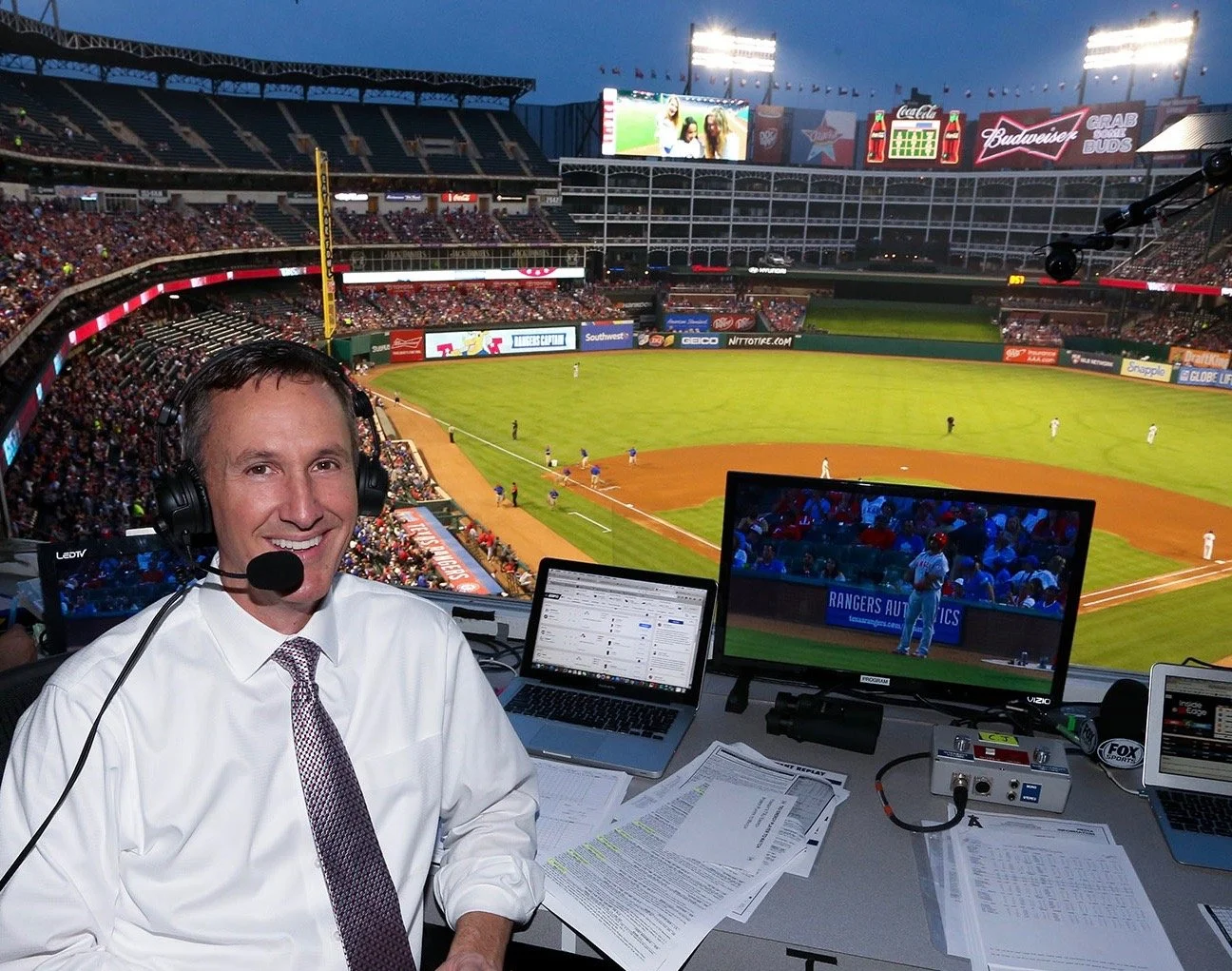
Robby Incmikoski: Dave Raymond, this is interview number 64 that we've done. So maybe play 064 in the lottery today. There are no rules, by the way, so if there's anything you don't want to talk about, no questions asked.
So this is year eight for you with the Rangers, right?
Dave Raymond: It's my full-time year eight. I'd been there a couple of years messing around before that.
Robby: Here's the biggest thing I want to know—in your observation, just as a franchise, as a fan base, as a city, what was it like going from Globe Life Park to Globe Life Field? Going from outdoor heat to a controlled environment for the fans?
Dave Raymond: I think when you're in something, you don't always know—or you don't take the time to register—how bad it is, or sometimes maybe how good it is. In the case of Globe Life Park, that ballpark was the savior of this franchise. That was the turning point of the Texas Rangers' history, and so it represented a lot of really positive stuff to a lot of people. It was a gorgeous facility, a beautiful architectural piece.
So when they made the announcement and then started showing the plans for the new park, I would say the feeling I got was a sense of longing before we even left: "How can we leave this beautiful ballpark? It's only 20 years old. We love it." And then there were people who were even saying, "Listen, yeah, it's hot, it's brutal, but it's our brutal. That's what it's like." Some people felt like maybe that was an advantage—teams don't go out and hit as much because they're afraid they're going to wear down, and they've got to factor in coming to Texas a week before they even get there. So I think there were a lot of people who were wistful for Globe Life Park, outdoors baseball, all that stuff, and there was a little melancholy as we shut down the place.
Then we get to the new place, and of course it's delayed by COVID and the work stoppage, the lockout. So we don't even get the clean start, which was weird. During that COVID year, it's hard to really get a sense for what it meant because nothing's normal. It wasn't until the following years where you started to realize, "My God, this is amazing!"
This is such a difference to know that you're going to go to the ballpark, it's going to start at 7:00 or 2 o'clock, whatever the time is, and it's going to be played in roughly 3 hours, and then I'm going to go home. There's not going to be a delay, there's not going to be this debilitating heat. We used to cart people out of the old ballpark by the tens or dozens, especially during day games, and there'd be ambulances lined up just ready to take people to get them back to health.
It's a very different vibe. There were times—Emily [Jones] one time, I don't know what possessed her to do this or why she thought this would be a great story, but it was a horrible Sunday afternoon game or something, and she took one of those laser pointer thermometers. She'd go down there and she's shooting a seat, and she's like, "Guys, it's pretty hot out here." She's shooting the back of the seat, and the thermometer says it's 145° on the seat. There's no way I could sit in a seat that's 145 degrees, but that's exactly what people did all the time. It was miserable.
I remember there was a stretch, I want to say it was 2017 or 2018, where we went 12 straight home games where the game-time temperature was in excess of 100 degrees every single night. And it stays that temperature for several hours—it might get under 100 by the time you leave. That thing's like a big old tandoori oven or something. It's just this big concrete thing absorbing heat. So the roof is huge—that's no doubt the biggest feature of the new ballpark, because it's comfortable.
Robby: How much do you think that helped the Rangers attract pitching talent to come there, and how much did going from outdoors to indoors help that team win a championship?
Dave: I think you can't discount how big an impact that is. There were apparently some pitchers during free agency—I don't know if it was after we had moved in or maybe even prior to—but we had talked to them about the prospects of pitching in Arlington. As I understand it, there were guys who specifically told them, "I'm not coming to pitch in that heat. I'm not going to play in that."
It's hard enough for guys to make 30 starts or throw 200 innings in a season—they just physically can't do it. Add on top of that 100-plus degrees every night and the humidity and everything else, and you're just zapping guys in a way that's not fair to them. So I think a number of them told the Rangers over the years, especially as we're in that transitional stage, "No, when you get the new place, give me a ring. We can talk about it, but not until then. I'm not going to come pitch in that crap."
Robby: How would you describe the vibe in that ballpark this past season? What did that championship do for that franchise and what was the vibe like at and around the ballpark when you include Texas Live?
Dave: I think the fact that you have an expectation all of a sudden that this is a winner and a team can win here and we could be champions and maybe you're building a sustained run of excellence—now people come to the ballpark with excitement. I think it's possible that people used to come to the ballpark and were immediately in self-defense mode: let's ration out the water, let's make sure we don't drink too many beers early, let's survive it, let's get to the end of this thing, let's try to see the eighth inning today before one of us passes out.
And then this year, it's like, let's go there, let's raise hell, let's have fun, let's make this an energetic, difficult place to play. We don't have to worry about our physical being. You can just come in there and you can dial in on the baseball and be excited.
I think that's one of the things too—people showed up this year for the baseball. They wanted to see Nathan Eovaldi pitch. They wanted to see Corey Seager hit. They wanted to see the world champions defending their title and playing to that level. So there's just a huge mental shift that happened. Even then, I still think there was a portion of the fan base that came to games that is still learning to make that shift—"We used to show up here and do this, but now I see, I get it now—showing up here to root on a real baseball team and try to win games." So yeah, there was definitely a different vibe this year.
Robby: What is it like calling a big moment—Jankowski makes the catch in Chicago to save a game for Andrew Chaffen, or Adolis Garcia hits monster homers—just big, game-changing, epic, memorable moments? How much do you think about that versus how much is it just organic and whatever comes out of your mouth at that moment?
Dave: I am committed to not preparing. That's my thing, right? I really like to be completely unprepared. I'm always a little uncomfortable talking about it because I think to some people it probably sounds so dumb, but as a play-by-play announcer, growing up as a kid, I loved watching the games, and certain guys would get your attention—they're really fun to listen to, and they make you feel the moment.
When you start getting into it as a young person and thinking, "Geez, wow, this is cool—some kid at home like me might be watching this and thrilled by that moment, might really think that was super cool what you said or how you said it," it becomes for me almost like every game is my own little athletic endeavor. How quick might I be today? Will I be sluggish? Will I have my good fastball? You don't know.
It's just like in baseball for the players—just because you're Corey Seager doesn't mean you get to be the guy in the ninth inning every single time. Sometimes it is Travis Jankowski or Josh Jung. So every game you show up, it might not be the day where you get to provide some great call or capture some great moment, but you always have to be ready for it. You have to be at the very least cognizant that it could happen.
Those moments are exhilarating and athletic in a way because they happen quickly. You don't know if the guy's going to fumble the ball out there, if the ball's going to take a weird bounce, if the guy's going to stumble around a base. The excitement, the thrill is: Will you convey it? Will you have the words in that moment and still not miss anything? That's the struggle you go through.
Sometimes you go home after a game and you're like, "Man, that was such a great moment, so exciting. Did I get it right?" And you listen to it, and you're like, "That was pretty good, but I missed a little bit here or there." And sometimes you go home and you're like, "I don't know, I think I might have screwed that up," and you listen back to it, and you're like, "Maybe by not mentioning that, I did myself and everybody a favor and let the moment breathe."
You mentioned the Jankowski moment in Chicago when he got that ball. It was great—it's the end of the game, and you should be keyed in at the end of the game. But it was the end of a miserable doubleheader in Chicago against historically the worst team in baseball history, and in a season which has turned out to be disappointing for the Rangers. Win or lose, it wasn't really going to move the needle. So to rise to the moment in that moment, to still have the attention at that point, is the thing that you take pride in. You're like, "All right, I was ready. I hit it."
Sometimes you don't. I'll be honest, there are days where you don't, and it sucks when it happens, but hopefully you're ready most of the time. When it happens like that and you nail it, you take a lot of pride in it and it's a thrill.
Robby: I interviewed Alan McDaniel, our audio guy. I'm putting Allan in the book because it's pretty cool that one of the audio technicians on a major league broadcast is also the guy that plays the seventh-inning stretch at the ballpark. How cool is it that the Rangers and Chuck Morgan incorporated a guy who makes his living at the ballpark, but can also highlight his hobby, which is music?
Dave: It's super cool. When you think about the ballpark, you think about guys like Allen, you think of Chuck Morgan—they're humans, but they're a part of the ballpark experience somehow, which is super cool. I think of Dancing Hannah up there just below our booth. Most games they'll isolate her on the video board, and it's cool—it's a part of the experience. A first-timer might go, "What's going on here?" And you're like, "Everybody in the ballpark knows that's Dancing Hannah."
That's what makes baseball special—this community. That's what makes the ballpark this place where we all go to be together and we share this experience and certain appreciations of each other. You have to tip your chapeau to Chuck and to the whole team that puts it all together. There are so many people involved in these things, most of whom people don't even know or never hear about. But it takes so many people to pull it off, and it's so cool.
Robby: You mentioned Chuck Morgan. He created the dot race, right? How cool is it to see something last as long as that has, and it got carried over from the old ballpark into the new ballpark? Chuck Morgan has got to be with the franchise as the PA voice for 40-something years, right?
Dave: Yeah, he left very briefly to go to Kansas City for a year, maybe two, and then came back. He has now done over 3,000 consecutive home games. Three thousand! You only have 81 home games a season, so you just have to do the math—that's a lot of years. Not even a substitute person has slipped in there for a game to say, "Now batting, whomever."
He's remarkable—a person as big as the building. When people think of that ballpark, or for that matter Globe Life Park previously, I think one of the first things they think about is Chuck Morgan.
You're right about the dot race, too. That was his thing. I think he might have invented that in Kansas City where he worked and then brought it with him back.
Robby: One other thing I want to touch on—that last series in Oakland, I watched the A's broadcast for that whole series because I wanted to see what the emotions and sentiments were like for the home team. I know how much baseball in Oakland meant to Dallas Braden in particular, a guy who threw a perfect game on Mother's Day with his grandmother in attendance. It was really special to watch. But afterward, I recorded your broadcast and watched it, and I saw how much love and appreciation you had for the fans in Oakland. What was that experience like for you, calling the final three games of baseball in a great baseball town like Oakland?
Dave: I don't know that there will be another broadcast that will match it, but for me, there's no doubt in whatever it's been—25, 30 years of doing this at various levels—that was the most meaningful broadcast I've ever been a part of.
Robby: What makes you say that? Why is that?
Dave: Because there was so much emotion there. If you were watching, you could probably hear it, but there were several times where I just had to stop talking because I was crying. There was something heart-wrenching about taking baseball away from a city like that. I think I still struggle to articulate what it means, but a church in a town, a ballpark, and that community that it provides for people—that purpose and that sense of self—is so huge.
I grew up in Nebraska. We have one school that's Division I, maybe Creighton now too, but there was the University of Nebraska. I was seven, eight hours away from the University of Nebraska where I grew up. But when I tell you that being a Husker fan was a part of my identity growing up, that so fails to convey how important that was to me and how big the Big Red were to my personal and the community's identity.
The idea of somebody—Warren Buffett, say—buying the University of Nebraska Cornhuskers and just moving them to St. Louis is first of all anathema, right? That's never going to happen. But it would devastate a state. That's the state—we grow corn, we have cows, but the Huskers are what we stand for, what we mean.
I met somebody in my own church the other day, and my wife said, "Hey, she's a Husker." I almost leapt over the pew to hug her. We immediately started with "Go Big Red" and talking about Nebraska. I felt a tie to that woman I'd never met before—we were relatives in that moment.
So take Oakland. Not a lot going for it these days, but the one thing they love and adore and have a great history in is baseball. In baseball's history, the Oakland A's have always been a little counterculture, so they have a really unique spot in baseball history. They have all these wonderful characters that have populated the baseball landscape and the Hall of Fame and the World Series. That run in the 70s, it's the greatest team, the greatest little dynasty since the Yankees of the '50s and '60s—no one's come close. I think the Big Red Machine compares, but that's about it.
So there's a lot of greatness there in a town that has nothing. And then for a guy to take that away from them when there were plenty of suitors who wanted to keep them there—that hurt people's hearts. I think it hurts baseball's heart when you take that away.
Now it's like the Las Vegas whatevers, or for the time being, the Sacramento A's. It just bastardizes all of that history and makes it confusing and stupid. They've been in Oakland longer than they were in Philadelphia, and they are more the Oakland A's than they ever were the Philadelphia A's. So to take that away just glibly like that is so hurtful.
The moment where I really broke down on the broadcast was when I was discussing how the players decided in that last home stand to wear the road "OAKLAND" unis. This year, you could not go to any souvenir store or anything and get anything that said Oakland on it. They stripped all of that merchandise out.
I think it's one thing to take a team from a town like that, to take this public trust and remove it—that's hurtful and mean and just awful. If you think you can't make it work, sell the goddamn team! There are a bunch of people lining up who think they can make it work. So get rid of it—if it's such an albatross to you, get rid of it and let somebody else do it.
But to then strip the dignity from these people of being able to wear the name of their town, their identity, on their chest and say, "You can't do that anymore"—that's ugly and hurtful in a way that is beyond comprehension to me. The whole thing just broke my flipping heart. I think it's a historical moment and a meaningful moment, and if it meant anything to an Oakland A's fan that somebody could articulate that—because it's harder for the Oakland broadcast to say some of the things that I was able to say on my broadcast—just to know that somebody else cared and somebody else felt that hurt.
I spent a lot of time in the Bay Area. It's one of the places where I cut my teeth and met people, and Bill King was my idol and all those things. So there was a lot of other personal stuff wrapped up into it, but just from the baseball standpoint, the community standpoint, it just hurt my soul so bad. It was really difficult to do, but I've never been prouder of anything I've ever accomplished professionally than that broadcast because I think we said a lot of things that needed to be said.
Robby: I think you're a legend in the eyes of Oakland A's fans for the way you handled that. I'm being dead serious—I was reading everything, and they just kept thanking you.
Let's end this on a lighter note, and this question's wide open. You are the only non-player I'm going to ask this question to, and you can answer it any way you want. How would you describe "the ass" in baseball?
Dave: The ass to me is short for "red ass." The red ass is when you are irritated, you're pissed off. I think irritated is probably the word, because anyone who's ever had the red ass knows what an irritation it is.
Nothing—if you've got a red, chafing, sore ass because you ate some bad food and then you've wiped too much, or whatever the case—it doesn't matter what's going on the rest of that day. If the ring of fire is hurting, then there's nothing pleasant in that day. It doesn't matter if somebody accidentally deposited an extra $100 in your account. "I don't give a s**t. My ass hurts. And I have to sit on it, and it's always there, and it hurts. And all my nerve endings are right there in my ass, and it hurts."
So that's the red ass. And when things in and around the game give you the red ass—and Lord knows they will—they chafe. Some of these people and things that happen in the game on a daily basis, over and over and over again—you get the red ass, and then it doesn't matter. "Yeah, I won the game, but that buck-face umpire just rung me up again on a pitch that was three inches off the plate. And it's like the fourth time he's done that in the last two games. I've got the red ass."
Robby: Jack Wilson described it as: Think about this. You're starving, you're super hungry, and you're like, "Man, I just want to go through a drive-thru and get something." You get home and it's the wrong order. You're not going to take the time to go back, but you're so pissed off because you were looking forward to eating that burger or that chicken sandwich or that milkshake, whatever it is that you wanted.
Dave: Seriously though, if you've ever had an actual red ass, nothing else matters. But Jack's analogy is perfect, because that might be the easiest way to trigger the red ass in somebody.