
Tim Tschida
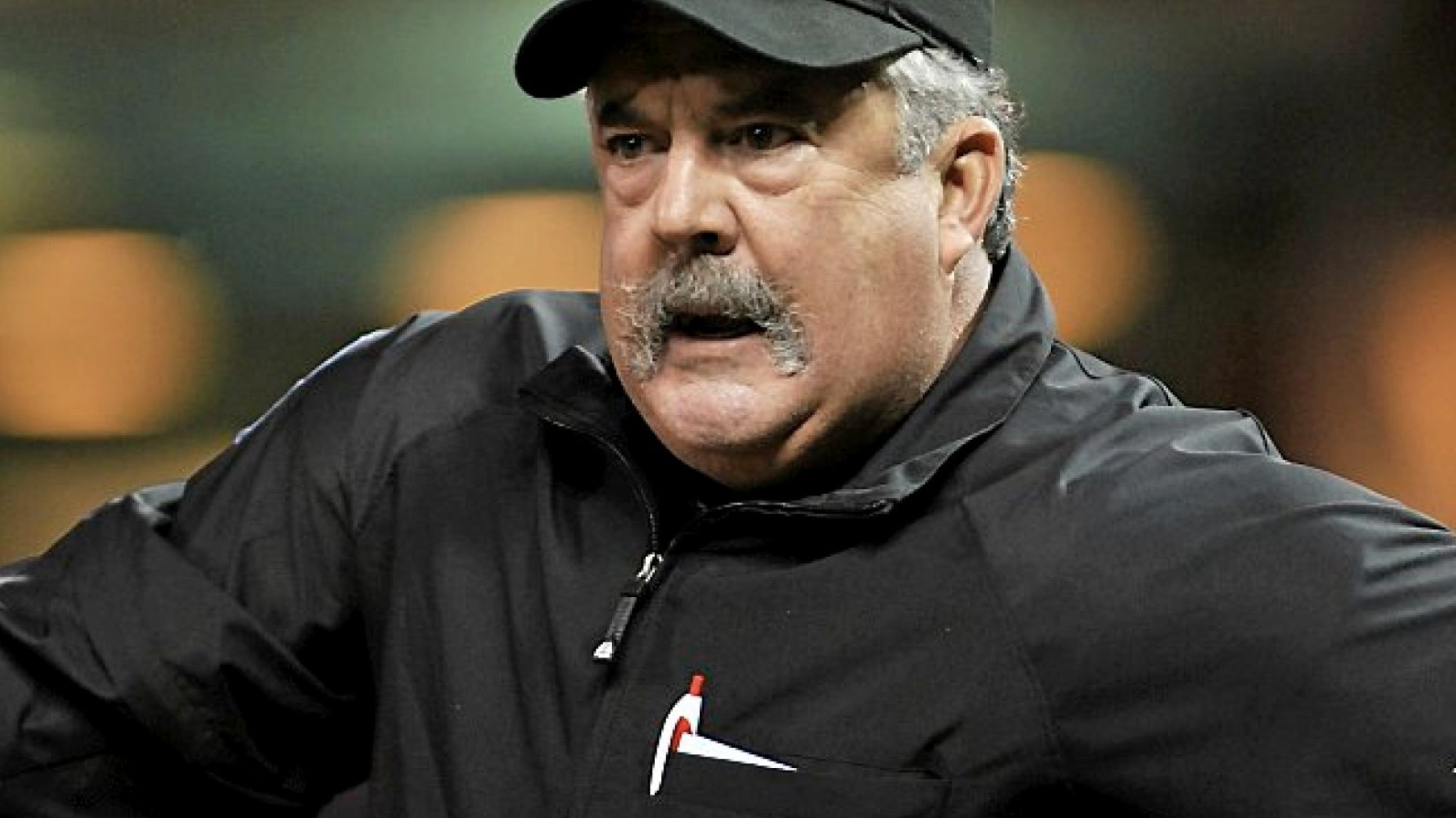
One of my favorite questions to ask isn't about a famous play. It's about the ballpark itself. What happens before the first pitch is ever thrown? Who decides where a ball is live, where it's dead, or how a quirky wall becomes part of baseball history? Tim Tschida has spent a lifetime answering those questions from the best seat in the house. Listening to him talk, you realize a ballpark isn't just steel, concrete, and grass. It's a living place with its own personality, traditions, and stories. Sometimes those stories begin months before Opening Day—and sometimes they last forever.
Tim, you've had a front-row seat to some of the biggest moments in baseball history, but I want to start with Target Field. You weren't just there for Opening Day—you actually helped establish the ground rules before the first game was ever played. How did that come about?
It's one of those experiences that's pretty unique because you're not simply walking into a new ballpark and learning it like everyone else. You're helping decide how baseball is going to be played there for decades. Jeff Nelson and I were assigned to inspect the stadium before Opening Day, so we walked every inch of the place with Twins executives Terry Ryan, Billy Smith and Matt Hoy. We started behind home plate, talking through dugouts, backstops and protective screens, then worked our way all the way around the ballpark looking for anything unusual that might require a special ground rule.
When we reached the left-field corner, we immediately noticed the famous Minnesota limestone wall. It was beautiful, but it also extended slightly over the field of play. Jeff and I looked at each other and said, "You're going to have to paint a line on that wall so everyone knows what's live and what's out of play."
The reaction was priceless. It was like we'd just suggested spray-painting the Statue of Liberty. Terry Ryan looked at me and said, "Tim, Mr. Pohlad is never going to allow anyone to put a drop of paint on that limestone. That's the signature of this entire ballpark."
So instead of changing the architecture, we changed the rules. We developed special ground rules explaining exactly what would happen if a ball hit that limestone. Visiting teams would have to be briefed before every series because plays that were dead balls everywhere else in baseball might stay live in Minneapolis. It became part of every umpire's pre-series routine.
That experience taught me something I've always loved about baseball. Every ballpark has its own personality, and sometimes the rules have to adapt to preserve what makes that park unique.
Then, incredibly, one of the strangest plays imaginable happened in the very first game.
You honestly couldn't write a better script. Months earlier Jeff and I had stood there looking at that tiny opening between the limestone wall and the foul pole and joked that someday it was going to create controversy.
Well... the controversy arrived about four innings into the very first game ever played at Target Field. Mike Cameron hit a towering fly ball down the left-field line. The ball squeezed through that tiny opening between the foul pole and the limestone, disappeared for an instant, then came flying back onto the field. For a split second everybody froze.
I remember thinking, This cannot be happening. We knew eventually we'd have something here... but the first game?
We immediately went to replay. Back then replay wasn't what it is today. There wasn't a replay command center full of umpires. We walked into a little room behind the dugout where technicians had a monitor waiting for us. We watched it over and over, making absolutely sure we'd gotten it right. We did.
When I walked back onto the field, Orlando Hudson looked at me and said, "Timmy, you may never see that happen again as long as you live." I don't think I ever will. Tom Kelly always used to say, "If you stay around baseball long enough, you'll see everything." That day, I believed him.
Opening Target Field must have meant even more because you're from Minnesota.
Without question. Major League Baseball had gotten into the habit of assigning hometown umpires whenever possible for stadium openings because they understood how meaningful those days were. To walk onto that field in your home state, knowing this ballpark is going to host baseball long after you're gone, is something nobody can ever take away from you.
People ask me all the time what my greatest baseball memory is, and I honestly can't answer that. Your first major league game. Your first postseason. Your first World Series. Opening a brand-new stadium in your home state. They're completely different memories, but every one of them becomes part of your life forever.
One thing a lot of fans probably don't know is that you also helped design Target Field's umpire clubhouse.
That's actually something I'm really proud of. A few years before the ballpark opened, Billy Smith called me and said the Twins wanted to build the best stadium in baseball—not just for the fans, but behind the scenes too. He asked if I'd help design the umpires' facilities.
I told him the biggest mistake teams make is thinking umpires want luxury. We don't. We want functionality. Give us space. Give us room for our families during the postseason.
Give the clubhouse attendant laundry facilities. Separate the changing area from the lounge so wives and children have somewhere comfortable to sit. Then I told them something they'd never considered. I said, "Put the groundskeeper's office near the umpire's room." They asked why.
I reminded them they'd spent nearly thirty years inside the Metrodome where weather never mattered. Outdoors, weather becomes one of the biggest parts of the job. Umpires and groundskeepers spend entire afternoons communicating about radar, tarps and field conditions. If those two groups work fifty yards apart instead of five hundred yards apart, everybody benefits.
To their credit, they listened. Seeing those ideas become part of Target Field remains one of the quieter accomplishments I'm most proud of.
Do umpires remember getting "the call" to the major leagues the same way players do?
Every single detail. I was in Buffalo when the American League office finally reached me. Within a couple hours I'd showered, packed every piece of equipment I owned, raced through the airport and flown to Chicago. I landed with barely enough time to grab a taxi to Comiskey Park.
I walked into the umpires' room ten minutes before first pitch. There wasn't time to be nervous. There wasn't time to appreciate where I was. I simply put the uniform on and went to work. Then something wonderful happened. After the third out of the first inning I looked up at that enormous scoreboard and thought, You actually made it.
A few innings later Jack Morris looked over from the mound. I'd known Jack since I was eight years old because he and my older brother played together. He looked at me and said, "What are you doing here?" I laughed and said, "I'm trying to keep this job." Those are the moments you carry forever.
You've worked three World Series, countless playoff games and All-Star Games. Does the World Series ever feel like just another baseball game?
Never. You prepare exactly the same way because your routine can't change. But everything else changes. The games slow down. Every pitch feels like it lasts longer.
Every decision carries more weight because somebody's season—and maybe somebody's legacy—is riding on it. One thing people don't realize is how mentally exhausting those games are. You finish working home plate in a World Series game and you're so wired you can't sleep until sunrise. The pressure isn't because the crowds are bigger. The pressure is because every single person inside that stadium is hanging on every pitch.
You were also the crew chief for one of baseball's strangest moments—the 2002 All-Star Game that ended in a tie.
That's another day I'll never forget. Late in the game I noticed something strange. The bullpen catcher walked in carrying the ball bag. There wasn't another pitcher warming up. I looked across at Joe Torre and Bob Brenly, and they both basically shrugged. We were out of pitchers. So we walked over to Commissioner Bud Selig.
I told him, "We have a problem."
His immediate response was, "You're f***ing kidding me."
I said, "I wish I was."
We talked through every possible option. You couldn't safely send a position player out there. You couldn't bring pitchers back into the game under the rules. Finally I said, "Mr. Commissioner, you're here to act in the best interest of baseball. Declare it a tie."
Afterward he thanked me privately. I told him he'd done the right thing. Sometimes leadership means making the only decision available, even when you know people are going to criticize it.
When you look back over nearly four decades in professional baseball, what stays with you the most?
Gratitude. Nobody grows up dreaming about becoming a major league umpire. I certainly didn't. I wanted to teach school and maybe someday umpire a state championship game. Instead, baseball gave me something I never imagined. It allowed me to stand in the middle of some of the sport's greatest moments—from Opening Day at Target Field to World Series games, All-Star Games and countless memories I'll carry for the rest of my life.
That's a privilege. And every time I walk back into a ballpark, even now, I still feel thankful that baseball let me be part of its story.
NOTE: The above was edited for clarity and length.
You can read the full transcript here.